The post The Complete Guide to E-Commerce Email Marketing appeared first on Amazon-ASIN Blogs - Latest from Amazon Sellers: News, Advice, and Effective Strategies.
]]>What Is E-Commerce Email Marketing?
E-commerce email marketing is an attempt to avail or sell a product over the internet through email correspondence, or improve customer relations for increased sales. This may comprise emails, newsletters, promotional emails, random product recommendations, and abandoned cart reminders. The purpose is to maintain customers’ interest in the brand and encourage repeated purchases.
You can also improve your marketing efforts further with tools such as the Snov.io email finder to locate the right contacts for your list and hence make improvements on the results of your marketing campaign.
If the e-commerce store is able to segment audiences and provide personalized content to the recipients, then it can help the customers receive relevant and timely information that may satisfy their needs and result in sales.
Tips for Crafting the Perfect E-Commerce Marketing Email
To maximize the impact of your email marketing campaigns, it’s important to focus on several key elements. Here are some tips for crafting the perfect e-commerce email.
Subject Lines Matter
The creation of the email’s subject line is the first thing that your customers will be able to see. A good subject line can really boost the level of open rates by a huge margin. Short and to the point, simple yet informative and leave a taste of the topic telling more in the context. Do not use the language that readers would find you intrusive, and try to stimulate the interest and interest of the readers. Another way of increasing interest is by using the customer’s name in the subject line.
Balance Copy and Design in the Body
The content and design of your email should complement each other or at least should be in a very consistent harmony. Always make sure that your message and information is as straightforward as it is possible. Subdivide your text with pictures, lists, and most importantly, CTA buttons. Keep a good and appropriate layout of brochure that matches brand or company image but ensure that there is too much information} that fills up the mail. Make the design mobile friendly because the majority of the users access their emails through their mobile devices.
Treat Customers As Individuals
Yet, e-commerce branded e-mailing is a very personalized way of consumer approach. Add value to your e-mailing recipients by directly addressing them, including their first name, suggesting which products they might like based on previous purchases or sending them a birthday discount. This contributes towards development of a loyal customer base since the company establishment is able to grant individual attention to each particular customer.
Refresh and Update Older Emails
Thus it is optimal to consider updating your email templates frequently to help keep your marketing campaign unique. Review the performance of the email campaigns – some emails would have resulted in high response while others would have yielded little or no results at all, so change your content, design or call to action to reflect this. By keeping your content well updated, there would always be renewed interest from your customers.
Get Feedback
Customers should be encouraged to provide feedback on their experience of your given email campaigns. Regardless of whether the collected data comes from the surveys or the questions posed in the email, customer insights will help you make the necessary adjustments in your further campaigns. Engaging your audience also improves your relationship with them, and they will know you appreciate their opinion.
How to Develop an E-Commerce Email Campaign
The complete process behind creating a great e-commerce email marketing campaign is complex. Here’s a step-by-step approach to developing your next campaign:
- Define Your Goals: Who is the target audience? What do you want to achieve with the help of your email campaign? Do you want to create demand, introduce a new product, and sell, or does your client want to sell more to his existing customers?
- Segment Your Audience: Like in most forms of marketing, you should strategically split your fan base into categories according to demographic information, previous actions, or inclinations. This will mean you send more relevant and targeted emails. The first is that the emails that you will receive will be varied depending on which ones people sign up for.
- Create Compelling Content: Be sure to use language that will be understood by your target consumers. Tell your subscribers what they can expect to get out of your email – in terms of a benefit such as a discount code, a piece of content, or tailored product suggestions.
- Design for Mobile: Make sure your email treats mobile as a relative of desktop and is easy to interact with on all platforms. Mobile responsiveness is also important, as more and more users use their handheld devices to access email.
- Use Automation: Send certain emails fully automatically, for instance, welcome emails, abandoned cart reminders or follow-up after purchase. They let you remain connected with your customers without having to personally email them every time.
- Track and Analyze: To track the effectiveness of the results of your campaign you need to regularly track such parameters as the open rates, click-through rates and conversion rates. Employ the strategies and recommendations for you during the future campaigns.
Examples of E-Commerce Email Marketing with Emarsys
For you to have a clear view of what some of the best practices of email marketing are, we are going to illustrate some basic real-life examples of the brands that use Emarsys – the omnichannel marketing platform.
Welcome Email for Crabtree & Evelyn
The example of Crabtree & Evelyn, welcome email is one way to create that first good impression. Their email’s content starts with a greeting, then an introduction to the brand, and ends with a 10% first-time use discount. Such an email is very important in establishing a good working relationship with subscribers who are newly subscribed to a particular website.
Abandoned Cart Email (Bamboo Clothing)
Bamboo Clothing has incorporated abandoned cart emails where once certain items are left in the cart, the company or store sends an email to the customer. Their emailed reminder is a simple picture of the forgotten product along with a gentle prod, reminding the buyer what it was and urging him to go through with the purchase. This serves the purpose of recovering possibly lost sales.
Order Confirmation Email (ROMAN)
The post purchase communication from ROMAN is quite good and is the order confirmation email sent to the consumer. It can contain Order summary, Shipping and tracking details and a Thank You message to the customer to let him/her know that their order was received. It also goes a long way in making the customer trust the brand as they are using the product as meant by the manufacturer.
Conclusion
One of the most successful types of email marketing is still e-commerce promotional campaigns. The key here is to work on creating really compelling mailing and building matched campaigns. It helps to keep clients engaged and ready to purchase again.
Read more:
7 Smart Productivity Tips for Ecommerce Business Owners
E-commerce Keyword Research: A Beginners Guide
The Ultimate Security Checklist for Your E-commerce Business Startup
The post The Complete Guide to E-Commerce Email Marketing appeared first on Amazon-ASIN Blogs - Latest from Amazon Sellers: News, Advice, and Effective Strategies.
]]>The post The Ultimate Security Checklist for Your E-commerce Business Startup appeared first on Amazon-ASIN Blogs - Latest from Amazon Sellers: News, Advice, and Effective Strategies.
]]>With the e-commerce sector expected to grow 8.8% in 2024 most of the new e-commerce store owners would be at risk of hackers’ attack.
One of the main requirements to help your e-commerce startup project succeed is to safeguard it from any potential risks.
Let’s look at how you can do exactly that.
The main risks of not having a security system
Before starting our checklist, you should read about the two main risks of not investing in security for your e-commerce.
The Cost of Cyberattacks
Did you know that small businesses are a prime target for cybercriminals?
Only in the United States, 73% of US small business owners reported a cyber attack last year. What is the main reason why hackers often attack small businesses?
They usually don’t have strong security like more prominent companies could and it’s easier for criminals to corrupt their data. This is why implementing a malware breach alert system is crucial it helps detect threats early and minimizes potential damage.
A cyberattack could cost your startup a lot of money and all your assets. Damages can be lethal without a contingency plan.
Trust and Reputation
Let’s suppose you suffer a data breach in a very unfortunate event.
Even if you get to solve it all and go through it without major destruction, your customers’ trust will be seriously damaged.
Remember that at the startup stage of every business, your clients will be your best allies.
Basic Security Practices
1. Bullet-Proof Passwords
Yes, we know, this sounds kind of obvious, but is it though?
If you use the same password for different accounts, if your employees share similar passwords, if you use any personal references for them, spoiler alert: That’s not safe!
If you struggle to remember several passwords, just install a trustworthy password manager and you should be ready to go.
2. Two-Factor Authentication
Many people already are using 2FA (abbreviation for Two-Factor Authentication). This tool gives you extra security and is really easy to use. There are two ways in which you can use 2FA:
● Directly from the apps, most platforms offer this service in 2024.
● Download an authenticator app and link it with your accounts.
3. Newer Software
It might be cheap, but old software doesn’t have the security needed for the 2024 landscape in terms of the new digital threats, every small business should be paying attention to this.
Always run the latest version of your software and accept all the security measures suggested by the experts.
E-commerce Specific Security Measures
1. Secure Your Website with HTTPS
Every online e-commerce platform needs a secure HTTP protocol, but you shouldn’t think this could be all.
Using an HTTP is not a guarantee of not having a breach, but it’s a good place to start. You can ask a professional IT team if you don’t know how to do this.
2. Conduct Regular Security Audits and Vulnerability Scanning
Conduct regular security audits to identify and fix vulnerabilities. Use tools like vulnerability scanners to detect weak points before hackers do.
These audits can help you stay one step ahead of potential threats.
3. Implement a Web Application Firewall (WAF)
WAF or a Web Application Firewall, is a security tool created to protect websites and applications from malicious attacks.
They are mostly prepared to prevent the most common threats, such as SQL injection, DDoS attacks, clickjacking, and many others.
4. Be Minimalist With the Data
When requesting information from your clients, think carefully about the exact data you need to ask to function.
Don’t ask for any extra data just because you believe it could be useful.
That might be problematic in the future. Stick to the minimum and only ask for essential information.
5. Conduct Regular Backups
You can use external memories or cloud services to store your data. The best option is to use both, but we know this might take a little extra time.
Assure you use at least one of these mechanisms to back your sensitive data.
This will be useful, not only in cases of hackers’ attacks but also if your hardware gets physically damaged.
6. Use a VPN for Data Protection
A Virtual Private Network (VPN) encrypts your internet connection, making it harder for hackers to intercept your data.
It’s especially useful if you or your employees work remotely or use public Wi-Fi networks.
VPNs allow your team to hide their IP address and encrypt your data. Encourage everyone within your business to use virtual private networks (VPNs) when accessing sensitive information.
It does not matter what type of system or software you are using. VPN can be used with all types of operating systems, so don’t worry if your team is using Apple for example, you can also get a VPN for Safari and all iOS devices.
7. Get an Antivirus Software
Hackers attacks can’t be stopped by regular antivirus software anymore.
These software programs act as protectors, neutralizing malicious attempts before they can get into your e-commerce platform.
Luckily, nowadays, many antivirus companies provide tailored programs for eCommerce businesses, offering real-time protection against modern threats.
When buying antivirus solutions, especially if your business is small, you should consider creating a private contract with them and asking for a representative to discuss the particular situation of your startup.
8. Secure Payment Gateways
PCI DSS (Payment Card Industry Data Security Standard) is a set of security standards to ensure safety while handling credit card information during transactions.
If your startup uses, processes, stores, or transmits cardholder data, you will need PCI DSS. It helps prevent data breaches and protect their clients’ financial information.
While we agree that any information leak could be lethal to any company, the worst attacks usually involve payment methods. Unfortunately, global payments fraud has tripled in the past years, and it is expected to reach $40 billion by 2027.
9. Run Regular Training and Awareness Programs
Your business should develop a comprehensive risk management strategy. It’s a good idea to create a formal company guideline for security, outlining acceptable and prohibited online activities for employees.
You can rely on professional IT services when educating your staff.
Hosting regular cybersecurity workshops or participating in webinars is an effective way to ensure they all stay informed.
Keeping up with all the rends yourself a lot of work, but luckily many IT companies specialize in businesses and have training programs you can access too.
10. Have a Response Plan
The first hours after a data breach or a hacker attack are the most important to mitigate damage. It’s no one’s dream to prepare for the worst, but unfortunately, you should. Having a response plan could be the difference between experiencing the loss of your dreams or saving your e-commerce.
Conclusion
Running an e-commerce startup is challenging enough even if we forget about the online threats. If you follow these security checklists, you can protect your startup to focus on growth.
Remember, security is not a one-time task but an ongoing process and it takes a lot of patience.
Every entrepreneur trying to make their way into the e-commerce world should be concerned about the security of its clients and staff.
This shouldn’t be stressful, but staying active and informed is essential. Follow professional advice, get involved in your startup security and your information should be safe.
Additional Read: 7 Smart Productivity Tips for Ecommerce Business Owners
The post The Ultimate Security Checklist for Your E-commerce Business Startup appeared first on Amazon-ASIN Blogs - Latest from Amazon Sellers: News, Advice, and Effective Strategies.
]]>The post 7 Smart Productivity Tips for Ecommerce Business Owners appeared first on Amazon-ASIN Blogs - Latest from Amazon Sellers: News, Advice, and Effective Strategies.
]]>Use online ecommerce tools and apps
With automated tools and AI to help you in every process, it would not be a wise idea to ignore them. From shipping orders to payment processing and social media campaigns to inventory management, there’s an online tool. This makes every part of the process smooth and efficient. These processes mentioned here are just some of the many. Once you start exploring deeply, you will find there’s a tool or an app to help you at every step to make you highly productive.
There are outstanding Mac tools and ideas that simplify your tasks and streamline your workflow. Mac productivity tools and shortcuts make you work smartly. One of the top ideas when using multiple software and apps is to try the split screen feature, which is basically two app windows side by side. It helps to use two applications together by dividing the screen into two. Using this feature, you can compare data analytics in spreadsheets. You can also use multiple design social media marketing apps without swiping into another app. To make it even better, use Command-S (Save file), Command-W (Close Window), Command-N (New file), and Command +/- to zoom in and zoom out. These shortcut keys make work quick. You won’t have to navigate through screens or waste time with the trackpad and mouse. Mac screen real estate is for real so learn to make full use of it.
Set clear goals
Goal setting is one of the top business productivity strategies to meet targets. Measuring progress is possible only if you have set relevant goals and work consistently towards them. With too many tasks to handle, you might struggle to prioritize the tasks or manage the team well. Set smart goals while keeping in mind the time and effort you can put in to achieve them. Having clear, achievable targets helps you to accomplish more in less time, making you more productive.
Plan your ecommerce business workflows
Streamlining workflows is also a smart way to run an ecommerce business successfully. You can do so by analyzing the current workflow and eliminating the unnecessary tasks that make your work repetitive and unproductive. Find easy ways to perform a task by allocating tasks and analyzing their progress regularly. As a business owner, you must focus on important business tasks rather than those that your team can handle easily.

Collaborate and communicate
Ecommerce businesses can be managed well when all the team members work in collaboration, whether remotely or in-office. It is a business productivity strategy that the best entrepreneurs use. You should encourage team members and keep things transparent to see them motivated and positive. Use tools to collaborate and provide all possible support to remote teams. A better level of communication and collaboration creates an atmosphere where everyone becomes more productive than before.
Look for quality sourcing channels
With China being a manufacturing hub, most online retailers including Amazon outsource their goods manufacturing there. If you lack that kind of capital, place bulk orders from popular Chinese online wholesale retailers. Sourcing goods from the best places at the best prices means you will save time and money. This plenty of extra time saved in sourcing can be used in many other business activities that need your regular intervention.
Prioritize work-life balance
Ecommerce business is stressful but being at work all day and all night might get you ideal results in the short run but in the long run, you will face burnout. You will feel exhausted and have a drop in your motivation level. To stay productive, learn to take time off, spend quality time with family and friends, or maybe go for a vacation. A balance in this regard does wonders for your productivity levels.
Find reliable partners
Just as for sourcing, find partners for your online business store for other processes. From delivery to packaging and branding to payments, use an outside partner. Offload as much work as you can through reliable outside partners. It’s their core work so it’s natural that they will provide better results there. With no burden on your shoulders on some of these key aspects, you will see yourself being productive every day and contributing more towards ecommerce business growth.
Conclusion
Like every business, ecommerce is also a lot of hard work. Being productive becomes a key element for every business owner. To make an online ecommerce business flourish, you must value productivity and try these seven best ways to improve it.
The post 7 Smart Productivity Tips for Ecommerce Business Owners appeared first on Amazon-ASIN Blogs - Latest from Amazon Sellers: News, Advice, and Effective Strategies.
]]>The post How to start selling on Etsy in 7 simple steps appeared first on Amazon-ASIN Blogs - Latest from Amazon Sellers: News, Advice, and Effective Strategies.
]]>Finding the right online spaces, for example, can mean determining whether to build and maintain your own website or using existing marketplace platforms such as Facebook, eBay or Etsy.
Etsy is a great way to sell products and leverage the built-in tools that the platform provides for small businesses. But Etsy can be intimidating if you are not familiar with using the platform and its features.
Here are 7 simple steps to take to start selling on Etsy.
1. Understand What Etsy Is, Including Fee Structures
Etsy is a U.S.-based e-commerce platform that focuses on selling handmade and vintage items. The products range from jewelry and clothing to home décor and furniture, along with art, toys, crafts and supplies.
Vintage items must be at least 20 years old. While it focuses on handmade items, Etsy began allowing sellers to sell mass-manufactured items in 2013.
Etsy is a massive online marketplace, with more than 100 million items for sale and 7.5 million sellers. More than 95 million buyers have made a purchase off the platform.
While there are no upfront costs for creating a storefront on Etsy, sellers pay various listing and transaction fees.
Listing fees are the most common, Sellers are charged 20 cents for every new listing that’s uploaded to their online store. This fee is charged whether the item sells or not. Listings remain active on the site by default for four months or until an item sells. You can auto-renew meaning the 20 cents is charged once the first four months are finished.
Transaction fees include a 6.5 percent fee to Etsy for facilitating the sale. Owners in the U.K., France, Italy, Spain and Turkey also pay regulatory operating fees on each listing of 0.25 percent to 1.1 percent.
You’ll also pay a payment processing fee, which is a percentage of the sales price and varies by country.
2. Create Your Business Structure
When you own your own business, you’ll need to choose a business structure, which is the legal business organizational type. There are many different business structures to choose from; however, most small businesses opt to either form a sole proprietorship or limited liability company (LLC).
Each business structure has its own benefits and drawbacks, especially related to taxation, liability protection and management.
Sole Proprietorship
This structure is the simplest and easiest to file, because there is no formal paperwork to complete. In a sole proprietorship, a single owner is responsible for all aspects of the business.
The company’s revenues, losses and expenses are passed through to the owner’s individual federal and state tax returns.
There are many benefits to being a sole proprietor. There are low start-up costs and you can be your own boss. You keep all the profits and can change the business structure easily in the future if you choose.
From a liability perspective, the sole proprietorship structure does carry some risks. If there is a court judgment against the company or a bankruptcy filing, your personal assets, such as your home, car and savings, are at risk.
LLC
An LLC is the most popular choice among small-business owners. With an LLC, the business is a separate legal entity. The owner or owners (called “members”) can choose to run the business themselves or hire a manager to run the company.
Taxes operate similarly to under the sole proprietorship model, passing through to owners’ individual tax returns. From a liability perspective, an LLC provides protection against court judgements, meaning their personal property is protected.
An LLC does require a formal filing within a state and, depending on the state, annual paperwork. The fees for filing an LLC can cost from a few hundred dollars to thousands of dollars.
3. Set Up Your Account and Add Products
To get started on Etsy, you’ll need to open a seller account by registering and entering in some personal details. You’ll then open a storefront after setting preferences for your language, country and currency.
If you already have a name for your business, you probably want to use it, if it’s available, for your Etsy store. If it’s not available, consider choosing a name that’s similar to your company name.
Shop names on Etsy can be 20 characters or fewer.
After you’ve created your store, you can start entering products. You can begin by uploading products to your Etsy store and add features, including:
● Photos. Each listing can have up to 10 photos. Etsy suggests adding photos that cover the different angles and views of your product to show it from multiple vantage points
● Listing Details. Good descriptions can make a listing sing. Be sure to list what the product is, what it is made of and who made it. Describe the materials that were used to make the item, whether it’s a physical or digital product and the dimensions. Using good keywords can help your products show up in search engine results
● Videos. Adding videos to your listings is optional. Like photos, they can help show the product from different angles. They can also show how a product works or its uses in different scenarios
● Product Variations. If you offer a product in different iterations, be sure to enter them. You can list the different sizes, colors and shapes for your products
● Personalization. Will you offer product personalization, adding names or other personal details to a final product. If so, be sure to add that feature to your listings by toggling that option on
4. Build Out Your Etsy Store
Building out your Etsy store is an important way to stand out. Your bio is one important area. Be sure to create a bio that’s compelling, explains what your store is all about and a little about yourself.
You should also spend some time customizing your storefront. Consider the fonts and colors you use and make sure your listings are well written.
5. Establish Customer Payment, Shipping and Remittance Processes
You may have several options when it comes to how you collect payment and ship your Etsy products. Pricing is the first element to consider, including factoring in the cost of the materials, labor and other business expenses. If you plan to offer free shipping, be sure to include those costs into your pricing.
You may also want to offer alternate pricing for domestic vs. global customers to account for the differences in shipping costs.
Payment details are another important consideration. You’ll need to enter a credit card to pay for listing and transaction fees.
Sellers have two options when it comes to shipping your sold items. You can set your shipping preferences on a per-product basis or so they apply to your full store.
If you will offer free shipping on smaller items that do not cost a lot to ship, but will charge for larger, heavier items, the first option probably makes the most sense financially. For larger items, using corrugated boxes ensures protection during transit, and the cost of these boxes should be factored into your shipping pricing.
6. Market Your Business
Etsy has some great search tools that allow your store and products to be found. But those tools alone will not be enough to draw customers. You’ll also want to invest in social media and paid ads to attract the customers most likely to purchase items from your shop.
Social media marketing lets you highlight your brand and your store. You can use social media to showcase certain products, advertise sales and let customers know about new products or variations. TikTok, Instagram and Facebook are popular social media platforms that Etsy shop owners have used successfully to cross-promote their products.
Etsy Ads are a feature that lets you advertise your products across the Etsy platform. Etsy Ads ensure your products show up in search results, category pages and market pages both on the Etsy website and app.
Etsy ads help your products stand out compared to similar products and give you more attention to your target audience.
7. Optimize Your Etsy Store
Want to get the most out of your Etsy shop? Understand that Etsy, like other selling platforms, uses algorithms to drive activity and sales.
The Etsy algorithm connects users’ search queries with the products on the platform to deliver search results. Here are some tips to maximize your efficacy with the Etsy algorithm:
● Use relevant keywords in product titles and descriptions
● Use relevant tags on your product listings
● Encourage and display reviews on your product pages
● Select the right attributes when writing listings
● Update your storefront with new content
● Make sure your About Me section is detailed
An Etsy store is a great way for your small business to sell your products. By understanding how Etsy works and spending the time to create your Etsy storefront, you’ll be well positioned to generate sales.
Be sure to use all the free features that Etsy provides and enhance your listings with great descriptions and photos. Also consider how you’ll market your Etsy store on the platform and other social media channels.
The post How to start selling on Etsy in 7 simple steps appeared first on Amazon-ASIN Blogs - Latest from Amazon Sellers: News, Advice, and Effective Strategies.
]]>The post The Art of Dropshipping on Amazon: Strategies for Success appeared first on Amazon-ASIN Blogs - Latest from Amazon Sellers: News, Advice, and Effective Strategies.
]]>Quick Guide
- Understanding Amazon Dropshipping
- Amazon FBA vs. Amazon Dropshipping
- Getting Started with Amazon Dropshipping
- Building Your Amazon Dropshipping Business
- Pros and Cons of Amazon Dropshipping
- Navigating Amazon’s Policies and Fees
- Tips for Success: Amazon Dropshipping Strategies
- Becoming a Successful Amazon Dropshipper
- Conclusion
Understanding Amazon Dropshipping
What is Amazon Dropshipping?
Amazon dropshipping is an e-commerce business model where sellers list products for sale on Amazon’s platform without actually holding any physical inventory. When a customer orders a product, the seller purchases that product from a third-party supplier or manufacturer who then directly ships the product to the customer. The seller essentially acts as an intermediary, facilitating the transaction between the supplier and the customer. The key steps in Amazon dropshipping include:
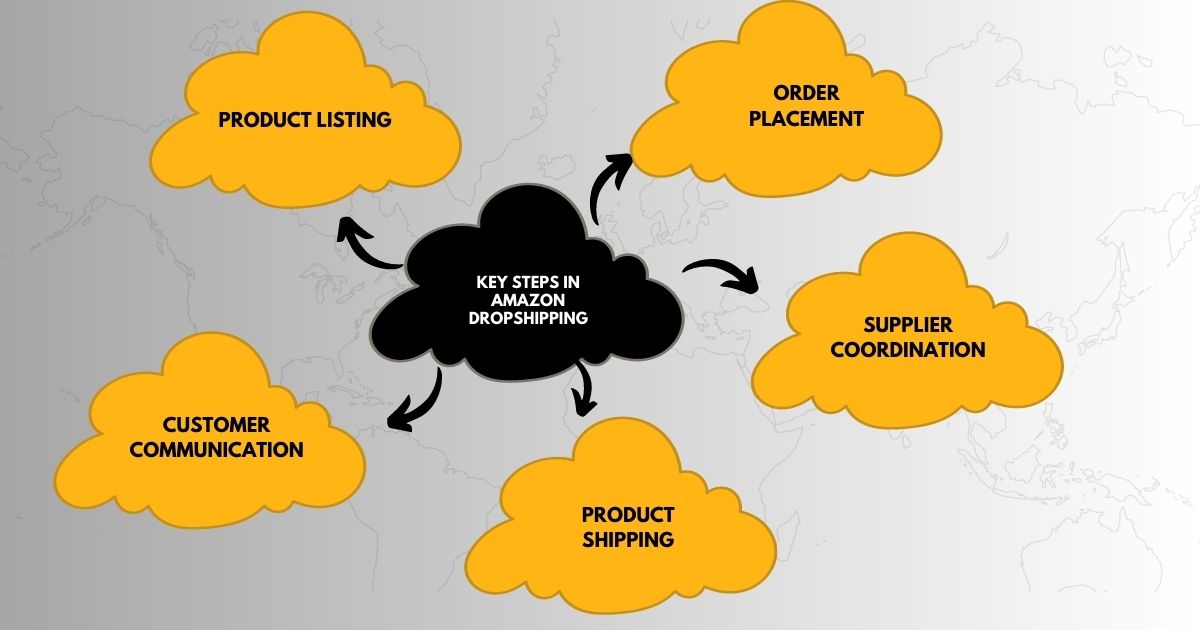
- Product Listing: Sellers create listings on Amazon, including product details, images, and pricing.
- Order Placement: When a customer buys a product from the seller’s listing, the seller receives the order and payment information.
- Supplier Coordination: The seller contacts the supplier, providing them with the necessary order details and shipping information.
- Product Shipping: The supplier packages and ships the product directly to the customer, often using generic or neutral packaging supplies.
- Customer Communication: Sellers remain responsible for customer service, addressing inquiries, providing tracking information, and handling returns or issues.
Differentiating Between Traditional Amazon Selling and Amazon Dropshipping
Traditional Amazon Selling
In traditional selling on Amazon, sellers purchase or manufacture products in advance and store them in Amazon’s fulfillment centers. When a customer orders, Amazon handles the storage, packaging, shipping, and customer service. Sellers have more control over branding, product quality, and shipping times.
Amazon Dropshipping
Dropshipping on Amazon involves listing products the seller doesn’t physically own or store. The seller coordinates with suppliers to fulfill orders, and the supplier handles packaging and shipping. Dropshippers have less control over product quality, shipping speed, and branding. However, dropshipping requires less upfront investment in inventory and allows sellers to offer a wide range of products without needing storage space.
Amazon FBA vs. Amazon Dropshipping
Comparison between Fulfillment by Amazon (FBA) and Amazon Dropshipping:
Fulfillment by Amazon (FBA)
- Amazon stores and manages inventory on behalf of sellers in its fulfillment centers.
- Amazon handles packaging, shipping, and customer service, offering fast and reliable delivery.
- FBA products are eligible for Amazon Prime, boosting their visibility and sales potential.
- Sellers pay fees for storage, fulfillment, and related services.
Advantages and Disadvantages of the Fulfillment by Amazon (FBA) approach
- Pros: Prime eligibility, streamlined logistics, scalability, and enhanced customer trust.
- Cons: Fees, limited control over inventory and shipping, potential competition with other FBA sellers.
Amazon Dropshipping
- Sellers list products without holding physical inventory.
- When an order is received, the seller purchases the product from a third-party supplier who ships it directly to the customer.
- Sellers are responsible for customer service, supplier communication, and order management.
- Drop shipped products may not be Prime-eligible, potentially affecting sales.
Advantages and Disadvantages of the Amazon Dropshipping approach
- Pros: Low upfront investment, flexibility in product range, focus on marketing and growth.
- Cons: Quality control challenges, lower profit margins, limited branding opportunities, customer service responsibilities.
Getting Started with Amazon Dropshipping
Setting Up Your Amazon Seller Account
Registration: Go to Amazon’s Seller Central and click “Register Now.”
Account Type: Choose between Professional and Individual Seller accounts. A Professional account has a monthly fee but offers advanced selling features.
Personal Information: Provide your details, including email address and password.
Business Information: Enter your business name, address, and contact details. You can use your own information if you’re dropshipping as an individual.
Payment Information: Set up your payment methods and tax information.
Product Categories: Choose the categories that best match the products you plan to dropship.
Shipping: Decide whether you’ll handle shipping yourself (Fulfillment by Merchant) or use Amazon’s services (Fulfillment by Amazon is not recommended for dropshipping).
Verification: Amazon may require verification of your identity and contact information.
Tips for Optimizing Your Seller Profile
- Complete Profile: Fill out your seller profile with accurate and detailed information. This builds trust with customers.
- High-Quality Images: Use high-resolution images for your profile picture and any images you include in your listings.
- Accurate Descriptions: Write clear and informative product descriptions that accurately represent your products.
- Competitive Pricing: Research competitors’ pricing and set your prices competitively.
Amazon Dropshipping Policy
Overview of Amazon’s Policies Related to Dropshipping
- Prohibited Seller Activities: Amazon has specific rules regarding dropshipping. The seller must be the seller of record for the products and must identify themselves as the seller on all packing slips, invoices, and external communications.
- Shipping and Fulfillment: Amazon does not allow the use of FBA for products sourced from a third party. Sellers must maintain control over shipping and fulfillment.
Highlighting Key Policy Requirements and Restrictions
- Seller Identity: You must identify as the seller on all documents and communication related to the order.
- Packaging and Invoices: You cannot include any information that directs the customer to contact the supplier or includes pricing different from what’s listed on Amazon.
- Quality Control: You are responsible for the quality and condition of the products you sell, even if they are drop shipped.
Selecting Profitable Niches and Products
Research Techniques to Identify Profitable Niches
- Market Research: Use Amazon’s Best Sellers, Hot New Releases, and Movers & Shakers lists to identify trending products.
- Keyword Analysis: Utilize tools like Amazon’s search bar and third-party keyword research tools to find keywords with high search volume and low competition.
- Competitor Analysis: Study successful competitors in your chosen niche to identify gaps or opportunities.
Tips for Selecting Suitable Dropshipping Products
- High Demand: Choose products with consistent and high demand to ensure a steady flow of orders.
- Competition: Analyze the competition and assess if you can differentiate your offerings.
- Profit Margin: Calculate potential profit margins after accounting for product costs, shipping fees, and other expenses.
- Supplier Reliability: Research and establish relationships with reliable suppliers to ensure smooth fulfillment.
Building Your Amazon Dropshipping Business
Finding Reliable Suppliers
Strategies to Find Reputable and Trustworthy Suppliers:
- Supplier Directories: Explore online supplier directories such as Alibaba, AliExpress, SaleHoo, and Worldwide Brands.
- Trade Shows: Attend industry-specific trade shows to connect with potential suppliers and assess their products in person.
- Supplier Vetting: Research suppliers thoroughly by checking their reviews, reputation, and history.
- Communication: Establish clear communication with potential suppliers to gauge their responsiveness and professionalism.
List of Popular Dropshipping Supplier Platforms:
- AliExpress: A well-known platform with a wide range of products and suppliers.
- Printify: A print on demand platform connecting users with various print providers, enabling the creation and sale of custom-designed products.
- SaleHoo: Offers a directory of verified suppliers across various niches.
- Worldwide Brands: Provides a comprehensive directory of certified wholesalers and dropshippers.
- DHgate: Features various product categories and suppliers.
- Oberlo: Specifically designed for Shopify users, connecting with suppliers on AliExpress.
Managing Inventory and Listings
Techniques for Efficiently Managing Product Listings:
- Consistent Branding: Maintain your brand’s image consistent across your listings for professionalism.
- Accurate Descriptions: Write detailed and accurate product descriptions to help customers make informed choices.
- Optimized Titles and Keywords: Use relevant keywords in product titles and descriptions to improve discoverability.
Tools to Track Inventory and Monitor Pricing Changes:
- Inventory Management Software: Tools like Ordoro, Inventory Source, and ecomdash help track and manage inventory levels.
- Price Tracking Tools: Tools like PriceYak and DSM Tool monitor price changes on supplier websites and adjust your listings accordingly.
Pricing and Margins
How to Price Your Dropshipped Products Competitively:
- Market Research: Study competitors’ prices and consider positioning your prices competitively or offering unique value.
- Account for Fees: Factor in Amazon seller fees, payment processing fees, and shipping costs when setting your prices.
Calculating Profit Margins While Considering Fees:
- Calculate the total cost of the product, including the product price, shipping costs, and any other fees.
- Deduct these costs from the selling price to determine your profit margin.
Customer Service Excellence
Importance of Top-Notch Customer Service in Dropshipping:
- Customer service is important for building trust and maintaining a positive reputation.
- Positive customer experiences may stimulate repeat business and positive reviews.
Strategies for Managing Customer Inquiries and Concerns:
- Prompt Responses: Address customer inquiries and concerns as quickly as possible.
- Clear Communication: Provide accurate information about shipping times, product details, and potential issues.
- Handling Returns: Have a clear return policy and process to manage returns efficiently.
- Professionalism: Maintain a professional and courteous tone in all interactions.
Pros and Cons of Amazon Dropshipping
Advantages of Amazon Dropshipping
Exploring Benefits Such as Low Startup Costs and Reduced Inventory Risks:
- Low Startup Costs: Dropshipping requires minimal upfront investment since you don’t need to purchase inventory. This makes it an accessible option for individuals with limited funds to start an e-commerce business.
- Reduced Inventory Risks: Without holding inventory, you’re not exposed to the risk of products becoming obsolete or unsold. You’re also not tied to managing storage space or dealing with surplus inventory.
- Wide Product Range: Dropshipping allows you to offer a diverse range of products without needing storage space or manufacturing. This flexibility enables you to serve various customer preferences.
- Location Independence: As dropshipping doesn’t involve physical inventory management, you can operate your business from anywhere with an internet connection, providing more flexibility regarding work location.
- Focus on Marketing and Sales: With less time spent on inventory management, you can devote more resources to marketing strategies, customer engagement, and brand growth.
Disadvantages of Amazon Dropshipping
Discussion of Challenges Like Increased Competition and Potential Quality Control Issues:
- Increased Competition: The low barriers to entry in dropshipping can lead to saturated markets on platforms like Amazon. This intense competition can make it challenging to stand out and maintain healthy profit margins.
- Quality Control: As you rely on suppliers for product quality and shipping, any lapses in quality control can lead to dissatisfied customers and negative reviews. Maintaining consistent quality can be a challenge.
- Limited Branding: Dropshipped products often arrive in generic packaging from suppliers, limiting your ability to establish a strong brand identity and set yourself out from the competition.
- Shipping Delays: If suppliers face delays in shipping, it can affect your ability to meet customer expectations for delivery times, potentially resulting in poor customer experiences.
- Dependency on Suppliers: Your business’s success is tied to the reliability and efficiency of your suppliers. If a supplier faces issues, it can impact your entire operation.
Tips for Mitigating Disadvantages:
- Niche Selection: Choose niches with less saturated markets or find unique angles within popular niches to reduce competition.
- Supplier Vetting: Thoroughly research and vet suppliers before partnering with them. Consider ordering sample products to evaluate quality and shipping times.
- Customer Service Excellence: Offer exceptional customer service to build trust and offset potential negative experiences caused by factors beyond your control.
- Diversification: Consider working with multiple suppliers to diversify your product offerings and reduce dependency on a single source.
Navigating Amazon’s Policies and Fees
Amazon’s Dropshipping Policies
In-Depth Look at Amazon’s Policies Related to Dropshipping:
- Seller of Record: Amazon requires that the seller listed on the packing slip, invoice, and communication with the buyer be the seller of record. The dropshipping seller is responsible for the entire customer experience.
- Packaging and Invoices: Sellers must not include any information that directs the customer to contact the supplier. Invoices should not include pricing information different from what’s listed on Amazon.
- Product Authenticity: Sellers must ensure that the products they list and sell are authentic, safe, and compliant with all applicable laws and regulations.
How to Ensure Compliance and Avoid Policy Violations:
- Transparent Communication: Communicate with suppliers that you are dropshipping on Amazon and provide them with the necessary information to adhere to Amazon’s policies.
- Quality Control: Regularly monitor the products you’re dropshipping to ensure they meet the expected quality standard.
- Order Tracking: Maintain accurate order tracking and shipping information to provide timely updates to customers.
Understanding Amazon’s Fees
Breakdown of the Various Fees Associated with Amazon Dropshipping:
- Referral Fees: A percentage of the item’s sale price that goes to Amazon as a commission for using their platform.
- Variable Closing Fees: Applied to media products, such as books, DVDs, and video games.
- Fulfillment Fees: If using FBM (Fulfillment by Merchant), you’ll be responsible for shipping costs, packaging, and handling.
- Storage Fees: If you use Amazon’s fulfillment centers for storage, you’ll incur storage fees based on the volume of space your products occupy.
- Subscription Fees: Professional Seller accounts have a monthly subscription fee in addition to referral and other fees.
Strategies for Optimizing Costs and Maximizing Profits:
- Price Strategically: Set your product prices to cover all fees while remaining competitive.
- Minimize Storage Fees: Monitor your inventory levels and adjust your storage to avoid unnecessary fees.
- Efficient Shipping: If using FBM, optimize your shipping process to minimize shipping costs.
- Bulk Ordering: Consider negotiating better deals with suppliers by ordering products in larger quantities.
Tips for Success: Amazon Dropshipping Strategies
Building a Strong Brand
Importance of Branding and How It Influences Buyer Trust:
- Trust: A strong brand inspires customer trust and credibility, reducing doubts about product quality and legitimacy.
- Differentiation: Branding sets you apart from competitors, allowing you to stand out in a crowded marketplace.
- Longevity: A well-established brand can lead to long-term customer loyalty and repeat business.
Tips for Creating a Recognizable Brand within the Dropshipping Model:
- Logo and Visual Identity: Design a professional logo and maintain consistent visual elements across your listings and communications.
- Unique Value Proposition: Communicate what sets your brand apart and how it benefits customers.
- Quality Assurance: Prioritize product quality and customer satisfaction to build a positive brand reputation.
Marketing Your Dropshipping Business
Overview of Marketing Strategies to Increase Visibility and Sales:
- Social Media Marketing: Use platforms like Facebook, Instagram, and Pinterest to showcase products and engage your audience.
- Search Engine Optimization (SEO): Optimize your product listings with relevant keywords to increase visibility in organic search.
- Paid Advertising: Consider using Amazon Sponsored Products or external platforms like Google Ads for targeted advertising.
- Content Marketing: Create valuable content related to your products to attract and engage potential customers.
Becoming a Successful Amazon Dropshipper
Scaling Your Business
Strategies for Expanding Your Product Range and Reaching a Wider Audience:
- Product Diversification: Gradually expand your product offerings within your niche to cater to different customer preferences.
- Market Expansion: Consider selling in multiple Amazon marketplaces or other e-commerce platforms.
When and How to Scale Your Dropshipping Operations:
- Profitability: Ensure that your current operations are consistently profitable before scaling.
- Supplier Relationships: Strengthen relationships with reliable suppliers to support increased order volume.
Continuous Learning and Adaptation
Emphasizing the Need to Stay Updated with E-commerce Trends:
- E-commerce Dynamics: Stay informed about changes in online shopping behaviors and preferences.
- Amazon’s Algorithms and Policies: Regularly review Amazon’s updates to adapt your Amazon Advertising strategies and stay compliant.
- Customer Feedback: Listen to customer feedback to identify areas for improvement and innovation.
Conclusion
Successfully navigating the world of Amazon dropshipping requires a combination of strategic approaches, branding, marketing, and adaptability. By building a strong brand, effectively marketing your business, scaling thoughtfully, and staying informed, you can position yourself for long-term success in the ever-evolving e-commerce landscape on Amazon.
The post The Art of Dropshipping on Amazon: Strategies for Success appeared first on Amazon-ASIN Blogs - Latest from Amazon Sellers: News, Advice, and Effective Strategies.
]]>The post Selling on Walmart – Why you Should and Where to Start? appeared first on Amazon-ASIN Blogs - Latest from Amazon Sellers: News, Advice, and Effective Strategies.
]]>Table of Contents:
- Introduction
- Walmart’s E-commerce revolution
- Walmart Marketplace
- Walmart Plus: A Prime Contender
- How Walmart is Good for Business
- Increase Visibility & Growth
- Better Customer Service
- Better Control
- Getting Started
- Conclusion
Introduction:
Walmart was an established boss of brick-and-mortar by the late 2000s, but with consumer tides increasingly drifting towards giant online shopping platforms like Amazon and eBay, business as usual had to shift yet again.
To keep up, Walmart established their own online marketplace with a few dozen sellers in 2009 that expanded their catalog by one million products. That marketplace sat relatively dormant until the company was catapulted into the eCommerce stratosphere seven years later.
In 2016, Walmart made a $3.3 billion acquisition of the e-commerce company Jet.com. With that single acquisition, Walmart’s marketplace expanded to 8,000 sellers and a catalog of 17 million products. The company’s eCommerce grew 35.8% that year, outpacing Amazon’s 25.2% growth for the first time. Then in 2017, Walmart acquired shoebuy.com and moosejaw.com. Their eCommerce sales increased by 42.8%.
No longer was Walmart a brick-and-mortar discount chain. They’d officially become a major eCommerce player.
Walmart’s E-commerce Revolution
Walmart’s eCommerce growth has not slowed down since 2016, and today, brands across the world are paying close attention for good reason. In the past year, the company has outpaced eBay to become the second-largest eCommerce marketplace in the United States, and its growth continues to outpace that of Amazon and eBay. Because of this rapid growth, Walmart’s 2021 eCommerce sales are anticipated to be near $43 billion, a $19 billion increase from 2020.
Ecommerce is working very well for Walmart, and the company’s investing heavily in its e-commerce arm as a result. The company continues to unroll new updates and services on its online marketplace to position itself as a serious rival to Amazon as well as a powerful ally for third-party sellers.
The most interesting spaces to look at are marketplace growth, its new subscription service, and the way it’s looking to the future.
Walmart Marketplace
Since 2016, Walmart’s Marketplace has burgeoned into a diverse and competitive omnichannel platform with a growing seller base where, like Amazon, brands can advertise and distribute their products to shoppers. The site currently sees over 308 million monthly visitors, and in 2019-2020, it added over 1,000 brands. Following a new partnership with Shopify, Walmart’s seller count has increased to over 50,000.
In early 2020, the company merged its Walmart grocery and Walmart.com sites together, making its online shopping experience just as seamless and convenient as its in-store shopping experience. Walmart.com has become the leading grocery platform in the country, and its recent partnership with Instacart has expanded accessibility to even more consumers.
Another exciting development with Walmart Marketplace is how the platform is scooping up a different demographic of consumers than the company’s brick-and-mortar stores. Luxury brands that wouldn’t otherwise sell their products in Walmart stores are finding success selling their products on Walmart Marketplace. Customers can now not only save money and live better at Walmart, but they can splurge.
Walmart Plus: A Prime Contender
Amazon Prime has long dominated the eCommerce subscription space—it’s hard to beat free one-day or two-day air—but in September, Walmart launched what’s perhaps its most ambitious attempt yet to outrace the eCommerce giant: Walmart+.
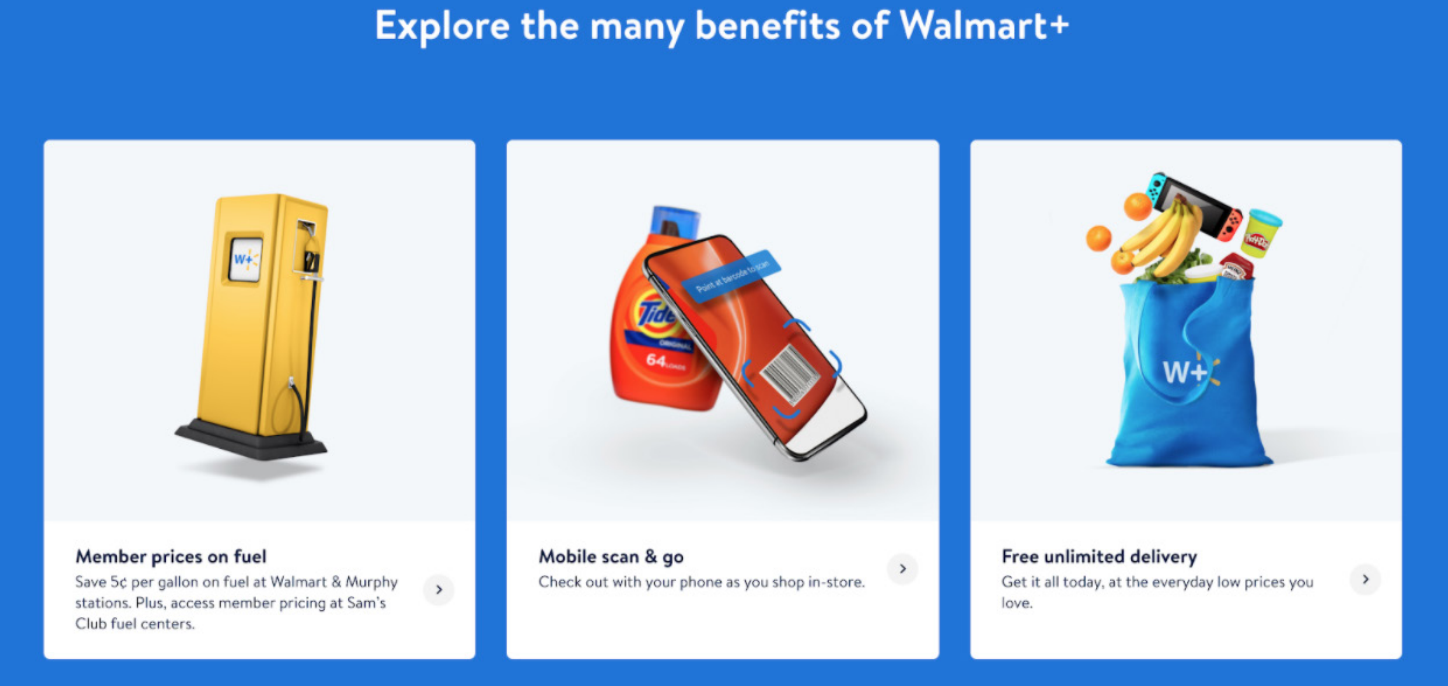
Walmart+ is a subscription service similar to Amazon Prime that offers shoppers unlimited free delivery on more than 160,000 items for a flat yearly or monthly fee. While Amazon Prime costs subscribers a $119 annual fee, Walmart+’s annual fee is $98. Shoppers pay the same for products on Walmart+ as they would in Walmart’s stores, and they get extra incentives including:
Scan & Go: This is an exclusive feature on the Walmart app that allows shoppers to scan their items as they shop and pay using Walmart Pay for a quick, touch-free experience.
Fuel discounts: Walmart+ members can save up to 5 cents a gallon at nearly 2,000 Walmart, Murphy USA, and Murphy Express fuel stations. They can also access member pricing at Sam’s Club fuel centers.
Same-day shipping
The secret weapons that will drive the success of Walmart’s new subscription service are the company’s 4,500 brick-and-mortar locations scattered throughout the U.S. that can almost instantly convert to distribution centers for shipping products. Walmart’s main eCommerce competitors, Amazon and eBay, lack similar infrastructure, making the Walmart company primed to become a powerhouse in this sector.
How Walmart is Good for Business?
Walmart continues to show they’re willing to evolve to stay competitive and meet customer needs. That’s not just good for their business. It’s really good for yours.
Walmart Marketplace is a lucrative channel for eCommerce brands trying to diversify their business, and its business model has a lot of benefits for sellers.
Increase Visibility & Growth
Something that immediately sets the Walmart seller experience apart from Amazon’s is that Walmart is more exclusive about the vendors it picks for its platform. This is in part because it’s still a developing channel. Brands aren’t getting lost in a slurry of third-party sellers and products on Walmart Marketplace, so it’s far easier for them to stand out and compete there.
In addition to the millions of shoppers they have the potential to reach through Walmart Marketplace each month, brands on Walmart are reaching a more dynamic demographic of shoppers: 57% of Amazon shoppers say they also shop on Walmart Marketplace.
Walmart Fulfillment Service (WFS)
Walmart Fulfillment Services is perhaps the biggest boon for brands on the site. Launched in February 2020, Walmart Fulfillment Services (WFS) is a program akin to Amazon’s FBA program where brands send their inventory to Walmart Distribution Centers and Walmart handles the packaging, shipping, and distribution.
WFS is a program created with sellers for sellers, and Walmart has done a good job of helping its WFS brands succeed. WFS gives sellers low, transparent pricing (often lower than FBA), personalized account management, inventory forecasting, increased site visibility, and the opportunity to scale profitability. Brands using WFS also get a tag on their listings telling customers their product is eligible for guaranteed 2-day shipping.
WFS has been growing its list of sellers over the last year, but it’s still not open for just anyone to sell on. Walmart is looking for specific requirements for those who can sell, but brands that fit the bill are seeing exciting growth. With Walmart’s 2-day shipping through WFS, we have seen a 50% lift in conversion. They’ve also gained Buy Box prominence.
Advertising
Walmart took its advertising in-house last year under the Walmart Media Group banner to bridge the gap between their offline and online data as they develop an ad platform to rival Amazon’s. This has made advertising on Walmart.com far less cost-prohibitive than it historically has been, and advertising, as a result, has been far more effective.
One brand that’s found particular success advertising on Walmart is Thorne, one of our brand partners. By employing advertising strategies to increase Thorne’s organic rank on Walmart, We were able to increase sales on Walmart by 67%. We see a large potential for growth in ad spend.
Better Customer Service
Walmart’s massive network of brick-and-mortar locations truly is the secret sauce, and where that’s especially apparent is in the customer service experience through WFS. WFS makes the shipping process incredibly quick and simple, and it offers perks customers can’t get on other platforms. While Walmart+ subscribers receive free 2-day shipping similar to Amazon Prime, Walmart Marketplace also offers a way to receive free 2-day shipping without a membership. Walmart Marketplace shoppers only have to spend $35 or more on their purchase to get the same service.
Walmart holds an unparalleled prevalence in the United States when it comes to distribution infrastructure. Amazon customers have to ship products back on their own or hunt down nearby Whole Foods or Kohl’s to drop off their return packages, but 90% of Americans live within 15 minutes of a Walmart store where they can make a return.
Getting your product on Walmart.com makes it more accessible to more customers, and through WFS, those customers can trust that their shipping experience will be convenient and quick.
Brand Control
Though Walmart Marketplace has different advantages than Amazon, it has similar problems. Walmart is just as susceptible to pesky unauthorized sellers who creep into eCommerce spaces to redistribute products behind brands’ backs. The sad truth of the matter is if you aren’t selling your products on Walmart, somebody else probably is, and they’re likely doing a less than fine job of it.
Unauthorized sellers can do a lot of harm to your brand by misrepresenting it with bad images, few images, misleading content, poorly written content, slow delivery, and pricing that undercuts MAP and harms your other distributors. The best way to prevent this behavior is to proactively sell in the spaces where it’s happening, and having a presence on Walmart Marketplace gives you one more level of brand control.
“Anywhere a buyer wants to engage with a brand’s product, we think the brand should be there to give a good representation and make sure it’s a good customer service experience, and we just see Walmart growing so quickly.”
Getting Started with Walmart
Walmart+’s trajectory shows us that brands who want to sell on Walmart need to be on the platform yesterday or they could miss out on big opportunities for growth.
“It’s better to get ahead of it versus trying to play catchup and cleanup,” said Hatch. “It’s a good opportunity for brands and own this channel and really own that customer service experience.”
Brands who are interested in becoming sellers on Walmart can submit an application on the Marketplace website to be considered for entry.
Conclusion:
Much of what makes a brand successful is its willingness to embrace and adapt to change. It’s how Walmart grew from a discount chain with a reputation to one of the most powerful eCommerce platforms in the world. And it’s how your brand can thrive, too.
The post Selling on Walmart – Why you Should and Where to Start? appeared first on Amazon-ASIN Blogs - Latest from Amazon Sellers: News, Advice, and Effective Strategies.
]]>The post The Meaning of Brexit for Amazon Sellers appeared first on Amazon-ASIN Blogs - Latest from Amazon Sellers: News, Advice, and Effective Strategies.
]]>Financial Implications of Brexit
Let us start with some good news: you do not need a separate account for selling goods in the UK and the EU. You can continue using your existing account without any problems. But there are many other smaller and bigger changes to selling online.
Some of the main impacts of Brexit on Amazon sellers are financial. These impacts concern not only taxes but also shipping costs as well as import and export processes. We’ll take a closer look at VAT (value-added tax) and customs before talking about other consequences for Amazon sellers in the area of competition and logistics later on.
VAT after Brexit – have you registered your business yet?
If you have not registered for the VAT already, this should become your top priority now. No matter if you are selling goods from the UK to the EU or vice versa, you need to be registered and receive a VAT number. This also applies if you store goods in the United Kingdom and sell those to customers in the European Union even if you are not based in the UK.
VAT is collected on imported goods and exported goods as well as on goods that are sold within the UK. If you sell to customers outside the UK, VAT can also be applicable and you may need to collect it from your customers.
The New VAT Customs Thresholds after Brexit
Since the UK now counts as a third country market for the EU, it is free to impose its own tariffs and rules regarding VAT and customs. The new thresholds have been implemented by the UK on January 1, 2021, but will only be applied by the EU starting July 1, 2021. Let us take a closer look at the new thresholds.
First, sales VAT is collected by Amazon regardless of an item’s value when it is stored and sold in the UK by a seller outside of the UK.
The second category encompasses items with a value of up to £15. VAT is collected at the point of sale which allows these items to pass through customs quickly. Goods with a value between £15 and £135 also have the VAT collected at the point of sale by the online marketplace they are being sold on.
The last category covers goods with a value of more than £135. In this case, import VAT is being collected at customs along with any other fees.
With all the new regulations on VAT, it can be a bit overwhelming. Fortunately, you are not on your own. We are familiar with all the pitfalls and details of VAT collection and are happy to recommend hellotax to help you with registration as well as VAT automation.
Customs – Everything You Need to Know about the New Processes
Now we will focus on the second big change. The introduction of customs has multiple consequences for you as an Amazon seller. Not only do the new processes delay delivery, but they are also reflected in higher shipping costs and additional fees, and handling charges.
This means that if you import goods to the UK to sell them there, you may have to pay import VAT as well as other fees, as mentioned above. But it also means that your customers outside of the UK might have to pay customs and handling charges by the shipping company or pick up their purchases at the customs office.
How to Properly Handle Custom Declarations
Unfortunately, you cannot avoid these additional costs, but you can do your best to ensure that the item can be effortlessly processed at customs and your customer will not be burdened with additional bureaucratic work. By making yourself familiar with the standards for declaring the contents of delivery as well as their value, the customs office can easily judge if the item is beyond a certain value threshold and calculate the correct fees.
Thus, not declaring items correctly can lead to customers being overcharged due to the value being estimated instead of based on what they actually paid for it. If you declare purchased goods as gifts, this may look very suspicious and cause similar problems to the recipient.
Transparency Is Key – Update Your Terms & Conditions
Right now is also a perfect opportunity to check if your Terms & Conditions on Amazon need to be updated. Additionally, your Terms & Conditions can be used to make customers aware of the circumstances. By pointing out the possibility of customs fees, your customers can prepare for that situation and will not be surprised by additional charges that were not visible on Amazon.
Competition & Logistics – It’s a New Playing Field!
All these changes also have implications for logistics and your competitive position. Concerning logistics, not only are shipping costs and delivery times to EU customers affected, but you might also want to reconsider your storage strategy to adapt to the new situation.
FBA Storage Limits – Two Separate Inventories
Previously, Amazon sellers had one storage limit that covered both the UK and EU inventory. From 2021 on, there will be two separate inventories with a storage limit each. This also means that it can make sense to divide your current inventory if you have stored your goods exclusively in the EU or UK up until now. To avoid customs, longer delivery times, or other complications, having separate storage in the UK for UK customers and one in the EU for EU customers is the best option.
Brexit’s Effect on Competition – Domestic & Abroad
The effects of Brexit and the ensuing changes on the competitive situation in your markets are two-fold. On the one hand, domestic sellers in the UK gain a competitive advantage over sellers outside of the UK because they can ship faster and cheaper and do not have to deal with customs for sales within the UK. On the other hand, selling internationally to customers in the EU is being made harder.
This means that some products will be less competitive when they can be delivered and sold cheaper by EU sellers. One strategy to mitigate these effects is the re-organization of your storage capacities as mentioned above. However, for some Amazon sellers, it might not be attractive or possible to stay competitive in certain countries.
Conclusion
While the full economic effects of Brexit will only be seen in a few years, staying informed and updated on the new regulations can save you a lot of worries. By making sure that you are properly registered, knowing when to collect VAT, how to store your goods, and how to make declarations for customs, you are well prepared for the new situation.
The post The Meaning of Brexit for Amazon Sellers appeared first on Amazon-ASIN Blogs - Latest from Amazon Sellers: News, Advice, and Effective Strategies.
]]>The post E-commerce Keyword Research: A Beginners Guide appeared first on Amazon-ASIN Blogs - Latest from Amazon Sellers: News, Advice, and Effective Strategies.
]]>Let us quickly examine some fascinating stats.
- 37.5 percent of traffic to e-commerce websites comes from search engines (SEMrush).
- 23.6 percent of e-commerce orders are directly connected to organic visitors (Company Insider).
Let us dip into the technical approaches in the modern guide.
Importance of Keyword Research
A keyword analysis is the foundation of every e-commerce SEO campaign. Because keyword research informs each other SEO-related activity, you do on your site. Without keywords, it’s not possible to optimize your website.
List of keywords influences your technical SEO too. That is because your site architecture and URLs will need to take keywords into consideration.
Since you can observe, keyword research is a VERY major deal for your eCommerce site.
And here’s exactly how to locate untapped keyword search terms that your customers search for… and also how to choose the best keywords for your website.
Best ways to find keywords for Product and Category Pages
Most keyword research tutorials give attention to “informational keywords”.
Informational keywords are type of search terms that people type into search engines to detect helpful “howto” content.
(Like “How to make coffee beans into powder”)
While informational keywords have their place within e-commerce, the vast majority of your website’s keywords will be customized around product searches.
(Like “Coffee Beans”)
Meaning you will need to tackle keyword search together with product-focused keyword phrases in mind.
Here’s precisely how to take action:
1. Amazon
Yes, Amazon might be your competitor. Nonetheless, it is also the most excellent e-commerce site on the web… helping to make it a items’s keyword gold mine.
Here is the Way to tap into Amazon for keyword study:
First, go over to Amazon and input a keyword that explains one’s merchandise.
Whenever you’re doing this, Amazon will list hints on this keyword.
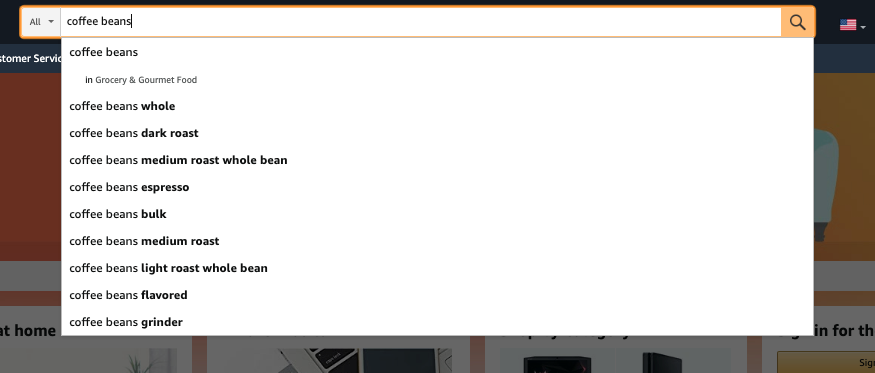
The keywords Amazon suggests are normally quite targeted (also referred to for so long-tail keywords ). Not just do long-tail keywords tend to convert a lot better compared to briefer terms. However, they are usually less competitive too.
Rinse and repeat your primary services and products on your website.
Pro Suggestion: Amazon will sometimes indicate categories over the keyword suggestions. All these create great search phrases to utilize for pages.
2. Wikipedia
Wikipedia is amongst the best regions to find keywords for the category and product pages.
That is why, Much like with category pages on your eCommerce competitor sites, Wikipedia organizes things by keywords and categories. Entirely only: they’ve done the work for you!
Let’s look at an example of ways to use Wikipedia for e-commerce research.
Firstly, Enter a keyword that describes a product or category your site sells:
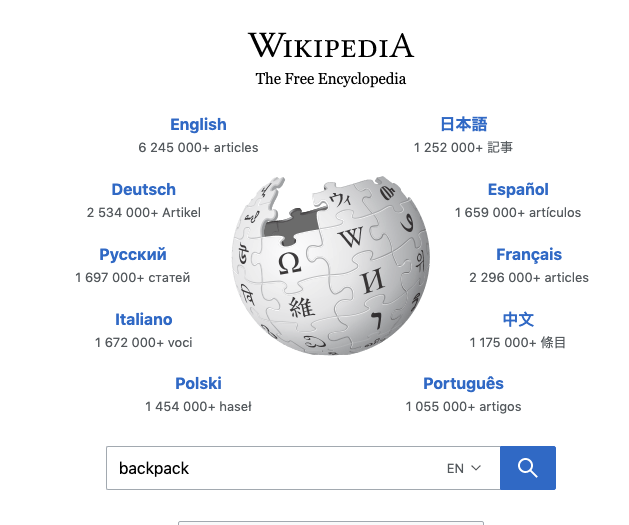
Then scan the Wikipedia entry to phrases and words that make feel for the products you have on your website:
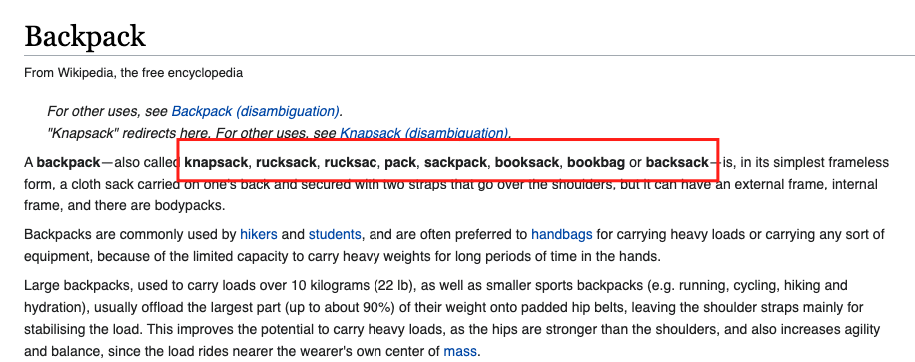
Make sure you have a look at the contents box. These will occasionally reveal excellent category page keywords.
When you’ve drained Wikipedia’s keyword suggestions, it’s time to proceed with one of my favorite tool: SellerApp keyword search tool.
3. SellerApp
SellerApp keyword research provides details about the high search volume of keywords and the purchasing intent of Amazon users. It helps topping up this game, by using the right keywords, you can be at the top organic ranks and get the best positions for your ads.
To use it, Type in the main keyword that describes your product
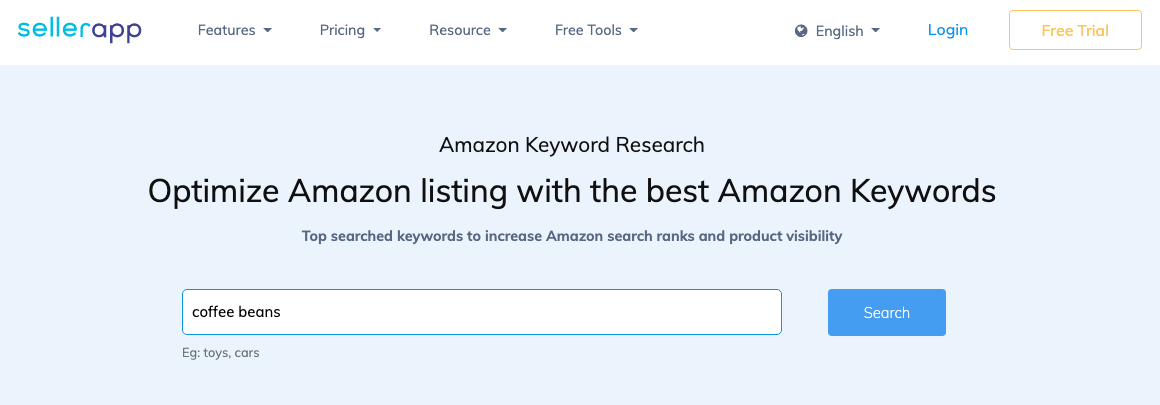
Click on the Search button to get best keywords list for your product, And it will spit out dozens of keyword suggestions.
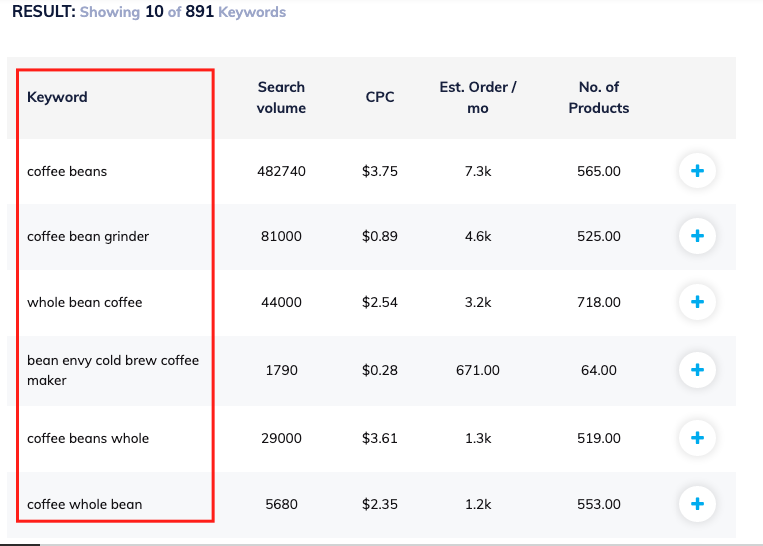
Yup, this tool makes finding longtail keywords from Amazon Suggest significantly faster. However, in my own experience, it gives you more keyword ideas too.
4. Google Keyword Planner
Lastly, we have the excellent Google Keyword Planner.
Even though the GKP can be a halfway good KeywordTool, it’s not very good to generate unique keyword notions.
For Instance, if you enter a category webpage keyword such as “organic pet food” into the GKP, it spits out super-close variations of this term:
That said, if you are doing some digging, you can get some stone which aren’t straight-up variations of this keyword you typed in.
Because the Google Keyword Planner will not generate a Whole Lot of unique keywords, I suggest using it to assess search quantity.
How to choose the best keywords for your eCommerce website?
Since You have a list of Possible keywords In Hand, you Are probably wondering.
Which keywords should you choose?
The clear solution? Make use of this 3-step checklist to recognize the very best keywords for your e-commerce website.
1. Search Volume
All Things Considered, If no one looks for this keyword, it doesn’t matter how hard it converts or the Way competitive Google’s first page happens to be.
There isn’t any way for me personally to give you special search volume tips. In a few industries, 100 searches monthly is A LOT. In others, 10k monthly searches are nothing.
You’ll get an idea of just what a “high volume” and “low volume” keyword is to get the industry through the years.
To locate the search volume for a given keyword, pop it into the GKP. You’ll discover the range of searches in the “Avg. monthly searches” column.
Pro Suggestion: Some keywords have HUGE seasonal variations. You are going to get more searches for “ugly Christmas sweaters” in December than in June. But there are plenty of non-seasonal search phrases which have peaks and valleys all over the world. For example, the keyword “organic pet food brands” has 4x more searches in April than December.
2. Filter keywords related to your product
This is a major one. Let us say you get a keyword that gets tons of searches. Must it be a winner, right?
Well…not really.
That is because the keyword may not be a great fit well in what your site sells.
If the keyword you pick is even a small bit of a stretch in contrast to what you have on the market in your e-commerce site, people that hunt for this term are not going to convert.
Before you move onto the following two stages in this technique, double-check that the keyword you’re considering fits your website, such as a glove.
3. Competition
In the end, it is the right time to understand how hard it’ll be to crack Google’s SERP page.
Here is how:
You’re able to get a keyword’s difficulty score in the SellerApp keyword planner by simply entering a keyword into the search field…
This metric provides you with a good idea of how competitive a keyword is to rank for.
Additional Read:
Amazon SEO: A Complete Guide for Ranking your Listings
The post E-commerce Keyword Research: A Beginners Guide appeared first on Amazon-ASIN Blogs - Latest from Amazon Sellers: News, Advice, and Effective Strategies.
]]>