The post Why Is My Amazon Listing Suppressed and How Do I Fix It? appeared first on Amazon-ASIN Blogs - Latest from Amazon Sellers: News, Advice, and Effective Strategies.
]]>There are many valid reasons why an Amazon listing would be suppressed, but there is only one most common reason for it: violation of policies of Amazon. Some of the most key ones are listed as follows:
- The product listing contains incorrect or misleading information.
- The product sold belongs to those items which are already defined as the restricted items in Amazon.
- Some of the critical information related to product descriptions or customer reviews is not available.
- The listing images fail to meet Amazon’s image guidelines.
- There are numerous customer complaints along with a history of suspensions due to policy violations.
- Another area is that Amazon may also demote a listing for improving the overall shopping experience, particularly if the listing causes confusion or doesn’t match the relevant search queries.
What Does it Mean When an Amazon Listing is Suppressed?
An Amazon-suppressed listing is one that shoppers cannot see-it is completely hidden from search results and completely inaccessible to the public. Amazon suppresses listings it deems do not meet its standards or to otherwise violate its policies. That is to say, listings for best-selling products may be suppressed for whatever reason Amazon has ruled as a reason for doing so.
Suppression is not the same thing as removal, however. Suppressed listings can be reinstated when the problem is fixed. You may have to update the product page or even, in some cases, recreate a listing from scratch.
To determine if some of your listings are suppressed, go to Seller Central, then to the Inventory tab, and click on Manage Inventory. If you have something at the top that says like “Suppressed Listings”, click on that and it will show you which products are flagged. If you do not see this option, you’re good to go!
The Impact of a Suppressed Amazon Listing on Sellers
An Amazon suppression of a listing puts an item out of view in search results due to, among other reasons, selling at very high prices, poor-quality customer reviews, or the wrong product details. Although it might not initially seem so serious, a suppressed listing in Amazon could have a tremendous effect on a seller’s business.
Among other things, suppressed listings hide the item from actual buyers and send sales numbers plummeting.
In addition, suppressed buy box prices usually tend to reduce sales, and also the loss in earnings will be affected.
Lastly, suppressed listings normally tend to damage a seller’s reputation and reduce the overall search visibility. Further, it will affect their IPI score as well, and therefore maintaining a profitable Amazon storefront will be much more challenging.
How can I fix suppressed listings?
Fortunately, suppressed Amazon listing suppression can be easily identified, and solves with a few easy steps. Though, this requires the checking of listings to ensure that everything is up to date and running well.
So here are 5 steps to solve a suppressed Amazon listing:
- Go to ‘Manage Inventory‘ under the Inventory tab in Seller Central.
- If you do have some suppressed listings then you will see a ‘Suppressed’ button appearing. If you don’t see any suppressed listings, then congratulations-things must be going great!
- If the ‘Suppressed’ button is active, click the button and select the listings that you’d like to correct
- Read through and correct any missing information or hit the ‘Manage Images’ button to add missing product images. Every listing comes with an Amazon Product Summary page which usually indicates suppression and quality issues.
- Once corrected, click the ‘Save and Finish’ option to complete the whole process.
How to Prevent Amazon Listing Suppression
The best way to prevent Amazon listing suppression is by closely following all of Amazon’s rules. If you’re finding it difficult to stay on top of what’s permitted, you can use Seller Central to manage product compliance and keep track of any missing documentation. Additionally, the Amazon Listing Quality Dashboard is a valuable tool, as it identifies listings at risk of suppression and provides details on what needs to be updated before issues arise.
What Should I Do if My Listing is Incorrectly Flagged?
At other times, even when you are certain that your listing is within the acceptable standards of Amazon, it will get suppressed because of an unintended prohibited claim. Prohibited claim guidelines maintained by Amazon include the measures that ensure shoppers receive the most honest and accurate information; however, the Amazon algorithm sometimes incorrectly flags certain claims or keywords. Depending on the nature of the problem, there are two basic methods through which suppressed listings that have been flagged incorrectly can be made to alert sellers. These include Stranded Inventory and Performance Notifications.
Stranded Inventory
When a listing is classified as Stranded Inventory, Amazon will delete the ASIN. It can be found on the ‘Manage Inventory’ page as ‘Stranded Inventory’. On the Stranded Inventory page, Amazon will provide a stranded reason, such as a missing characteristic or a wrongly labeled prohibited claim. Sellers can then either dispute or correct the problem.
Often enough, the problem can simply be corrected by editing the copy on the listing. Deleting words such as ‘bugs’, ‘pests’, ‘mildew’, ‘mold’ and ‘insects’ in, for example a pesticide claim usually deletes the ASIN from Stranded Inventory.
Performance Notifications
Performance Notifications are an alert sent to sellers with a specific ASIN flagged for a performance issue. The product detail page could be removed entirely from Amazon, or the seller could just experience an error that must be corrected in order to continue selling. In order to clear Performance Notifications, sellers must provide a Plan of Action consisting of three parts: Root Cause, Corrective Actions, and Preventative Actions.
Sellers can head over to their Voice of the Customer dashboard in Seller Central to see if this ASIN has been flagged and find any recent customer comments concerning this particular performance issue Amazon raised. Upon submission of a proper POA, the performance notification should be removed.
Conclusion
There can also be suppressed listings on Amazon, citing reasons like a violation of the Amazon policy or insufficient critical information; the issues may also be with the product image. Although suppressed listings affect the viewability and sale greatly, it is not completely eliminated from the store as correcting the cause that leads to the suppression might help bring it to life again. With the help of Seller Central tools including Manage Inventory and Amazon Listing Quality Dashboard, sellers are able to identify errors and correct them early. Ongoing monitoring and adherence to policies set by Amazon may help prevent future depressions as well as further the continued success of your business.
The post Why Is My Amazon Listing Suppressed and How Do I Fix It? appeared first on Amazon-ASIN Blogs - Latest from Amazon Sellers: News, Advice, and Effective Strategies.
]]>The post How to do Marketing on Amazon – Ultimate Guide appeared first on Amazon-ASIN Blogs - Latest from Amazon Sellers: News, Advice, and Effective Strategies.
]]>But the brands who want to win the sale (and actually do) proactively seek new ways to:
- Optimize their listings
- Elevate their product
- Cater to shifting consumer behavior
- Deliver better customer experiences
- Expand their brand reputation
Understanding Your Amazon Audience
2021 Amazon consumers:
- Are more technical and feature-focused
- Consider price, ratings, and reviews top factors in their purchase decision
- Are not as brand-loyal as they would be on other channels
- Expect their questions, issues, and hesitations about products to be addressed as fast as possible
- Are looking to make decisions quickly and easily
- Assume that the product they see online will be the exact product they will receive in the mail
Because Amazon shoppers are motivated in a different way than traditional consumers, brands can’t rely on the same marketing strategy to attract both audiences. To the millions of Amazon consumers, Amazon is a trusted, convenient, and compelling place to shop—but it’s up to you to employ the right strategies catering specifically to their needs in order to stand out and win their sale on the marketplace. Which leads us to the very reason why you’re reading this playbook in the first place…
” Over 60% of all online shoppers begin their search on Amazon “
“215+ M shoppers log on to Amazon every month in the U.S.”
This guide breaks down five key sections highlighting the most crucial marketing and advertising strategies sellers need to leverage in order to attract and convert Amazon customers. It’s important to note while each of these strategies can individually increase your conversion rate and sales, they are most successful when executed simultaneously.
Here are the 5 main ways brands can improve their success on Amazon:
- Optimize your copy for Amazon SEO
- Quality Product Photography and Video
- Take Advantage of A+ Content (EBC)
- Create a Compelling Amazon Storefront
- Maximize Paid advertising on Amazon
STEP 1 : Optimize Your Copy for Amazon SEO
One of the most impactful changes a brand can make to drive more conversions is by optimizing your product listings with SEO-rich keywords.
Amazon’s search algorithm looks at the following to determine where a product lands in its search results:
- Keyword indexation
- Seller ranking
- Product reviews
- Price
When it comes to writing copy for product pages, an optimal listing combines valuable indexed keywords and the vital information the shopper needs to make a purchase.
But, writing and creating successful copy for product pages hinges on whether or not a brand knows and understands its consumers on the Amazon platform. Because Amazon shoppers are so feature-focused and hyper-aware of the technical specs of products, they’re going to be searching for more specific keywords. Adding these search terms into every facet of page copy (outlined on the next page) will help ranking and close rate.
“Up to 30% conversion rate increase from Optimized titles and bullet points”
Key Amazon Content Optimization Strategies
PRODUCT TITLE
Should include the brand name, product name, and top keywords
Product titles should target specific keywords that have a better chance at ranking well. For example, let’s say a brand is selling multi-vitamins on Amazon.While including ‘multi-vitamin’ in a listing is tempting, the marketplace is saturated with vitamin companies and it’s hard to rank for a keyword that is so generic and widespread. Instead, the brand should target specific search terms that the Amazon shopper is using that relate to their product. Brands can use multiple third-party tools to identify which keywords are trending and then include these in their product copy. In the case of a multi-vitamin brand, ‘multi-vitamins for women’ or ‘multi-vitamin gummies’ are more specific and will be easier to rank for.
BULLET POINTS + PRODUCT DESCRIPTION
Highlight the features of the product while focusing on the brand and its message
The bullet points and product description section of a listing should highlight what the product does and how it can solve the shopper’s problem. Consider these when writing:
- What problem the product is helping to solve
- The value it is providing
- What makes this product better than a competitive product
- What’s included—and what’s not included—in the package
Best practice is to have the product description focus more on the brand and the company selling (or manufacturing) the product than on the product itself. Because the product description is often further down on a page, it doesn’t attract as many viewers as the bullet points, which are located right next to the photography section. Additionally, any A+ Content effectively overwrites any product description, so it isn’t really as critical.
VARIATIONS
Showcase the different sizes, colors, or shapes of a product on a single page
If you have two products that are exactly the same but come in two different colors, you can put them on the same product page with a variation. These variations show consumers how they can customize the product or even upsell to a better model. In addition to grouping product listings for easy viewing, variations also combine ratings and reviews which is proven to increase the product’s organic search rank and close rate.
SEARCH ATTRIBUTES
Understand keyword indexing and how to get your products seen
If your listing is indexed for a keyword, that means it will show as a result when a customer uses that search term in the Amazon search bar. Simply put, increasing the number of keywords you are indexed for increases the ways in which your customers find your products on the marketplace. If your product is not indexed with the right keywords, then buyers will find a competitor’s products or will not find any products related to their search.
On Amazon, brands have a limited number of characters or opportunities for keyword indexing, so focus on keywords that are highly relevant and have search volume. Also, keyword research and indexing is not a set-it-and-forget-it process. Trends and consumer needs continuously evolve, so brands need to regularly check and update their keywords for relevancy and conversion.
Conclusion:
When it comes to creating the perfect product description and keyword-optimized copy for product listings on Amazon, the words you include on the page do more than just sell your product to potential customers. You’re also giving consumers another way to engage with and, ultimately, judge your brand. Many consumers go to Amazon as a first step before they make a buying purchase, and oftentimes they’re simply looking at the reviews on the page. The way a product and a brand are represented on every single product page can help influence whether or not a shopper converts. This means that there must be cohesive branding, high-quality content, and meticulously maintained brand responses on every single listing
Step 2: Take Advantage of A+ Content
A+ Content gives brands the space to take their listings to the next level—but the content must be thoughtfully crafted to win over customers.
One of the most underused yet most effective elements of an Amazon listing is A+ Content. Located further down on the product listing page, A+ Content is a valuable retail space that enables brands to expand upon product details while giving them control over their visual identity, leading to consistent branding across channels and legitimizing the product within Amazon.
This visual content is an excellent opportunity for brands to share their unique story, highlight key features, expand on product specifications, and display a consistent brand identity. However, not all A+ Content is created equal. Many sellers across Amazon use the generic modules that result in a 5% average increase in conversion rate when applied. But developing strategic A+ Content with a thoughtful approach to design and storytelling (we’ll share how to do that next) has proven to increase conversion rate by up to 25%.
Up To 25% conversion rate increase from the addition of A+ Content
Key A+ Content Research Strategies
The most important part of implementing an A+ Content strategy that sells? Research. Your enhanced content won’t resonate with consumers unless it’s developed or optimized specifically with their needs in mind. Some considerations during your research sessions should include:
CURRENT CONTENT
If content already exists, what brand assets can you work into your design to appeal to the Amazon shopper? Share your company’s history, your unique story, and mention accreditations, awards, or health and safety considerations pertaining to your products. Then, after publishing, pull out your phone and make sure your A+ Content is consistent across desktop and mobile.
COMPETITORS & OTHER MARKETPLACES
Every product on Amazon is in competition with dozens of other products. And because of Recommended Products that appear on the listing, it’s more crucial than ever that you make your product stand out. Inevitably, most consumers will navigate away from your listing to explore the other options on the market. The best strategy to ensure customers don’t leave your listing in the middle of their decision-making process is to show the Amazon shopper the key differentiators of your product.
CUSTOMER REVIEWS
Research the feedback and questions your customers have so you can address them up front. If there are recurring issues or questions in the product reviews, proactively address these in your A+ Content to deliver a better customer experience.
For example, a brand selling health supplements should address where their ingredients come from, any certifications that add credibility, and information on how or why their products work. A brand selling a power tool should address manufacturing processes, materials that make it high-quality and long-lasting, or call out features that make it safer to use.
BRAND VOICE
A+ Content blocks are the best place for your unique brand voice to shine through and to create a consistent brand experience for your customers. Utilize your brand’s typography, logo, colors, and photography to reinforce your branding and stand out. A+ is the perfect avenue to establish credibility and industry reputation with an audience that may or may not have heard of your brand before.
Step 3 : Maximize Paid Advertising on Amazon
Amazon ads are a powerful way to drive purchases, increase consideration of your product, and reach customers at every stage of their journey.
Amazon Advertising lets sellers drive traffic to their listings and increase sales—it is currently Amazon’s fastest growing sector and is expected to seriously compete with Google and Facebook in the next few years. Any brand not currently utilizing Amazon’s advertising offerings, particularly Amazon Sponsored Ads, is playing catch-up.
Amazon marketers must be able to handle variables specific to Amazon, such as the Buy Box, the competitiveness of a particular category on Amazon, and detail page placements versus search placements. A successful Amazon advertising strategy is built on both product and channel expertise, and continuously optimized for peak performance.
Up to 50% boost in sales from optimized advertising
Breaking Down the Different Types of Amazon Sponsored Ads
AMAZON SPONSORED PRODUCT ads are Amazon’s most popular advertising offering. Advertisers bid for placements in search results or on detail pages under the “Sponsored Products Related to this Item” heading based on a set of predefined keywords. These placements can be triggered by search term bids or bids on competitive ASINs. Sellers strategically place these ads in areas on Amazon to help catch the shopper’s eye over organic product listings.
AMAZON SPONSORED BRAND ads appear in the headlines of search results or on product pages and are triggered by keyword searches only. They help build brand awareness by showcasing your entire brand on Amazon, not just a single product. This is a great way to bring awareness to your company and entire product line instead of just a single offering. Brands must be enrolled in Amazon Brand Registry to take advantage of Sponsored Brands.
Brands can now also use Sponsored Brands Video to stand apart from the competition. These ads will play automatically when 50% of it is on screen and link directly to the product detail page where they can learn more and purchase
AMAZON SPONSORED DISPLAY ads allow sellers to engage relevant audiences who are in the mindset of browsing, discovering, or purchasing products by placing their ad in front of those who have previously been on that listing, or a similar product listing. This ad type allows you to reach and retarget relevant audiences with your product or a similar product both on and off Amazon. Brands must be enrolled in Amazon Brand Registry to take advantage of Sponsored Display.
How to Maximize Advertising Performance?
USE MULTIPLE KEYWORD MATCH TYPES AND TARGETING TYPES
In order to have a strong advertising mix on Amazon, you’ll need to strengthen your advertising campaigns with multiple keyword match types while using a mix of broad, phrase, exact, and negative keywords. And when targeting these keywords, be sure to attack and bid for these terms in a variety of ways.
The different types of keyword targeting on Amazon are:
- Close-match
- Loose-match
- Substitutes
- Complements
Additionally, it’s important for sellers to set up campaigns that isolate search terms. A search term is isolated when it only shows up in one keyword. Ideally, that search term is also the only search term that keyword is bidding on.
TEST NEW KEYWORDS AND AD TYPES
Amazon sellers should always be testing new keywords and targets, and have a plan in place to test any new or existing features you aren’t taking advantage of. Every product and brand is different in terms of finding the right advertising mix—brands should understand their position relative to competitive items to craft the ideal paid strategy on Amazon. Identifying similar products with poor reviews, a high price point, or low-quality content and photography can lead to massive gains.
MONITOR BUDGET AND BIDS
All brands typically have an awareness, volume, or efficiency goal when advertising, and many have some mix of each. Understanding your goals helps inform decision-making. For example, if your goal is awareness, you may consider bidding highly on Sponsored Products broad match terms and utilizing Sponsored Brands. If your goal is efficiency, it’s likely you’ll be using more exact match terms and regularly adjusting bids based on performance.
Step 4: Create a Compelling Amazon Storefront
Storefronts operate as a mini-website for brands on the Amazon platform, creating a cohesive brand experience that converts and keeps customers loyal.
Available to brand-registered sellers, Storefronts allow brands to showcase all of their products in a single location, highlight top content, photography, and graphics, and customize with personalized branding and logos. With an optimized Storefront, you can capture the attention of shoppers and use it as a landing page for advertisements to organize and showcase your full product assortment.
Amazon Storefronts are also helpful for sellers who want to better understand shoppers’ buying patterns. Amazon created Store Insights—a tool that shows brands the exact amount of traffic and sales their Amazon Storefront receives. This feature helps brands see what customers are thinking, adapt their marketing strategy, and then execute changes that lead to more shopper conversions.
If you’re not sure if you have an Amazon Storefront, or you’re hoping to check out a competitor’s, the easiest way to find it is by clicking on the brand name located under the title on the product detail page. If the brand has an Amazon Storefront, it will show the custom designed Storefront for that brand’s products
5 Steps Sellers Should Take to Set Up Their Amazon Store
GATHER YOUR BRANDING ASSETS
Like all product listings or brand assets on Amazon, your Storefront is an extension of your brand. It should look and feel like any other branding asset your company manages, including your own website or physical store. With your brand assets in one place, your team can better represent your message and value in the marketplace and create a single, streamlined identity across multiple channels.
CREATE A STOREFRONT STRATEGY
Before you get too far into the process of creating an Amazon Storefront, it’s important to have a purpose in place for why you’re taking this step. A Storefront can be used to educate consumers on your different products, add more details and specific use cases for individual products, or simply to increase conversions by creating a larger brand presence on Amazon. Having in place will help your team be able to build the Storefront and place specific products in the optimal locations.
DEVELOP CREATIVE AND IMAGES
Now comes the fun part. Creating your Storefront means organizing all of your creative assets, product listings, custom graphics and images, and even embedded videos and banners to reinforce your brand presence. The Storefront’s visual design must effectively communicate the relevant content—and the desired action—to consumers while accurately representing the brand’s visual identity and message.
INVITE FEEDBACK AND EDITS
Once your team has a Storefront design in place, it’s time to get feedback. Because Amazon is such a strong retail channel for so many brands, there should be adequate feedback on this investment. Your sales, marketing, operations, and even finance team should take a look at your Storefront to ensure it is conveying the right message and is set up for success.
PUBLISH AND REFINE
Publish your Storefront and start promoting to customers via paid ads and other channels. Be sure to track Store Insights, adapt, and make changes to your Storefront as necessary based on customer interactions, emerging trends, and the evolution of your brand over time.
Step 5 : Leverage a Mix of Quality Product Photography and Video
As the saying goes, a picture is worth a thousand words, and pictures on Amazon can be the tipping point that influences a purchase.
Around 70% of consumers will choose a specific listing based on the photograph alone. That being said, Amazon is quite strict with their visual guidelines, and there are set standards in place that brands must follow in order to be approved for listing. While the guidelines are more technical in scope (white backgrounds, different angles, high-quality photographs, etc.), following Amazon guidelines alone won’t lead to a successful Amazon strategy.
Product photography and now video have become increasingly important for brands selling on Amazon. Because Amazon shoppers are less brand loyal than those who shop directly from a brand’s website, product photos and videos can serve as a way to add in differentiating elements, highlight functionality, and reinforce product value.
70% of consumers choose a listing based on photography alone
Types of Product photography on Amazon
WHITE BACKGROUND PHOTOGRAPHY
This is the most common type of photography on Amazon. White background product photography is exactly what it sounds like—pictures of a product on a plain white background. White background photos help to accurately represent your product, minimize shadows and distractions, and meet Amazon’s strict photography guidelines.
LIFESTYLE PHOTOGRAPHY
Images of products in a styled scene or in use, that are usually shot outside of a studio, are called lifestyle images. These help customers see a product in context, visualize themselves or a loved one actually interacting with it, and allow them to determine scale and functionality.
GRAPHIC PHOTOGRAPHY
Graphic photos are becoming increasingly common on the marketplace. These are images in a progression accompanied by visual callouts, copy, and other design elements placed on the image to enhance the customer’s browsing experience and understanding of the product. Graphic overlays on product or lifestyle photos can help reinforce or showcase the product’s benefits, features, and instructions, which has shown to improve conversion rate over standard white background photography.
ANIMATED PRODUCT VIDEO
According to Amazon video shopping experience data, shoppers who watch videos on Amazon are 3.6x more likely to purchase the products featured in the video than shoppers who do not. If able, it is worth the time and energy for brands to create a 30-60 second animated video that shows off the utility and value of their products.
Photography To-Do List
As you’re working through your Amazon marketing strategy, taking high-quality product photographs should be at the top of your to-do list. Here is a quick rundown of the Amazon product photography process to get you started:
- Run an audit of current product photography samples. What images do you currently have access to?
- Research competitors on Amazon and other vendors in the space. How can you differentiate yourself from
- other products?
- Analyze customer reviews and feedback. Are there any issues that are called out specifically that could be clarified with optimized photographs?
- Identify your shot progression. Plot out 6-7 images and the angles and features that will be captured throughout the series
- Shoot the images. Always take more than necessary in case there are issues or a change in strategy.
- Retouch the images. Work in a photo editor to remove any imperfections and distortions to ensure the product
- is displayed correctly and adheres to Amazon guidelines.
- Upload the images. Add the images to the product listings and, if issues arise, create Amazon cases if necessary.
Final Thoughts :
Planning, executing, implementing, and optimizing a successful Amazon strategy takes more than a few hours a week.
The post How to do Marketing on Amazon – Ultimate Guide appeared first on Amazon-ASIN Blogs - Latest from Amazon Sellers: News, Advice, and Effective Strategies.
]]>The post 4 Risky Amazon Black Hat SEO Techniques to Avoid appeared first on Amazon-ASIN Blogs - Latest from Amazon Sellers: News, Advice, and Effective Strategies.
]]>Amazon has made it very clear that sellers who use these tactics will not benefit from them as they have complex methods of tracking these artificial rank boosters.
Amazon A9 Algorithm
A9 is how Amazon refers to its search engine algorithm, or its proprietary system that ranks products in a specific order when a consumer enters a word or phrase into the search bar. Did you know that 63% of consumers start their online searches on Amazon?
With that it mind, it is imperative that an A9- specific SEO strategy is developed with a solid understanding of how Amazon’s proprietary search engine works. Unlike Google SEO, A9 is a closely-guarded secret that very few have insider knowledge about.
Due to the limited details shared about A9, it’s difficult to identify what we will call “influential factors”—things similar to what we mentioned above with Google such as keywords and backlinks. This is what makes Amazon SEO challenging.
Unlike Google SEO, A9 doesn’t make their optimization algorithm public, so SEO usually comes down to guesswork. However, based on our tests and knowledge of the Amazon Flywheel, we think we have it figured out. A9 may be difficult to master, but it’s not impossible. Let’s first discuss how Amazon ranks differently than Google.
Amazon’s ranking system doesn’t follow the same rules as most other search engine platforms because it is trying to accomplish a different goal. The best way to understand this is to focus on the conversion funnel, or the path that a consumer takes when making a purchase.
When a consumer goes to Google and searches for something, they are typically at the top of the conversion funnel, “awareness” or “interest.” They are searching for more information about a topic or product. When a consumer searches for something on Amazon, they are specifically searching for products that meet a need. This places users of Amazon lower in the funnel at “desire” or “action.”
Amazon has to account for their user’s unique needs. A9 enables Amazon to realize their user’s full shopping potential during this “desire” and “action” phase of the conversion funnel. To boil this down for simplicity; Google is primarily focused on information while Amazon is focused on conversion.
Amazon Vs Google
Hopefully it is now clear what makes Google and Amazon different and why they both demand a unique SEO strategy. As a quick recap, Google is most widely used for gathering product and brand information, whereas Amazon is where the consumer actually makes a purchase.
Although Google and Amazon share some ranking similarities, their different goals should lead you to develop unique SEO strategies. In order to create a successful Amazon SEO strategy, you must understand Amazon’s fundamental goal, “to be earth’s most customer-centric company; to build a place where people can come to find and discover anything they might want to buy online.”
Amazon’s Fundamental Goal
To be earth’s most customer-centric company; to build a place where people can come to find and discover anything they might want to buy online
Amazon Black Hat SEO Practices Every Amazon Seller Should Avoid
Below are a few of the most common Amazon Black Hat Techniques:
1. Keyword Stuffing
As previously mentioned, there was a time when you could positively influence your page rank by increasing the saturation of keywords in your content. This is no longer the case. Amazon advises sellers to avoid entering redundant information in the keywords fields, suggesting this won’t impact your placement in search results.
You can, however, include words in your product description that are included the product title, as this can still benefit customers when making a purchase decision.Putting Amazon’s style guidelines aside, let’s think about the consumer experience when a product detail page is stuffed with keywords.
Looking at an example of a generic phone charger (above). Would you purchase this product? While it may improve the relationship strength for a variety of search terms in the eyes of A9, the title looks messy and is very difficult for consumers to read. Content that is difficult for consumers to read will negatively impact your listing’s performance. In fact, 98 percent of shoppers are dissuaded from completing a purchase because of incomplete or incorrect content.
This proves how important it is to consider the consumer experience when optimizing your product detail pages. As such, we highly recommend the human-appeal of your listings be carefully considered.
2. Click Farms
You’ve probably heard of click farms. If so, you’re not the only one. Major websites are also aware of their existence and work diligently to reduce their influence. If you’re unfamiliar with the term, click farming is the practice of artificially inflating the number of clicks a link receives.
On Amazon, this can be applied in a few different scenarios such as wasting competitor’s advertising spend or driving artificial traffic to a listing. When artificial traffic is associated with a specific keyword or search term using a Super URL, it can drastically improve the listing’s click-through rate. Why does this work? As previously mentioned, the click-through rate is likely a factor that Amazon analyzes when determining how related each product is to the user’s search term.
By artificially increasing the number of clicks your product receives, you can potentially trick A9 into thinking your product is more related to the specified keyword or search term than it actually is. Here’s where it gets interesting. When this practice was first exposed by David Gaughran, it received a lot of attention. As such, Amazon developed systems for evaluating the quality of traffic to each listing, the conversion rate being one of the more profound.
This is why click farms simply aren’t worth the risk. While they may artificially improve your listing’s page rank in the short-term, the increased traffic without corresponding purchases will ultimately damage your listing’s conversion rate. The net result is simply not worth the risk of falling into the crosshairs of Amazon’s Seller Performance Team.
3. Super URLS
Super URLs are generated links that can be used on external websites to drive traffic to a specific Amazon product based on a keyword. Sounds like a pretty good gig, doesn’t it? Not exactly. Amazon has complex systems that allow them to track how and where individuals (or bots) arrive on their website. Looking at this URL for the Coleman Sundome 4-Person Tent that we found by typing in “tent,” you will notice two very unique identifiers, an “sr” code and “qid” number as shown above.
These two unique identifiers within the URL allow Amazon to track external traffic arriving at any given listing. The “qid” represents the number of seconds since January 1, 1970 and the “sr=” shows the page number and page position number at the time of the search.
This means that Amazon is tracking page position and time for every super URL created and it is rumored that product purchases and reviews left from consumers using these Super URLs are being removed as legitimate conversions in Amazon’s conversion statistics. Gaming the system by driving unnatural traffic to a product detail page through these Super URLs will likely not help your product or page rank, not to mention that you could get on Amazon’s radar. As such, we don’t recommend using Super URLs as a part of your SEO strategy.
4. Fake Reviews
Customers rely heavily on product reviews when they make online purchases. In fact, roughly 84 percent of people trust reviews like they trust their friends’ opinions. That being said, manipulating reviews can be very misleading for customers during the purchasing process.
Amazon is aware of this issue and has been the target of intense criticism for the validity of reviews on its website. Prior to all the publicity around review authenticity, sellers could easily inflate their product reviews by providing product for free, or at a steep discount, in exchange for a review. Amazon is now aggressively cracking down on sellers who attempt to manipulate product reviews in any way.
Recently, there have been reports of hundreds of thousands of product reviews being removed from Amazon after being identified as inauthentic or influenced. You will also notice a “Verified Purchase” tag on most reviews. This is another form of letting customers know the review is authentic.
There are also a host of websites that can be used to detect fake reviews—our personal favorites are fakespot.com/ and reviewmeta.com/.
These sites provide users with an estimate of how authentic a product’s reviews are. While they are only estimates based on data that’s publicly available, they provide a great reference for sellers and consumers alike.
Watch this video to learn about the importance of verified reviews, and how verified reviews help the seller to grow their business on Amazon.
The post 4 Risky Amazon Black Hat SEO Techniques to Avoid appeared first on Amazon-ASIN Blogs - Latest from Amazon Sellers: News, Advice, and Effective Strategies.
]]>The post Create High-Converting Product Listings on Amazon appeared first on Amazon-ASIN Blogs - Latest from Amazon Sellers: News, Advice, and Effective Strategies.
]]>When you look at a few of the best Amazon listing examples and its sales figures, you will realize why listing optimization is important. A well-optimized listing helps improve your product’s visibility, boost your product sales, and increase your business.
Table of Contents:
What is Amazon SEO?
Amazon SEO is the process of optimizing your product listing to rank higher on SERP results for desired targeted keywords.
If you are an Amazon seller, then the ranks on the Amazon search results page are the most crucial success factors for your enterprise.
“The Higher the Position, the More You’ll Sell!“
66% of online buyers hunt for their merchandise by going straight to the Amazon site without Google. Therefore, brands have to be observable in the organic results of the platform to allow Web users to buy their products, and if your products are not rank well, you’re missing out on sales possible!
How Amazon Ranking Algorithm Works?
A9 Algorithm is the platform which Amazon utilizes to choose how products are ranked in SERP. It’s similar to Google search algorithm. But they are some key differences.
A9 is Amazon product algorithm that is made up of direct and indirect facets used to complement users’ search questions to services and products they have been most likely to purchase.
The majority of the components that rely on SEO are on the item page. It’s thus essential to understand what it involves before seeing its details.
The A9 algorithm, consequently, takes the following components into account on the Item page:
- Title
- Bullet-Points
- Description
- Product Pictures
- Keywords
Check this video to get detailed understanding about how amazon algorithm works:
Create High-Converting Product Listing
Title:
Creating quality names is essential to improve the positioning of your products on Amazon and be visible in the marketplace. Unlike Google, names online sales platforms can be up to 200 characters. This allows more data to be included, but not overly much.
According to Amazon, a qualitative product title must have this structure:
- Brand name
- Product name
- Main features
- Color
- Size
- Packaging or volume
The major keywords ought to be put at the beginning of the name and the least important at the end. These should enable you to differentiate your goods from those of the competition.
Description:
This component shouldn’t be neglected if you want to optimize the content and SEO of your brand’s products on Amazon. Inside, you will need to insert the appropriate keyword phrases and synonyms and properly structure the paragraphs with sentences and bullet points.
From the product sheet, there are two types of descriptions:
Bullet Points: there is a short description beside the pictures, which can be in bullets. It is used to temporarily present the product to the user on the product sheet. The purpose is to entice customers to purchase the Item, thus increasing the conversion speed.
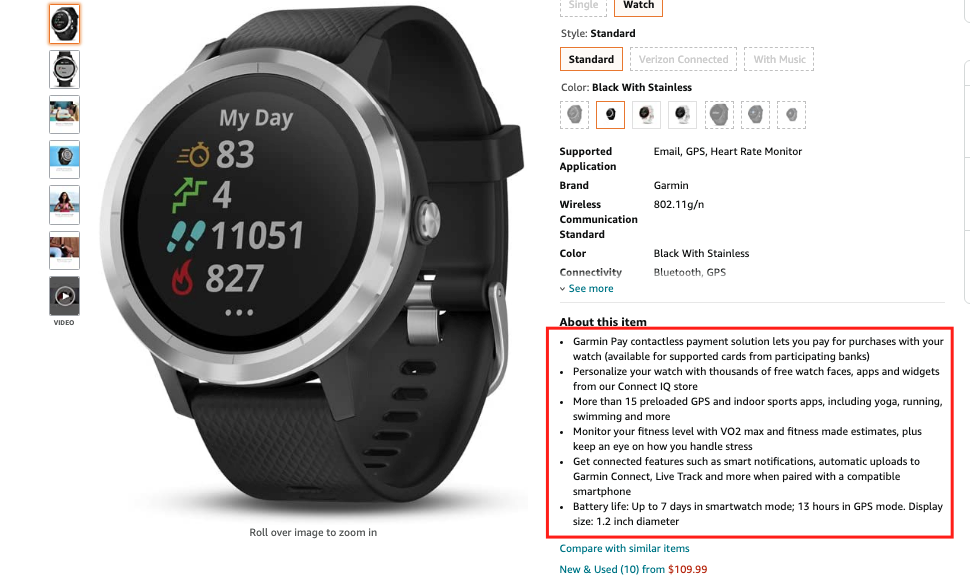
Product Description: Unlike the brief ones, the lengthy description may be further down the item sheet before consumer comments. Additionally, inside, important keywords should appear. It has to be well written and methodical to pull in more people, who are most likely to be interested in the product given that the location where the description is situated.
With that in mind, We have prepared this Free Product Description Editor Tool where you can optimize the description of your Amazon product and make it look attractive and stylized. You can use different styling options and symbols like bold, italic, bullet points, among others.
Product Images:
Pictures added to a product do not have a direct effect on Amazon’s algorithm. On the other hand, the more pictures, the greater the Item will have the ability to be observed by visitors. They are essential to make people wish to look at the item sheet and get it.
Because of this, Amazon has few recommendations:
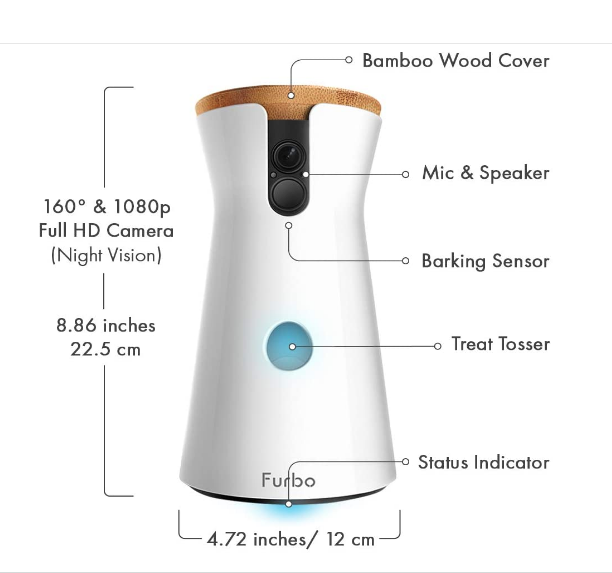
- The product has to be clearly revealed.
- The image must be at 500 pixels on a single side.
- Have a white background to highlight the Item.
- It is likely to fill five different keywords per Item on Amazon, of 50 characters max per field, which is utilized exclusively for SEO.
It’s recommended to put in a keyword and synonyms. The first reflex to have a great SEO is to determine the keywords you need to place your merchandise. It is good to know that some generic keywords are not readily available to manufacturers which have just arrived on the platform. To get this, the algorithm should know it.
Keywords:
- Keywords are essential for search engine optimization (SEO) and discoverability. Research and select relevant keywords and phrases that potential customers are likely to use when searching for your product.
- Incorporate these keywords naturally into your title and description. Avoid overstuffing, as it can harm your search rankings.
- Consider long-tail keywords for more specific targeting.
- Regularly monitor your product’s performance and adjust your keywords as needed.
The keywords that Amazon indicates in the search bar can be a fantastic source of inspiration. They could give clues into the keywords that consumers can use to do their study. Visiting the site pages may also be an exciting technique to understand which keywords the opponents use and know the free spaces and their strategy.
Conclusion
To create high-converting product listings on Amazon, focus on crafting a compelling title, informative description, high-quality images, and relevant keywords. Tailor your content to resonate with your target audience and regularly optimize based on performance and customer feedback. By doing so, you can increase the likelihood of driving sales and success on the platform.
The post Create High-Converting Product Listings on Amazon appeared first on Amazon-ASIN Blogs - Latest from Amazon Sellers: News, Advice, and Effective Strategies.
]]>The post How to Create your First Product Listing on Amazon? [STEP-BY-STEP] appeared first on Amazon-ASIN Blogs - Latest from Amazon Sellers: News, Advice, and Effective Strategies.
]]>Creating the perfect product listing is the essential part of success on Amazon. But if you’re a beginner, you may find it a bit challenging. Don’t worry; creating your very first product listing is much easier than you think, and we’ll discuss everything you need to know in this article.
You need to prepare a few things ahead of creating a product listing. Make sure that you have all the required information. I’m going to take you through three critical things.
- Product ID
- Keywords for your Listings
- Product Images
Product ID
If you’re selling a product that’s never been sold before on Amazon, then you need something called product ID. It’s a unique identifier for commercial products. UPC barcodes, EAN are all variations of Global Trade Item Numbers or GTINs.
Many websites sell GTINs for a low price. But, these are not allowed by Amazon. If you do buy it from these sites, there is a risk that your products might get suspended because Amazon might think your products are fraudulent. Amazon suggests a GS1 platform to buy UPCs from, or you can also buy it from legitimate GS1 sellers.
Keywords for your Product Listing
Keywords are one of the important factor that increases your chances of being visible to your potential customers.
Researching keywords can be a bit of a pain. So this is where we come in. With SellerApp’s powerful tools, you can research the right sort of keywords for your product listing based on CPC, search volume, relevancy, etc.
We’ve already created a detailed video on how to research keywords for your listings on Amazon using SellerApp:
You need a unique set of keywords for product title, bullet points, description, and backend search terms.
Product Images
Make sure you have the right set of images for your product. Images can influence the buying decision of shoppers to a large extent.
So you need to make sure that you have the right images that put your product in the best light possible.
- Ensure the images are of High-quality
- Capture product in Different angles
- Portray lifestyle images in different use case scenarios
- Highlight all the USPs.
- Use Infographics to show how your product is unique from your competitors.
How to Create Product Listing on Amazon?
Now you have everything you need, let’s have a look at how to create a product listing on Amazon
- Sign in to Amazon Seller Central
- Add a New Product or Select Existing Product
- Select your product listing Category & Sub-Categories
- Filling out Product Listing Information (Vital-Info)
- Product Listing Information (Variations)
- Select your Fulfillment Channel
- Upload Product Images
- Add Product Description
- Add Keywords
Step 1: Sign in to Amazon Seller Central
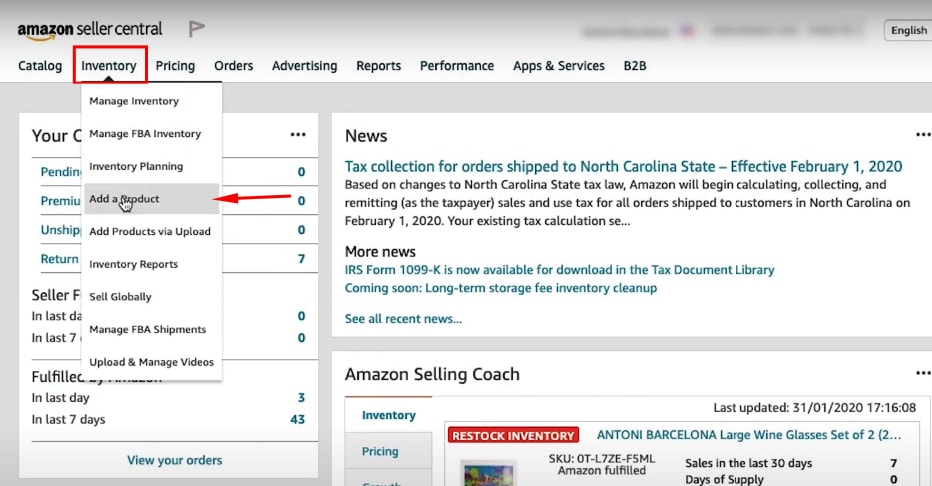
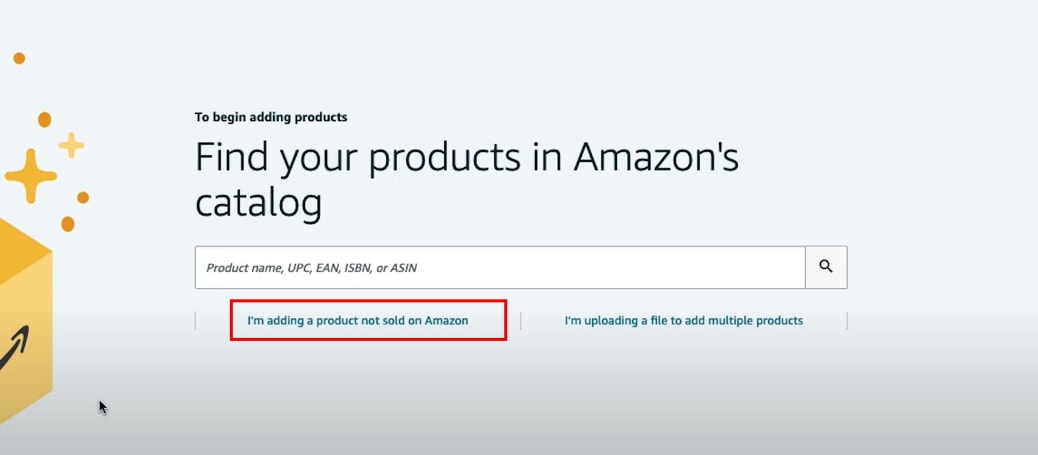
Sign in to Amazon Seller Central and select Add a product under the inventory drop-down menu.
Step 2: Add a new product or Select a product that’s already on Amazon.
Here you see two different options. The first one is if you’re planning to sell a product that already exists on Amazon, then you can choose the first option, which is to find your products in Amazon’s catalog.
If you have any Product ID like EPC or ISBN, or ASIN number, you can type it in the search box.
If you are planning to sell a product that’s not sold on Amazon then click on ‘I’m adding a product not sold on Amazon’
Step 3: Select your Product listing Category and Sub-categories
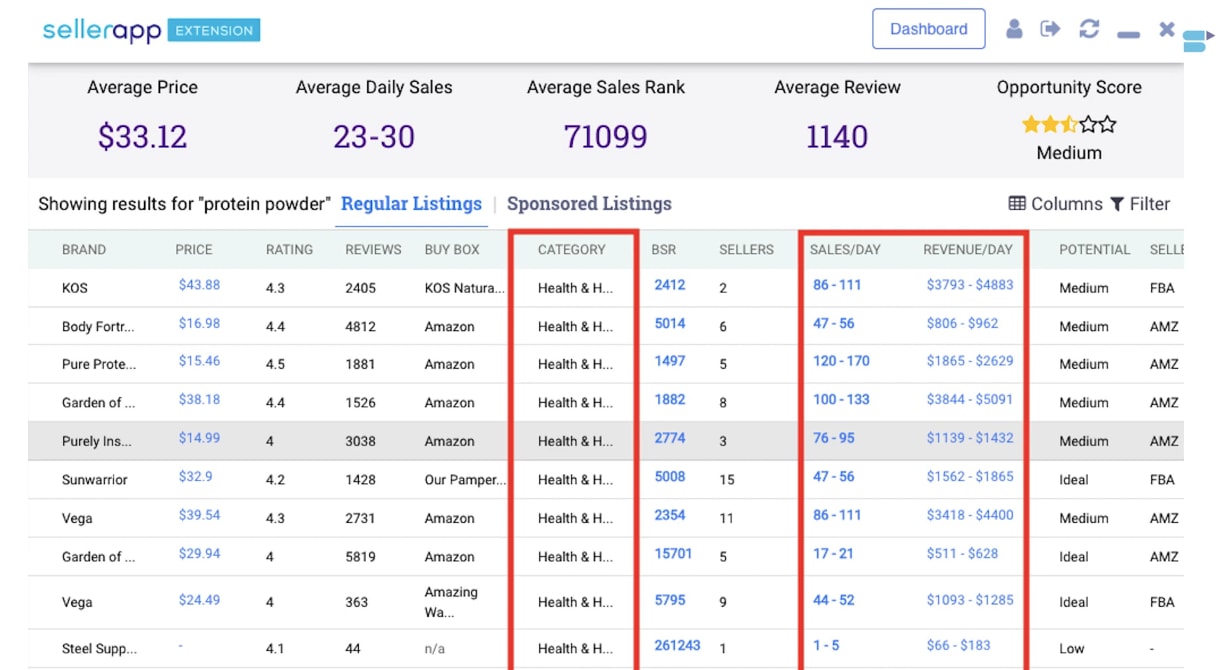
Once you click on the second option, you’ll be taken to a page with categories to choose from. if you feel like your category might qualify for two different categories, then the wisest thing to do would be to look at where the existing sellers are listed and look at their corresponding daily sales and revenue whatever category is making the most amount of sales, I would say choose that specific category.
You can use the SellerApp Chrome extension to find out the daily amount of product sales and revenue per seller.
For Example:
I have already chosen the product, which is ‘whey protein powder.’
and it’s the best seller in its niche.
Let’s figure out what category it’s listed under.
Health and Household > Sports & Nutrition > Protein Powders > Whey
Step 4: Filling out your product listing Information (Vital Info)
Once you’ve selected the correct category, you’ll be taken to the most essential part of the process, which is filling out the listing information of your new product.
This section is divided into different tabs, and the first one is vital info.
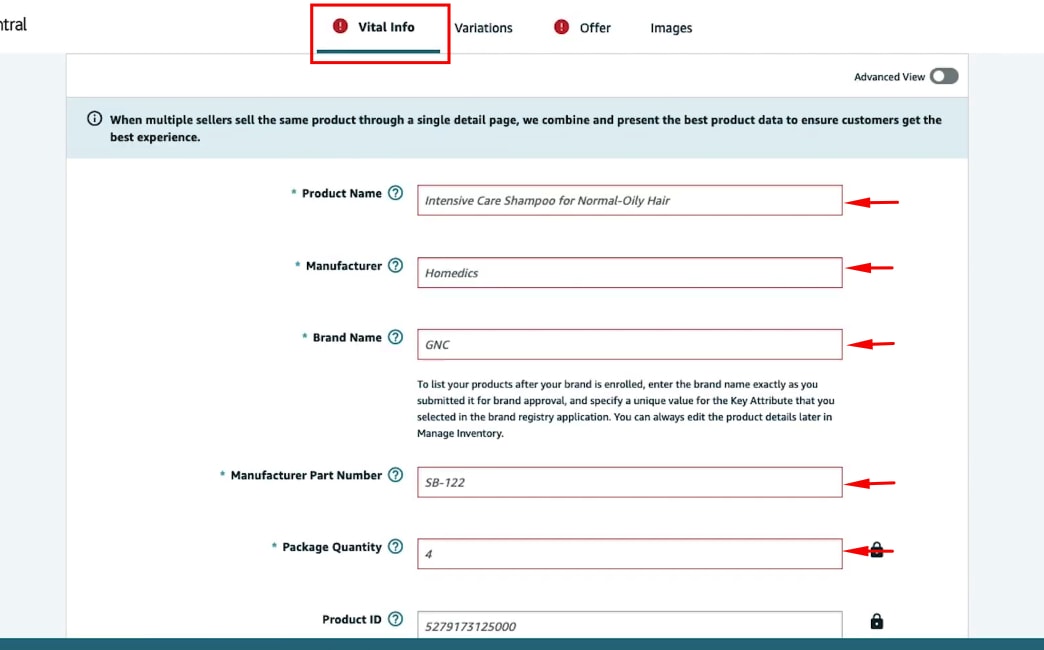
The Vital tab contains one of the essential parts of your product listing. which is your product name, manufacturer, brand name, manufactures part number, package quantity, product id, and more.
Step 5 – Filling out your listing Information (Variations)
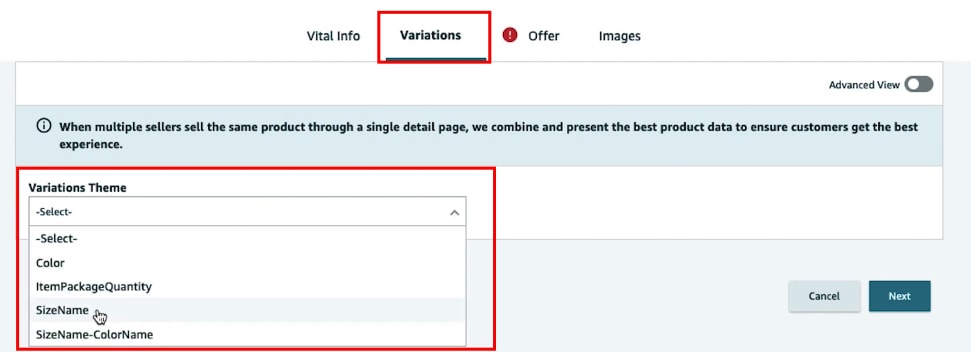
If you have different variations for the same product that you’re selling. based on size or color or items, then you can choose variations. You can create a parent ASIN and then list all the child ASINs under it.
Step 6 – Select Your Fulfillment Channel
There are two options in the fulfillment channel: the first one is motion fulfills, and Amazon fulfills the second one. If the seller is fulfilling the orders, package everything, then it is merchant fulfilled.
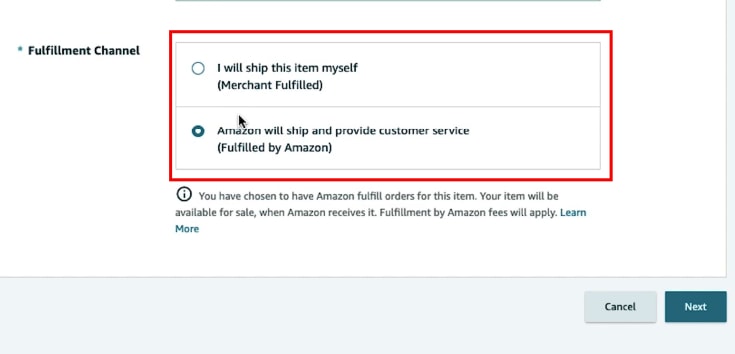
If Amazon is taking care of packaging, shipping, customer service, everything, then it is fulfilled by Amazon.
Step 7 – Upload your Product Images
Move on to the image section. This is where you can upload all of your images. It is recommended to have at least five to six images, and Amazon allows up to ten images. it would help if you made sure that images are of excellent high quality and high resolution.
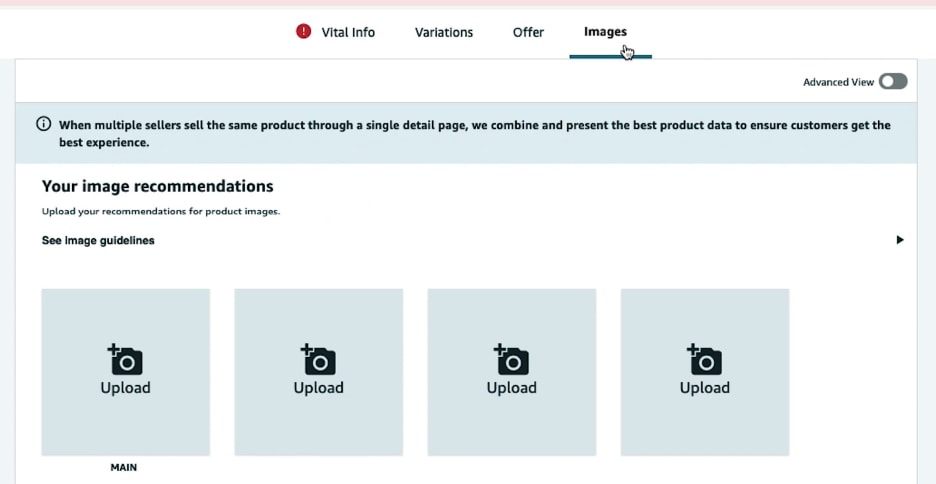
You can have one product image as a thumbnail image, and the rest can be product detail images, infographics, and lifestyle images.
Best Practice
- Images should be at least 1000px on the longes side & 500px on the shorter side
- Ensure your product occupies 85% of the space on the image.
- Don’t add any watermarks or logos on the product images
Once you uploaded all the images, click on advanced view. It will show you multiple different options that were hidden.
Step 8 – Add Product Description
The description is super important as you will be entering your bullet points and product description.
- You’re allowed to have five bullet points to maximize your visibility
- Add your keywords in the description
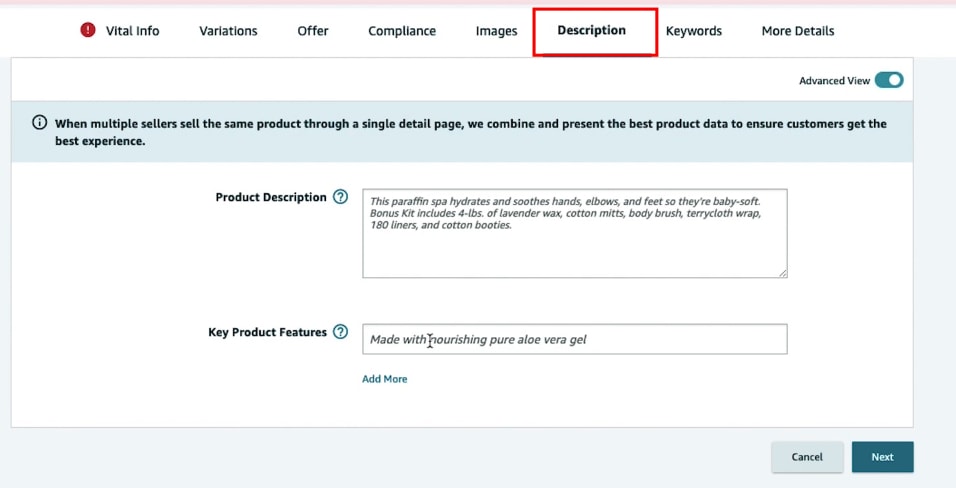
Create an attractive HTML product description for your Amazon product for free with the Amazon Product description editor. No HTML knowledge is needed!
Step 9 – Add Keywords
Keywords are another critical part of creating a successful product listing. Tools like SellerApp can help you find the perfect keywords for your product.
The first one is search terms which are usually referred to as backend keywords. If you have any synonyms or any other keywords that you’d like to put into your listing, you can add those search terms here.
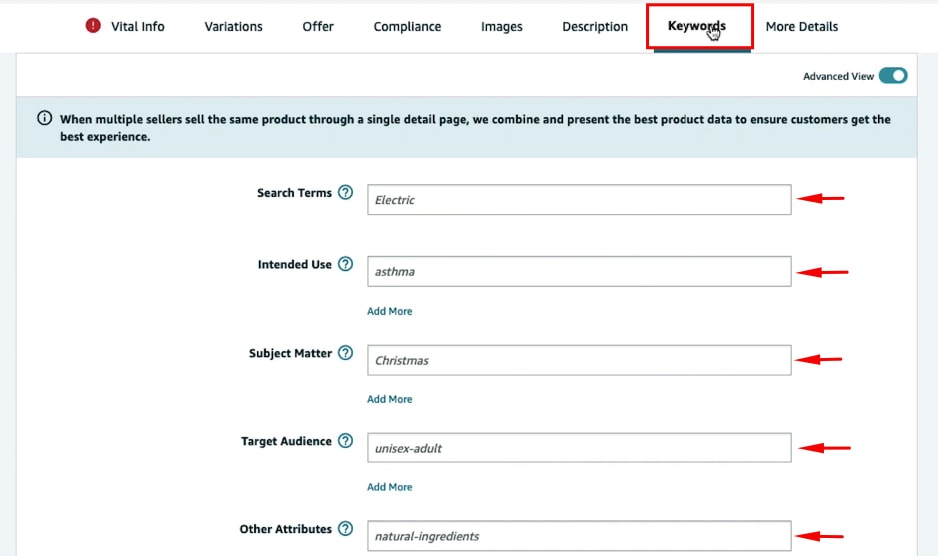
That’s it click Save and finish, and you have created your product listing.
Amazon product listing Restrictions
Now that you’ve created your very first Product listing, make sure you avoid the following
- Don’t use terms like best, free, buy one get one or subjective terms like cute, cool, etc.,
- Stay away from trademark words & Amazon words like special amazon deals.
- Don’t do keyword stuffing because neither amazon, not the shoppers like it
- Incomplete listing will be suppressed, fill out all the information required.
- Don’t use time-sensitive information, like the best product of the year.
- Don’t put shipping details on the description, like free shipping or the shipping duration.
Final Words
Let’s summarize you need to have the following information ahead of creating a product listing on Amazon, like your product ID, keywords, and images. Then you will sign in to your seller central account, choose to add a product on the inventory drop-down menu in the seller central, select the option to add a product that’s not sold on Amazon before, and fill out all your product details and select the appropriate category & subcategories.
You can choose an FBA offer if you want Amazon to fulfill your orders. I hope you found this article helpful.
The post How to Create your First Product Listing on Amazon? [STEP-BY-STEP] appeared first on Amazon-ASIN Blogs - Latest from Amazon Sellers: News, Advice, and Effective Strategies.
]]>