The post Exploring Top 10 Amazon FBA Alternatives appeared first on Amazon-ASIN Blogs - Latest from Amazon Sellers: News, Advice, and Effective Strategies.
]]>Quick Guide.
- Importance of Considering Alternatives for Sellers
- Exploring the Best Amazon FBA Alternatives for Sellers
- ShipMonk
- AMZ Prep
- Unicommerce
- ShipNetwork
- FedEx Fulfillment
- Fulfillment.com
- Flexport
- ShipBob
- DHL e-commerce
- eFulfillment Service
- ZonPrep
- Factors to Consider When Choosing an Alternative
- Conclusion
Importance of Considering FBA Alternatives for Sellers:
While Amazon FBA offers numerous benefits, sellers need to consider the best FBA alternatives for various reasons:
Costs
FBA comes with fees, including storage fees, fulfillment fees, and additional charges for various services. These fees can impact your profit margins depending on the nature of your products and sales volume. Exploring fulfillment by Amazon alternatives can help sellers find cost-effective solutions
Control
By relying solely on Amazon FBA, you’re ceding a significant amount of control over the fulfillment process to Amazon. This can sometimes lead to quality control, packaging, and customer experience issues. Exploring alternatives gives you more control over these aspects.
Competition and Dependence
The popularity of FBA means that many sellers are using the same service. This can lead to increased competition for “Buy Box” placement and limited differentiation. Additionally, if Amazon changes its FBA policies or fees, it can significantly impact your business. Diversifying your fulfillment strategy reduces dependence on a single platform.
Product Restrictions
Amazon has certain restrictions on products that can be fulfilled through FBA, such as hazardous materials or oversized items. Exploring top alternatives to Amazon FBA ensures flexibility in product offerings.
Multi-Channel Sales
Sellers operating on multiple e-commerce platforms may require more seamless integration than what FBA offers. Amazon fulfillment alternatives can cater to various sales channels.
Geographic Reach
Depending on your target market, Amazon FBA might not cover all the regions you want to serve optimally. Alternative fulfillment centers strategically located in different regions can improve shipping times and costs for specific markets.
Customization
Some sellers require specialized packaging or branding that might not align with Amazon’s FBA process. Exploring Amazon FBA alternatives allows for more customization in this regard.
Niche or High-Value Products
For certain niche products or high-value items, personalized fulfillment methods might offer better security, quality control, and customer experience than FBA’s standardized approach.
Exploring the Best Amazon FBA Alternatives for Sellers
Let’s delve into some of the Best Amazon FBA Alternatives that can empower Amazon sellers with greater control, cost-efficiency, and flexibility in their fulfillment strategies:
ShipMonk
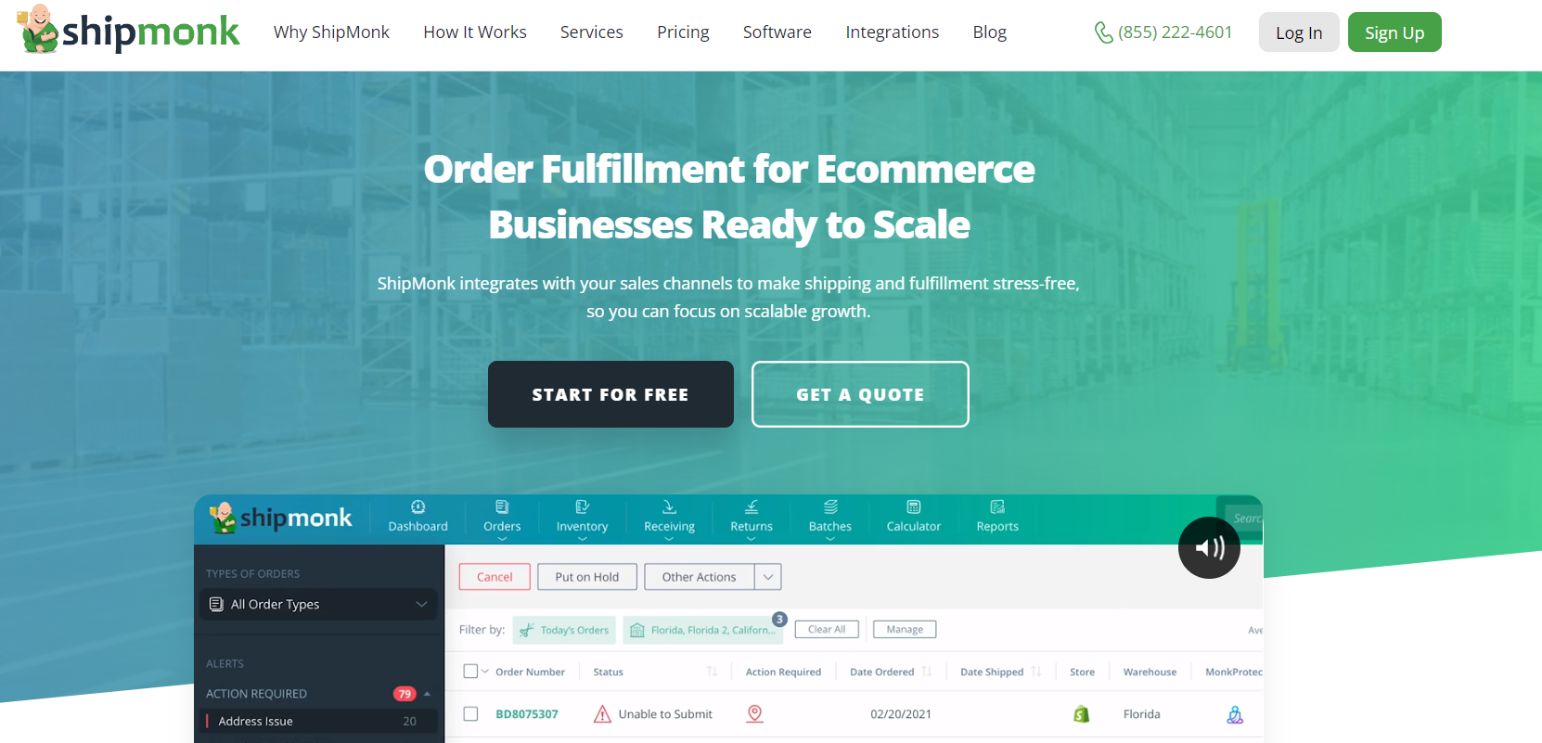
ShipMonk is a comprehensive e-commerce fulfillment service that provides customizable packaging, seamless integration, and efficient order fulfillment. It focuses on improving the customer experience by offering personalized branding and a range of shipping options.
Key Features of ShipMonk
- Order Fulfillment: ShipMonk offers comprehensive order fulfillment services, managing the entire process from receiving orders to shipping products to customers.
- Custom Packaging: ShipMonk provides the option for custom packaging, allowing sellers to design branded packaging and include personalized inserts or marketing materials.
- Integration: ShipMonk integrates with popular e-commerce platforms, enabling seamless order processing, inventory synchronization, and automatic order transfer.
- Multiple Locations: ShipMonk operates from multiple strategically located fulfillment centers, which can lead to faster and more cost-effective shipping to different regions.
- Inventory Management: ShipMonk’s software allows for real-time inventory tracking, ensuring accurate stock levels and minimizing the risk of overselling.
- Returns Processing: ShipMonk handles returns processing, streamlining the returns management process and enhancing customer satisfaction.
Why ShipMonk Might Be Better Than Amazon FBA
- Customization: Unlike Amazon FBA’s standardized packaging, ShipMonk lets you design a special and memorable unboxing experience with branded packaging and personalized inserts.
- Control: ShipMonk gives you more control over packaging, inventory management, and customer experience than Amazon’s FBA, which has strict guidelines.
- Multi-Channel Support: ShipMonk’s integrations with various e-commerce platforms enable consistent fulfillment across all channels if you sell on multiple platforms.
- Faster Shipping: ShipMonk’s multiple fulfillment centers can result in faster shipping times to different regions, which is advantageous for customers who prioritize quick delivery.
- Scale and Flexibility: ShipMonk’s ability to handle a range of order volumes and its customizable services make it a versatile choice for businesses with varying needs.
AMZ Prep
Founded in 2016, AMZ Prep has become a leading force in e-commerce fulfillment. We empower brands across the globe to achieve seamless operations and explosive growth through our best-in-class supply chain solutions.
Unparalleled Technology & Services:
- Leverage our proprietary platform that integrates order & inventory management, FBA Prep workflow, warehouse management, and predictive data analytics – all designed to optimize your e-commerce operations.
- Enjoy access to a vast international fulfillment network spanning the US, Canada, UK, EU, and Australia.
- Benefit from optimized shipping solutions to ensure timely and cost-effective product delivery to your customers.
Scaling Your Success:
- Our 12+ strategically located warehouses, encompassing over 5 million square feet, allow us to serve over 2,000 merchants globally. This robust infrastructure solidifies our position as the largest Amazon fulfillment partner in North America.
- Recognized as North America’s fastest-growing logistics company, AMZ Prep sets the bar for excellence in the e-commerce industry.
Unwavering Dedication:
At AMZ Prep, we prioritize exceeding your expectations. Our commitment goes beyond technology and infrastructure. We offer:
- Unparalleled service: Our dedicated team ensures your operations run smoothly, freeing you to focus on growth.
- Unmatched reliability: We prioritize timely order fulfillment and efficient logistics management – your brand can rely on us.
Join the winning Team:
Partner with AMZ Prep and unlock the power of our comprehensive fulfillment solutions. Experience faster order fulfillment, optimized costs, and a dedicated team focused on your success. See why thousands of brands trust AMZ Prep as their strategic partner in achieving e-commerce dominance.
#1 Fastest-Growing Business on Clutch 2024: Further solidifying our commitment to excellence, AMZ Prep has been recognized as the number one fastest-growing business on Clutch’s platform in 2024!
Unicommerce
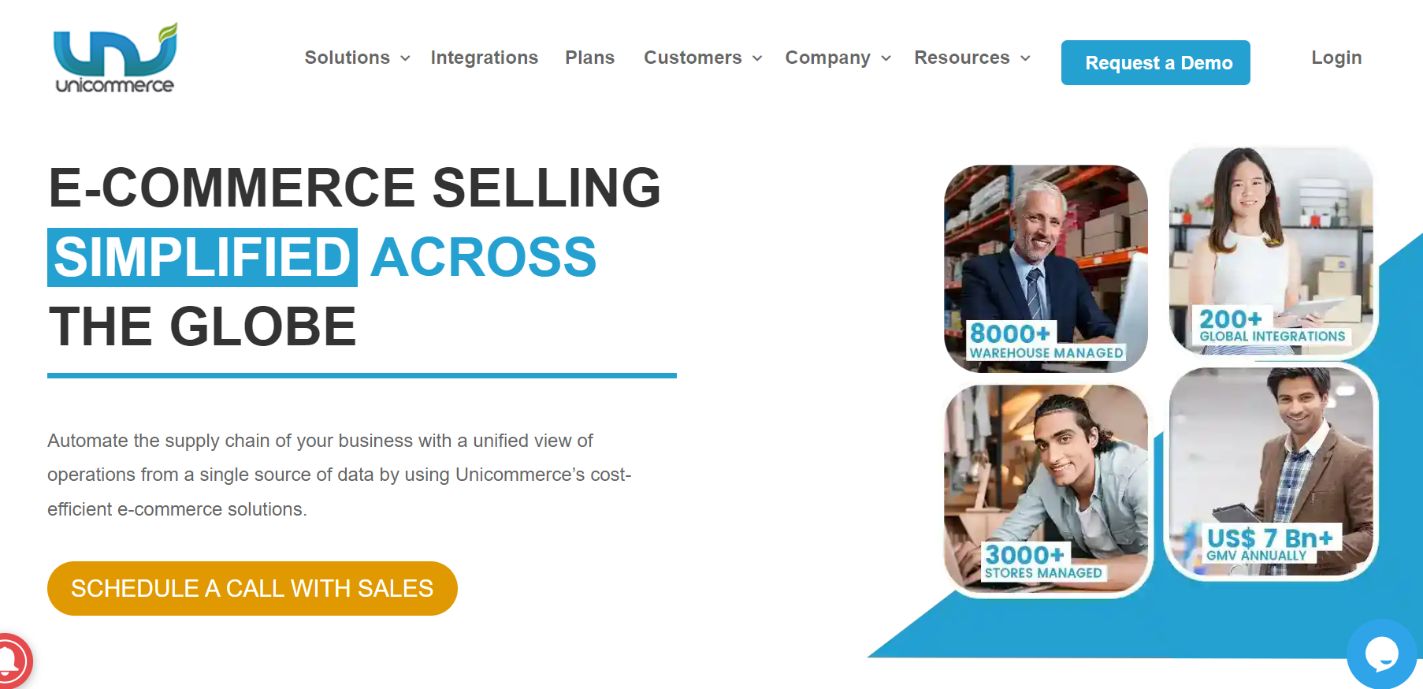
Unicommerce is a prominent player in the e-commerce industry, offering a range of solutions designed to simplify and enhance online retail operations. With a suite of services spanning order management, inventory control, and warehouse management, Unicommerce enables businesses to efficiently manage their online stores and provide a seamless shopping experience for customers. Their platform is a valuable asset for e-commerce businesses seeking to streamline their supply chain and thrive in the dynamic and competitive online marketplace
Essential functionalities of Unicommerce
- Multi-Channel Order Management: Unicommerce offers a centralized platform to manage orders from various sales channels, streamlining the order processing workflow.
- Inventory Management: The system provides real-time inventory tracking and synchronization across all your sales channels, reducing the risk of overselling and stockouts.
- Warehouse Management: Unicommerce assists in managing multiple warehouses efficiently, optimizing order fulfillment, and reducing shipping costs.
- Returns Management: It simplifies returns processing, automating the process and improving customer satisfaction by ensuring swift and accurate returns handling.
- Integration: Unicommerce seamlessly integrates with popular e-commerce platforms, marketplaces, and logistics providers, ensuring smooth data flow and minimal manual work.
Why Choose Unicommerce
- Efficient Order Management: Unicommerce’s multi-channel order management simplifies the handling of orders from various platforms, reducing errors and enhancing order processing efficiency.
- Inventory Accuracy: Real-time inventory tracking and synchronization help you maintain accurate stock levels, preventing issues like overselling and stockouts.
- Optimized Warehouse Operations: Unicommerce’s warehouse management capabilities assist in efficient inventory storage, order picking, and shipping, leading to cost savings and faster order fulfillment.
- Enhanced Returns Handling: Streamlined returns processing can improve customer satisfaction by ensuring that returned items are processed promptly and accurately.
- Integration Flexibility: Integration with a wide range of e-commerce platforms and logistics providers allows for a customized and scalable solution, that adapts to your specific business needs.
ShipNetwork
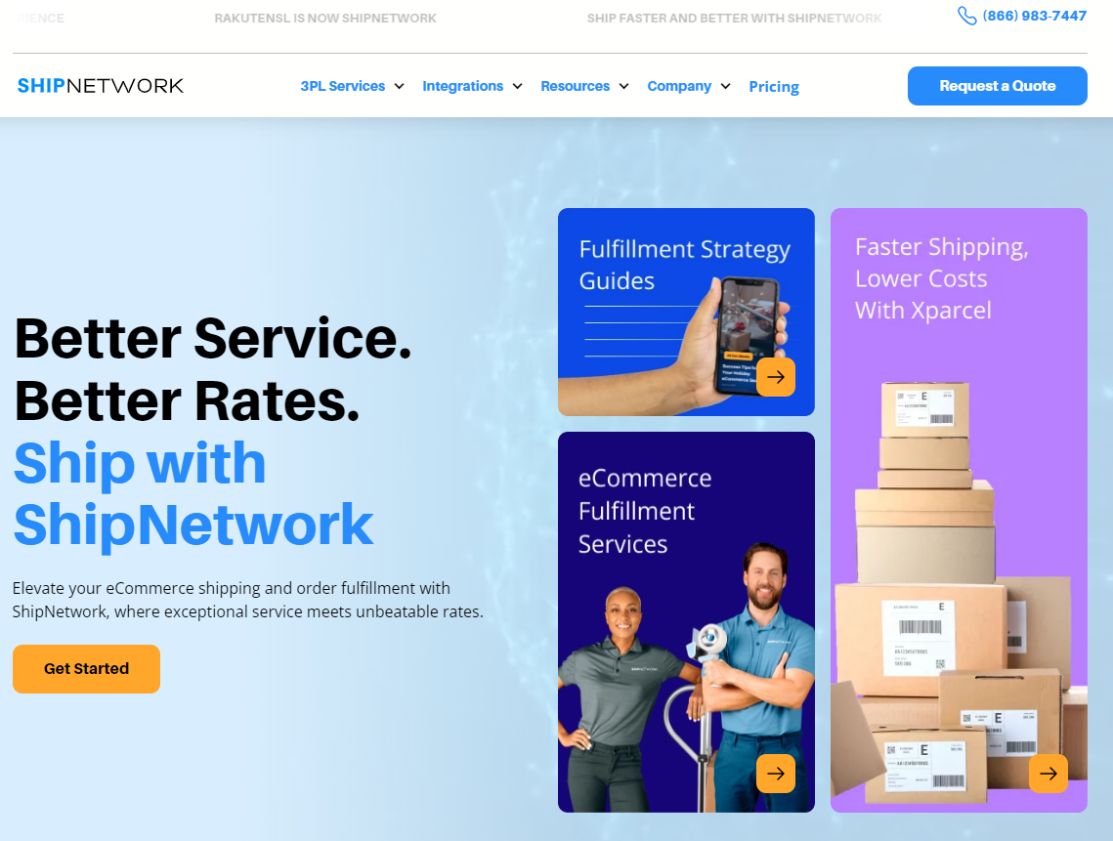
ShipNetwork stands out for its commitment to fast and reliable order fulfillment, with a 2-day delivery guarantee. Their extensive network of strategically located fulfillment centers ensures efficient order processing and timely shipping.
Key Highlights of ShipNetwork
- Multi-Channel Fulfillment: ShipNetwork supports the fulfillment of orders from various sales channels, providing centralized order management and streamlining operations.
- 2-Day Delivery: They offer a 2-day delivery guarantee, which can attract customers who prioritize fast shipping and help you compete effectively in the market.
- Real-Time Order Tracking: Sellers and customers can access real-time tracking information, enhancing transparency and communication throughout shipping.
- Warehouse Network: ShipNetwork maintains a network of fulfillment centers strategically located nationwide, ensuring efficient and timely order processing.
- Inventory Management: Their software allows for accurate real-time inventory tracking, minimizing the risk of stockouts and overselling.
- Returns Processing: ShipNetwork handles returns processing, simplifying the returns management process and improving customer satisfaction.
Comparison with Amazon FBA
- Delivery Speed: ShipNetwork’s 2-day delivery guarantee can be advantageous if your customers’ quick shipping times are crucial.
- Multi-Channel Support: If you sell on multiple platforms, ShipNetwork support for multi-channel fulfillment can help you manage orders across all platforms more efficiently.
- Transparency: ShipNetwork offers real-time tracking and transparent communication, which can enhance the customer experience and reduce inquiries.
- Geographic Efficiency: ShipNetwork’s strategic network of warehouses can result in faster shipping times compared to Amazon FBA’s centralized approach.
- Customization: While Amazon FBA offers certain branding options, ShipNetwork’s personalized service might provide more flexibility in creating a unique customer experience.
- Competition: Offering 2-day delivery through ShipNetwork can help you compete with Amazon Prime and potentially attract customers who seek fast shipping without relying solely on Amazon’s platform.
FedEx Fulfillment
Leveraging its renowned expertise in shipping, FedEx Fulfillment offers end-to-end solutions for businesses. It provides a seamless and integrated approach to fulfillment services from warehousing to packaging and order delivery.
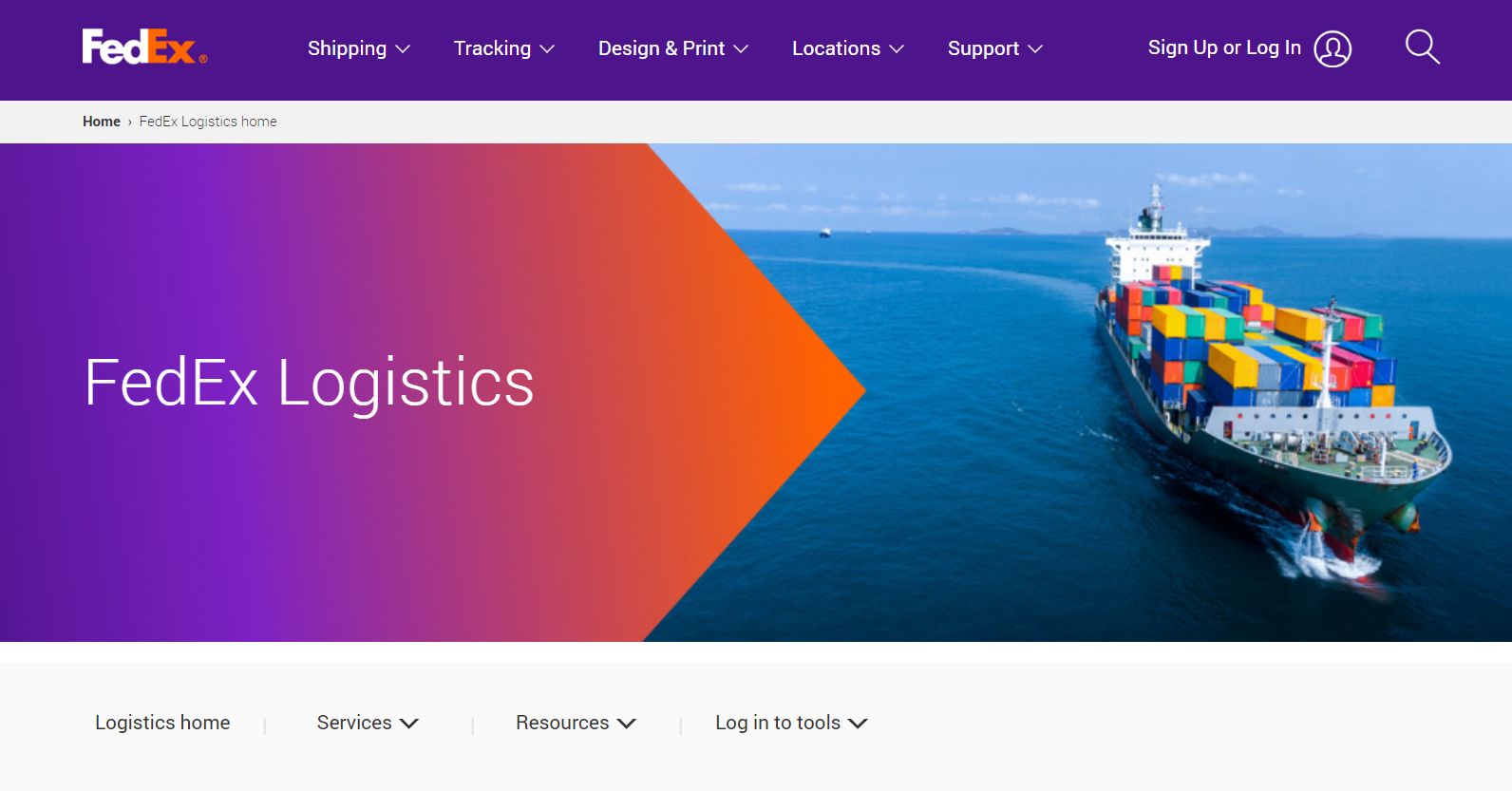
Core Attributes of FedEx Fulfillment
- Warehousing: FedEx Fulfillment provides warehousing services, storing your inventory in their fulfillment centers.
- Packaging: They handle packaging, prepare products for shipment, comply with shipping regulations, and ensure that items are well-protected during transit.
- Shipping Network: Leveraging FedEx’s extensive shipping network, they offer efficient order delivery, reliable tracking, and various shipping options.
- Inventory Management: FedEx’s system provides real-time inventory tracking, helping you manage stock levels accurately and prevent stockouts.
- Integration: They integrate with multiple e-commerce platforms, allowing seamless order processing, automatic updates, and centralized management.
Why Choose FedEx Fulfillment
- End-to-End Solution: If you’re already using FedEx for shipping, incorporating their fulfillment services creates a cohesive end-to-end process within a single provider.
- Shipping Expertise: With FedEx’s strong reputation in shipping, you can expect reliable and efficient order delivery, contributing to customer satisfaction.
- Integration Advantages: Integration with your existing e-commerce platforms can streamline operations, reducing manual work and errors associated with order processing.
- Packaging Quality: FedEx’s expertise in packaging ensures that your products are properly prepared for transit, reducing the risk of damage during shipping.
- Flexibility: By leveraging FedEx’s shipping network, you can offer customers various shipping options, catering to different delivery preferences and budgets.
Fulfillment.com
Fulfillment.com is a global fulfillment service with a focus on international shipping. Its extensive network of warehouses caters to businesses looking to expand their reach and serve customers worldwide
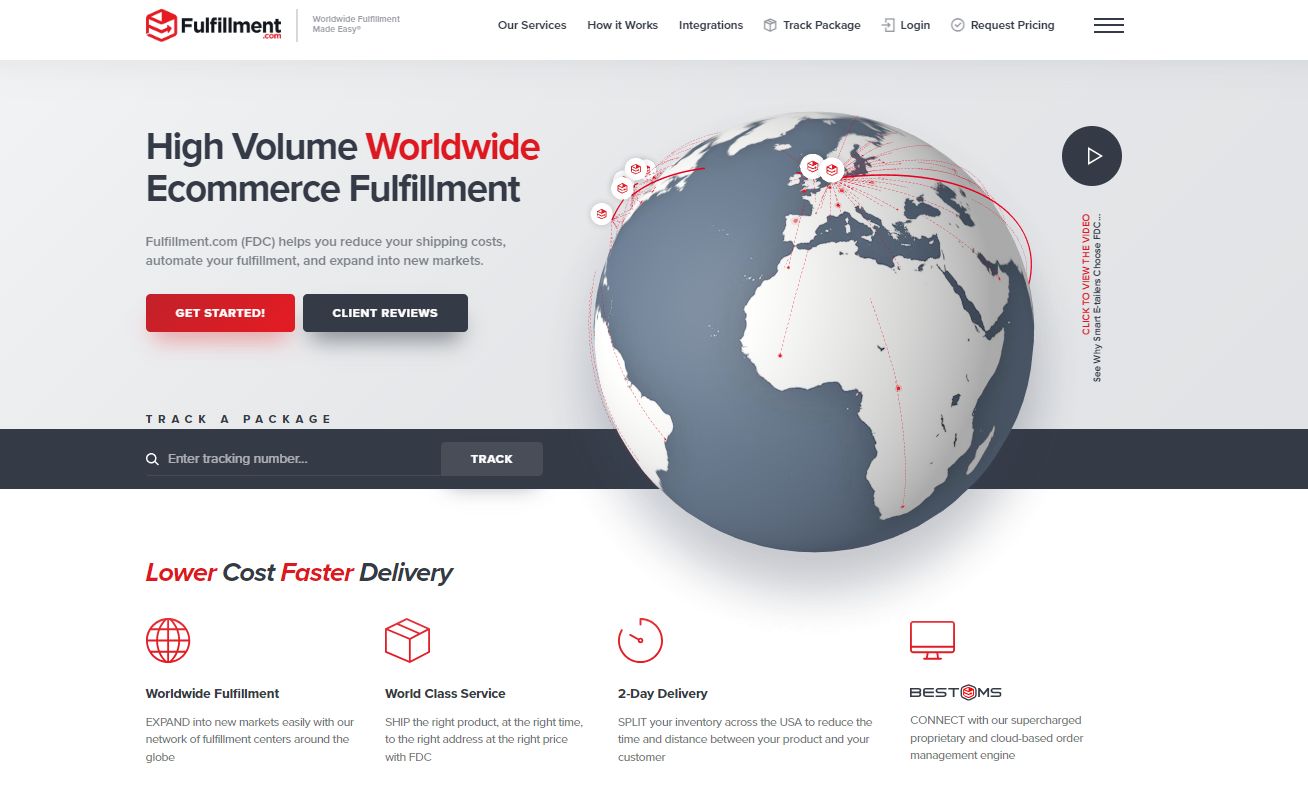
Essential functionalities of Fulfillment.com
- Global Fulfillment: Fulfillment.com offers international fulfillment services, catering to customers worldwide and enabling efficient cross-border shipping.
- Real-Time Reporting: Access to real-time analytics and reporting helps you make informed decisions about inventory, order trends, and overall business optimization.
- Integration: They integrate seamlessly with major e-commerce platforms, ensuring automatic order processing and inventory synchronization.
- Shipping Expertise: Fulfillment.com leverages its expertise in shipping to provide reliable and efficient order delivery to various regions.
- Customer Service: They offer customer service support, assisting with inquiries related to order status, returns, and shipping.
Comparison with Amazon FBA
- International Fulfillment: If you have a strong international customer base, Fulfillment.com’s global reach and expertise in cross-border shipping can be a distinct advantage.
- Customization: Fulfillment.com’s services might offer more packaging, branding, and customization flexibility than Amazon FBA’s standardized process.
- Data-Driven Insights: Their real-time reporting can provide valuable insights into your business operations, enabling data-driven decision-making.
- Integration: Fulfillment.com’s integration with e-commerce platforms ensures that orders are automatically transmitted, minimizing the risk of errors from manual data entry.
- Diverse Shipping Options: Fulfillment.com’s shipping expertise can provide various shipping options and cost-effective solutions tailored to different regions and customer preferences.
Flexport
Flexport specializes in fast and affordable fulfillment, offering 2-day and 3-day delivery options. This service is designed to help businesses compete effectively in the e-commerce market by meeting customer demands for quick shipping.
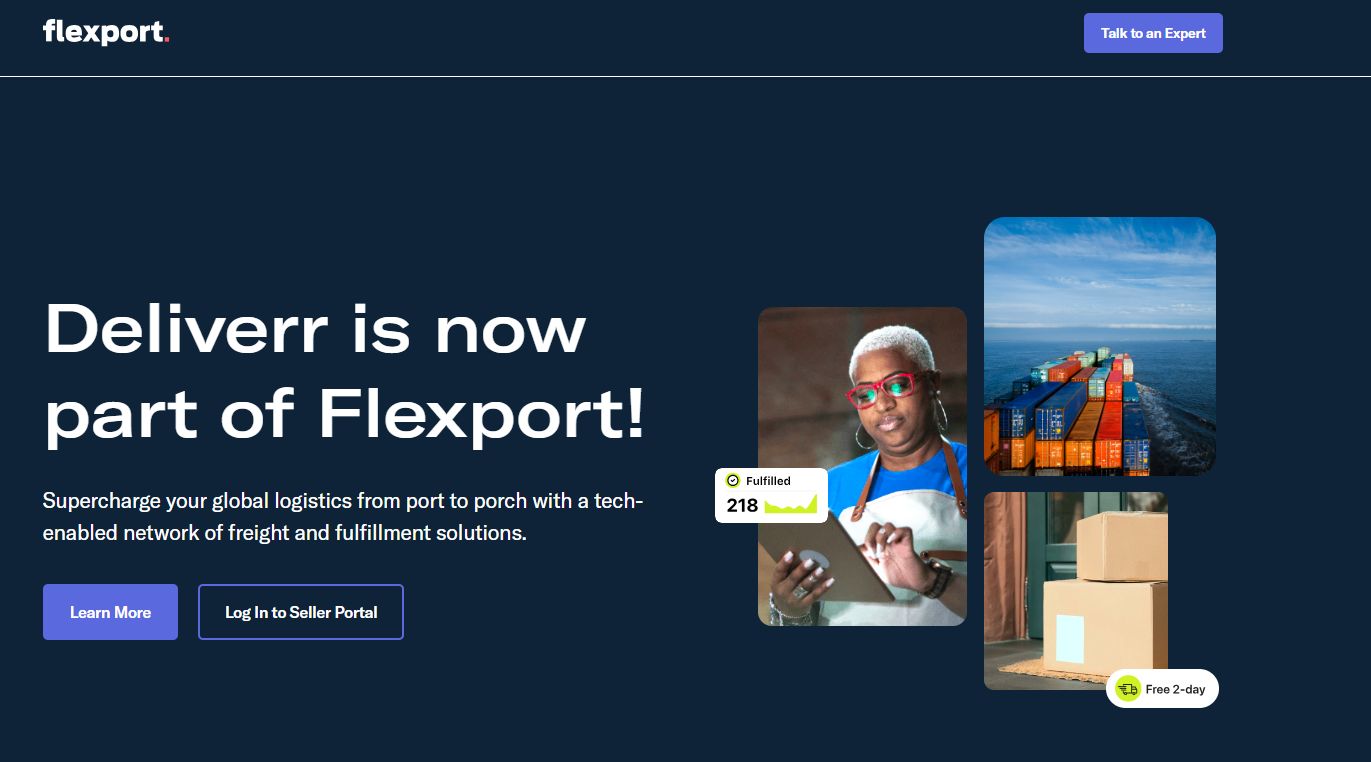
Features of Flexport
- Fast Fulfillment: Flexport specializes in fast and affordable fulfillment, offering 2-day and 3-day delivery options to meet customer demands for quick shipping.
- Integration: They integrate seamlessly with popular e-commerce platforms, automating order processing and synchronization of inventory data.
- Nationwide Warehouses: Flexport strategically positions inventory in warehouses across the U.S., enabling faster shipping times and reducing transit costs.
- Inventory Management: Their software provides real-time inventory tracking, ensuring accurate stock levels and minimizing the risk of stockouts.
- Returns Handling: Flexport handles returns, simplifying the process and improving customer satisfaction with efficient returns management.
Comparison with Amazon FBA
- Fast Delivery: Deliverr’s focus on 2-day and 3-day delivery options aligns with Amazon Prime’s fast shipping, allowing you to compete effectively.
- Multi-Channel Fulfillment: Deliverr’s integration with various e-commerce platforms can support your multi-channel selling strategy more seamlessly than Amazon FBA.
- Shipping Costs: Deliverr’s strategic warehouse placement can save costs, particularly if your products are closer to your customers.
- Control and Flexibility: Deliverr’s fast and customizable fulfillment options can give you greater control over your shipping strategy than Amazon FBA’s standardized approach.
- Competition: By offering fast shipping on platforms beyond Amazon, Deliverr can help you stand out from other sellers and attract customers looking for quick delivery.
ShipBob
ShipBob offers multi-location fulfillment centers strategically positioned across regions. It emphasizes speedy delivery, order scalability, and real-time inventory management, making it an attractive choice for growing businesses.
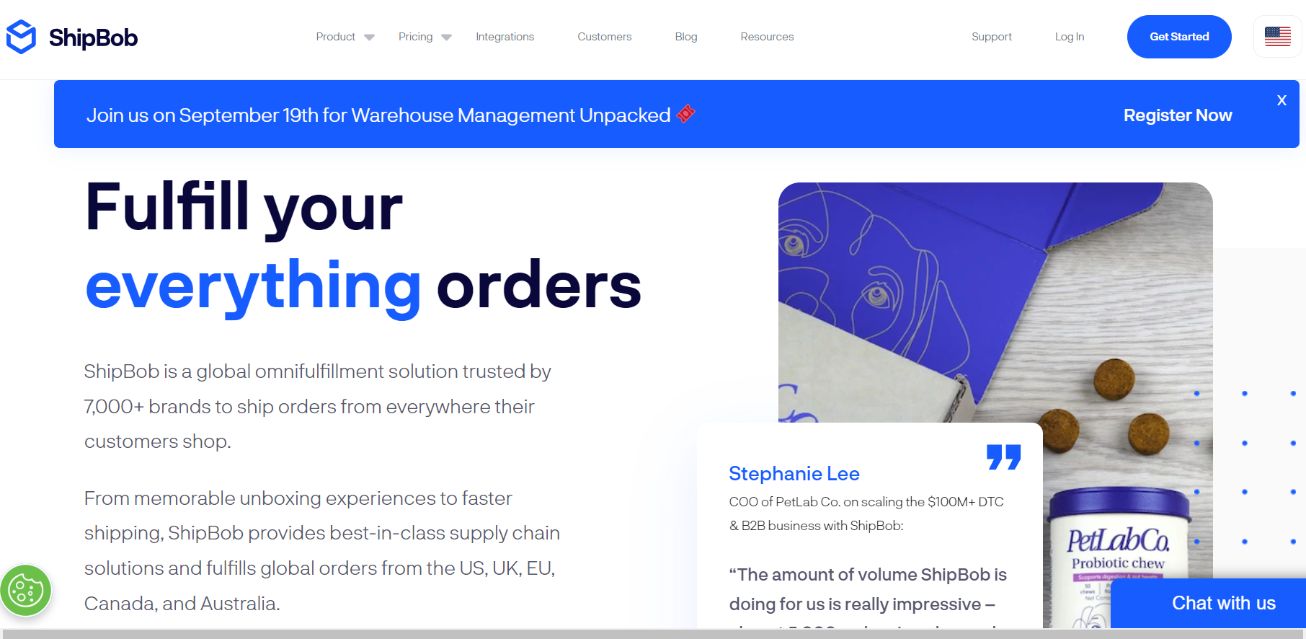
The following integral features are part of their service
- Order Fulfillment: ShipBob provides end-to-end order fulfillment services, including inventory storage, picking, packing, and shipping.
- Multi-Location Fulfillment: They operate a network of fulfillment centers in different regions, enabling efficient and timely shipping to customers.
- Inventory Management: ShipBob’s technology offers real-time inventory tracking and visibility across multiple fulfillment centers.
- Integration: They integrate with various e-commerce platforms, automating order processing and inventory synchronization.
Why Choose ShipBob
- Fast Shipping: With multiple fulfillment centers, ShipBob can offer faster shipping times, reducing transit distances and improving customer satisfaction.
- Geographic Efficiency: ShipBob’s strategic placement of fulfillment centers helps lower shipping costs and delivery times across various regions.
- Integration: Integration with major e-commerce platforms streamlines order processing and minimizes errors associated with manual data entry.
- Scalability: ShipBob’s multi-location setup and customization options cater to businesses of different sizes, from startups to enterprises.
- Branding Opportunity: Custom packaging and branding options can enhance your brand’s identity and create a consistent customer experience.
DHL eCommerce
DHL eCommerce is a global shipping and fulfillment service with a strong international network. It provides businesses with reliable international shipping solutions and expertise in navigating customs regulations.
Their service encompasses the following features
- Global Network: DHL eCommerce provides international shipping and distribution services, reaching customers worldwide.
- Warehousing: They offer warehousing solutions for inventory management and order fulfillment.
- Tracking: DHL’s tracking system provides transparency and real-time updates on the status of shipments.
- Customs Expertise: DHL’s experience in international shipping includes navigating customs regulations and duties.
- Integration: They integrate with various e-commerce platforms for seamless order processing and management.
Why Choose DHL eCommerce
- International Expansion: DHL’s global network can help you expand into international markets and efficiently serve customers worldwide.
- Shipping Expertise: DHL’s experience in international shipping ensures reliable and efficient order delivery.
- Transparency: Their tracking system provides visibility into shipments, enhancing customer experience and reducing inquiries.
- Customs Navigation: DHL’s expertise in customs regulations can simplify the complexities of international shipping.
- Integration: Integration with e-commerce platforms streamlines the order flow and minimizes manual data entry.
eFulfillment Service
eFulfillment Service offers multi-channel integration and a range of shipping options. With a focus on customization and efficient inventory management, it helps businesses streamline their fulfillment processes.

They present these cornerstone features
- Multi-Channel Integration: eFulfillment Service integrates with various e-commerce platforms for centralized order management.
- Flexible Shipping Options: They provide a variety of shipping options to accommodate various customer preferences.
- Custom Packaging: eFulfillment Service provides options for customized packaging to enhance your brand’s identity.
- Inventory Management: Their software offers real-time inventory tracking and reporting.
- Returns Handling: eFulfillment Service assists with returns processing, making the process more efficient.
Why Choose eFulfillment Service
- Platform Flexibility: Integration with multiple e-commerce platforms allows for consistent order processing across various sales channels.
- Shipping Variety: Various shipping options accommodate different customer needs and budget constraints.
- Branding Opportunities: Custom packaging supports brand identity and provides a positive unboxing experience.
- Inventory Visibility: Real-time inventory tracking aids in effective inventory management and demand forecasting.
- Returns Efficiency: Efficient returns processing enhances customer satisfaction and simplifies inventory management.
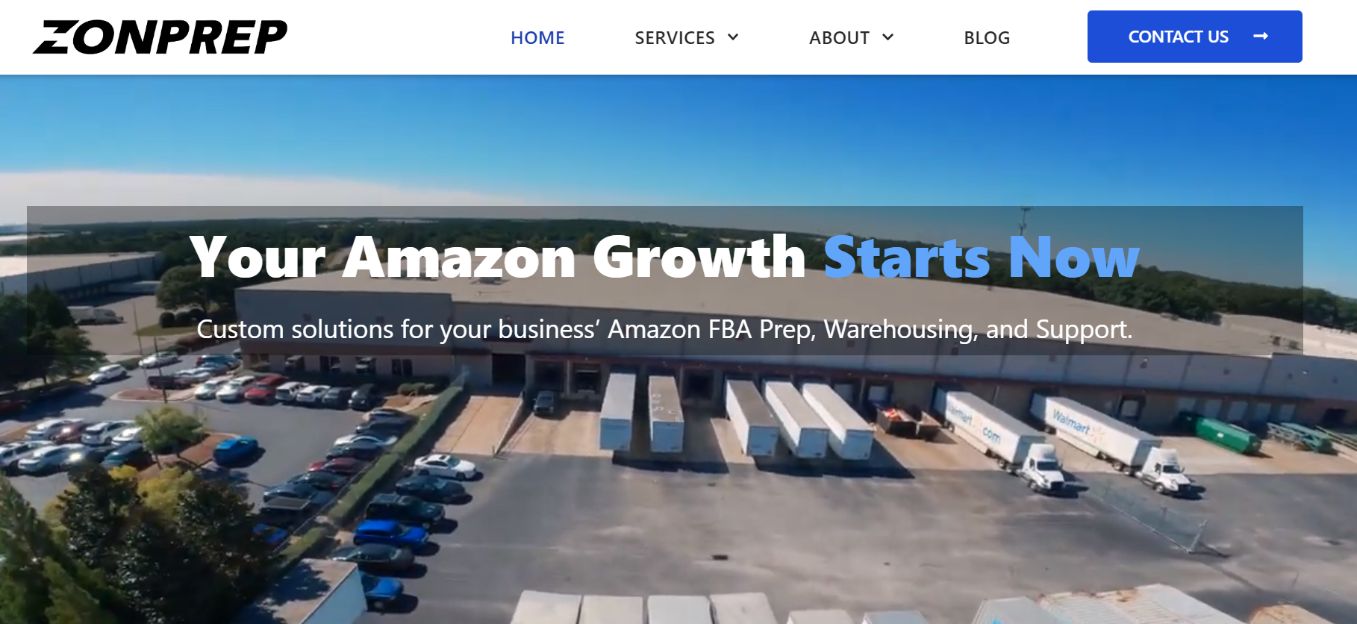
ZonPrep
ZonPrep specializes in Amazon FBA preparation services. It ensures that products comply with Amazon’s guidelines, handling labeling, quality control, and inspection tasks, making them Amazon-ready.
Their service comprises these key attributes
- Amazon Prep Services: ZonPrep specializes in preparing and labeling products specifically for Amazon FBA, ensuring compliance with Amazon’s requirements.
- Labeling: They handle labeling and preparation tasks, saving you time and effort.
- Quality Control: ZonPrep ensures that products are accurately prepared and meet Amazon’s guidelines.
- Inspection: They offer inspection services to verify product quality and compliance.
- Amazon Expertise: ZonPrep’s focus on Amazon-specific preparation can help you navigate Amazon’s requirements effectively.
Why Choose ZonPrep
- Amazon Focus: If Amazon is your primary sales platform, ZonPrep’s expertise in Amazon FBA preparation can ensure compliance and smooth selling.
- Time Savings: Outsourcing prep and labeling tasks free up your time for other aspects of your business.
- Quality Assurance: ZonPrep’s quality control and inspection services ensure that products meet Amazon’s standards.
- Amazon Compliance: ZonPrep’s specialization in Amazon FBA can help you avoid issues and complications related to non-compliance.
- Efficiency: ZonPrep’s services streamline the process of preparing and labeling products for Amazon FBA, ensuring that your products are ready for sale faster.
Factors to Consider When Choosing an FBA Alternative
When selecting the most suitable FBA alternative, Amazon sellers should consider several key factors
Product Niche and Target Audience
- Consider whether the fulfillment service aligns with your product type. For instance, certain alternatives might be better suited for fragile items, while others excel with larger products.
- Analyze the geographic reach of the alternative and its ability to deliver to your target audience. Some services might be more effective in specific regions or countries.
Budget for Fees and Advertising
- Evaluate the pricing structure of the alternative, including storage fees, fulfillment costs, shipping rates, and any additional charges. Compare these costs with your budget and projected sales volume.
- Factor in the cost of advertising and marketing. Faster shipping or Prime-equivalent services could influence your advertising budget.
Integration with Existing Systems
- Check if the alternative integrates seamlessly with your current e-commerce platform, order management systems, and other tools you use.
- Automation is key to efficiency. Choose an alternative that easily syncs orders, inventory, and tracking information across your systems.
Growth Potential and Scalability
- Consider the alternative’s ability to handle your projected growth. Does it have enough warehouse space, shipping capacity, and support for increased order volumes?
- Evaluate the flexibility of the alternative in accommodating seasonal spikes or sudden increases in demand without compromising delivery times.
Conclusion
Exploring the best Amazon FBA alternatives is a strategic move for Amazon sellers aiming to optimize their fulfillment operations. By carefully considering product niche, budget, integration, and scalability factors, sellers can make informed choices that enhance their competitiveness and customer satisfaction in the ever-evolving e-commerce landscape.
Evaluate the compatibility of the alternative with your existing systems to ensure a seamless integration that minimizes manual work. Factor in growth potential and scalability, as your chosen alternative should accommodate your business’s expansion without compromising the quality of service.
The post Exploring Top 10 Amazon FBA Alternatives appeared first on Amazon-ASIN Blogs - Latest from Amazon Sellers: News, Advice, and Effective Strategies.
]]>The post Amazon Private Label: Your Gateway to Profitable Branding appeared first on Amazon-ASIN Blogs - Latest from Amazon Sellers: News, Advice, and Effective Strategies.
]]>In this guide, we will go in-depth into the realm of Amazon Private Label, exploring its definition, the surge in its popularity, and the myriad reasons why it’s a golden opportunity for aspiring business owners.
Quick Guide.
- What is Amazon Private Label?
- Why Should You Sell Private Label Products on Amazon?
- Understanding Amazon Private Label
- Benefits of Amazon Private Label
- Disadvantages of Amazon Private Label
- Steps to Launching a Private Label Product on Amazon
- Overcoming Challenges in Amazon Private Label Business
- Tips for Sustaining and Growing Your Private Label Brand
- The Future of Amazon Private Label
- Conclusion
What is Amazon Private Label?
Amazon Private Label refers to creating your brand and selling products under that brand on Amazon’s platform. Instead of simply reselling existing products, the private Label allows you to customize and brand products according to your vision, offering unique solutions to customers. This approach gives you control over pricing, product quality, and branding, allowing you to differentiate your offerings in the competitive marketplace. By leveraging Amazon’s vast customer base and infrastructure, private label sellers can build their brands, maximize profit margins, and establish long-term customer relationships.
Private Label in the Context of Amazon FBA
Private Label, within the realm of Amazon FBA, involves creating your brand and selling products under that brand on Amazon’s platform. Instead of simply reselling products from established brands, private label sellers design, brand, and market their unique products. This can include customizing the product’s design, quality, and packaging to cater to specific target audiences.
The Synergy Between Amazon FBA and Private Label
Combining Amazon FBA with a private label offers a powerful synergy that enhances the potential for success. Here’s how they complement each other:
Efficient Fulfillment
With Amazon FBA, you can leverage Amazon’s robust fulfillment infrastructure, ensuring your products are stored, handled, and shipped efficiently. This seamless process eliminates many sellers’ logistical challenges, enabling you to concentrate on other crucial aspects of your business.
Global Reach
Amazon’s expansive customer base provides a global reach that would take more work to achieve through traditional selling methods. Private label products, tailored to specific customer preferences, can gain traction on a global scale.
Brand Control
Private Label empowers you to build a unique brand identity, and FBA ensures consistent and professional delivery of your products. This combination fosters customer trust and loyalty, driving repeat purchases.
Time and Resource Optimization
By outsourcing fulfillment to Amazon, you free up valuable time and resources that can be directed toward product development, marketing, and scaling your business.
Prime Eligibility
FBA products are often eligible for Amazon Prime, which grants customers access to expedited shipping and a premium shopping experience. This can give your private-label products a competitive edge in the marketplace.
Customer Service
Amazon’s customer service handles inquiries, returns, and other customer-related issues, ensuring a positive shopping experience and further strengthening your brand’s reputation.
Scale with Ease
As your private label brand gains traction, FBA accommodates scaling without significant logistical challenges. Without a complicated infrastructure for warehousing and shipping, you may increase your product line and reach more customers.
The Surge in Popularity and Growth of Private Label Products
The digital age has democratized entrepreneurship, and Amazon FBA Private Label is at the forefront of this revolution. The ease of access to global suppliers, advanced manufacturing techniques, and the vast reach of e-commerce platforms like Amazon have fueled the explosive growth of private-label products.
As more entrepreneurs realize the potential for higher profits, greater brand control, and reduced competition, the private label landscape expands exponentially. Printed lanyards are among the diverse products that entrepreneurs can develop under this model. This allows sellers to offer unique and customized items, catering to specific market needs.
Why Should You Sell Private Label Products on Amazon?
Selling private-label products on Amazon offers entrepreneurs a unique and lucrative opportunity in the e-commerce landscape. This business model has gained immense popularity due to its potential for profitability and brand ownership. Here’s a closer look at the compelling reasons to venture into Amazon’s private label:
Higher Profit Margins and Control Over Pricing
Private label products generally have higher profit margins compared to reselling branded items. With your brand, you have control over pricing, allowing you to set competitive prices while maintaining healthy margins.
Brand Ownership and Recognition
Creating your brand identity gives you control over how your products are perceived in the market. Over time, a recognizable brand can lead to customer loyalty and repeat business.
Flexibility in Product Design and Quality
As the brand owner, you can dictate product specifications, design, and quality standards. This control ensures that your products meet the expectations of your target audience.
Streamlined Fulfillment through Amazon FBA
Amazon FBA (Fulfillment by Amazon) simplifies order fulfillment, storage, and customer service. This allows you to focus on business growth rather than logistical challenges.
Understanding Amazon Private Label
To embark on this journey, it’s essential to grasp the essence of Amazon Private Label, how it differs from other models like retail arbitrage and wholesale, and why Amazon is the ideal platform for private label endeavors.
Concept of Private Label in E-commerce
Private Label isn’t just about putting your logo on a product; it’s about creating a brand experience that resonates with customers. You’re not merely selling a product; you’re selling a story, a promise, and a solution to your customers’ needs.
Differentiating Private Label from Other Selling Models
Unlike retail arbitrage, where you resell existing products, or wholesale, where you buy products in bulk from manufacturers, Private Label involves creating a unique product line tailored to your brand’s vision and your audience’s desires.
Why Amazon is a Fertile Ground for Private Label Sellers
Amazon’s immense reach, customer trust, and seller-friendly ecosystem provide a fertile ground for private-label endeavors. The platform’s vast infrastructure handles logistics, customer service, and payment processing, freeing you to focus on building your brand.
Discovering the Best Private Label Products to Thrive on Amazon
Selecting the best private label products to sell on Amazon requires a strategic approach considering market demand, competition, and your brand’s unique value proposition. While the ideal products can vary based on trends and niches, specific categories tend to perform well due to their evergreen nature and consumer preferences. Here are some top contenders for the best private-label products to sell on Amazon:
Health and Wellness Products
With growing interest in personal health, items like vitamins, supplements, fitness equipment, and eco-friendly wellness products appeal to health-conscious consumers.
Beauty and Skincare
Cosmetics, skincare products, and accessories cater to a vast audience seeking self-care and grooming solutions.
Home and Kitchen Essentials
From innovative kitchen gadgets to eco-friendly home organization products, this category caters to daily needs.
Electronics Accessories
Phone cases, screen protectors, and intelligent device accessories are sought-after items.
Pet Supplies
Pet owners are willing to invest in high-quality pet products, making this a lucrative niche for private labels.
Baby Products
Items like baby gear, clothing, and organic baby care products resonate with parents seeking safe and convenient solutions.
Apparel and Accessories
Offering unique clothing items, fashion accessories, and customized apparel can tap into consumers’ desire for self-expression.
Outdoor and Adventure Gear
Camping equipment, outdoor accessories, and eco-friendly travel essentials appeal to adventure enthusiasts and eco-conscious consumers.
Home Decor
Decorative items, wall art, and customized home accents cater to individuals looking to personalize their living spaces.
Personalized Gifts
Customized gifts like engraved jewelry, personalized mugs, and unique home decor offer a special touch for special occasions.
When choosing private label products for Amazon, conducting thorough market research is crucial. Look for products with steady demand, reasonable competition, and differentiation potential. Utilize tools like Amazon’s Best Sellers Rank, Google Trends, and keyword research to gauge market trends and customer preferences.
Benefits of Amazon Private Label
Private Label comes with a plethora of benefits that set it apart from other selling models:
Higher Profit Margins and Control Over Pricing
With the ability to set your prices, you can strategically position your products for optimal profitability.
Brand Ownership and Building
Private Label empowers you to craft a unique brand identity, fostering customer loyalty and enabling long-term growth.
Reduced Competition Through Product Differentiation
By creating unique, tailored products, you reduce direct competition, giving your brand a distinct edge.
Flexibility in Product Design, Quality, and Packaging
Private Label allows you to customize products to meet your target audience’s precise needs and preferences.
Disadvantages of Amazon Private Label
Initial Investment and Risk
Launching a private label product requires upfront investment in product development, branding, and inventory. There’s a risk that your investment might not yield the desired returns, especially if the product doesn’t resonate with the target audience.
Competition and Saturation
As private label gains popularity, competition within specific niches can intensify. Saturated markets make it challenging to stand out, requiring innovative differentiation strategies.
Brand Building
Building a brand from scratch demands time and effort. Establishing brand recognition, loyalty, and trust among consumers takes time, especially in a competitive marketplace.
Marketing and Promotion
Success in private Labels depends on effective marketing and promotion. Generating visibility and sales may require substantial investment in advertising and promotional activities.
Quality Control and Supplier Relations
Maintaining consistent product quality can be challenging when working with suppliers. Poor-quality products can damage your brand’s reputation and lead to negative reviews.
Intellectual Property Concerns
Protecting your brand from intellectual property infringement, counterfeit products, and copycats requires vigilance and enrollment in Amazon’s Brand Registry.
Dependence on Amazon
Relying solely on Amazon for sales can make your business vulnerable to changes in Amazon’s policies, algorithms, or competition from Amazon-owned brands.
Limited Customer Data Access
Amazon controls customer data, limiting your ability to build a direct relationship with customers. This can hinder your ability to personalize marketing efforts.
Risk of Imitation
Once your private-label product gains popularity, other sellers might attempt to replicate your success by offering similar products. This further intensifies competition.
Lack of Control
While you control branding and listing optimization, you need full control over the entire sales process, including factors like shipping speed and customer service.
Steps to Launching a Private Label Product on Amazon
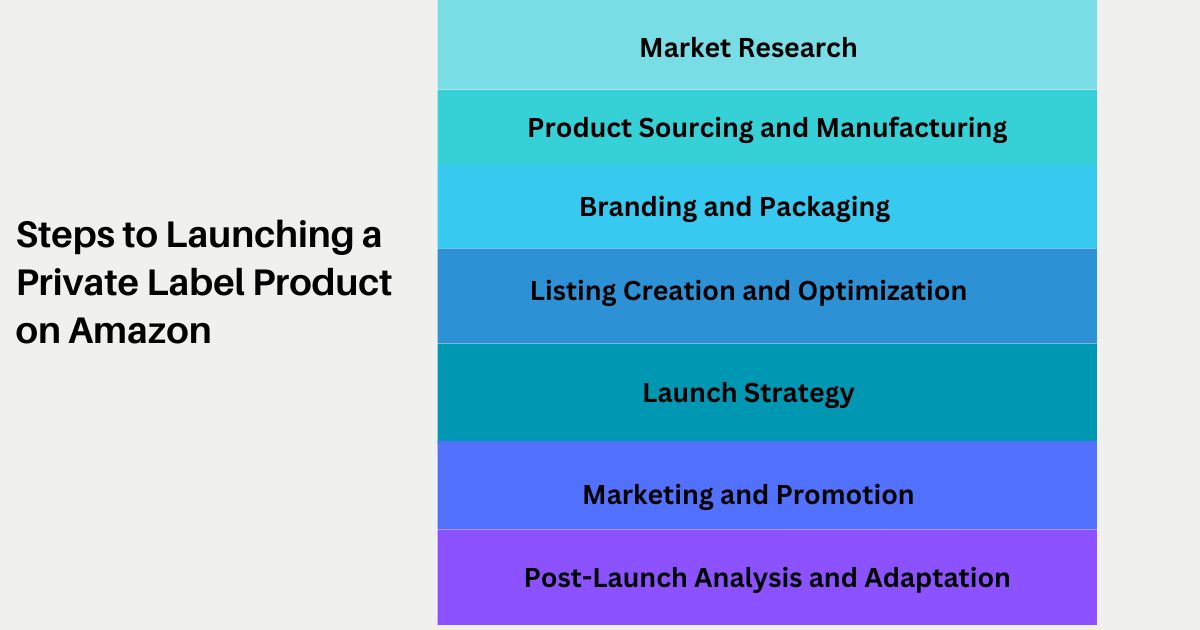
Launching a private label product on Amazon involves a series of strategic steps laying the foundation for a successful product launch. Here’s an expanded and comprehensive breakdown of the essential stages to effectively introduce your private-label product to the Amazon marketplace:
Market Research: Identifying Your Path to Success
Identify Profitable Niches
Explore various Amazon categories to identify niches that align with your expertise and offer growth potential. Look for products with steady demand and manageable competition.
Analyze Demand, Competition, and Trends
Dive into sales data, customer reviews, and trends using SellerApp or AMZScout tools. Gain insights into peak selling seasons and market gaps.
Understand Target Audience
Develop detailed customer personas to understand their demographics, preferences, and pain points. Tailor your product offering to address their specific needs.
Product Sourcing and Manufacturing: Crafting Quality and Consistency
Vet Suppliers
Thoroughly vet potential suppliers based on their track record, production capacity, and communication skills—request samples to assess product quality.
Negotiate Terms
Negotiate pricing, minimum order quantities, and delivery times with your chosen supplier. Ensure clear terms to prevent misunderstandings.
Customization and Prototyping
Collaborate closely with manufacturers to customize your product’s design, features, and packaging. Create prototypes to test and refine your vision.
Branding and Packaging
Creating a Lasting Impression
Develop a Strong Brand Identity: Craft a compelling brand name, logo, and mission statement that resonate with your target audience. Ensure consistency across all branding elements.
Design Eye-Catching Packaging
Your packaging is an extension of your brand. Design packaging that aligns with your brand’s aesthetics and effectively communicates product information.
Include Value-Added Materials
Consider including inserts, user guides, or generating QR codes that enhance the customer experience and provide value.
Listing Creation and Optimization
Craft Engaging Product Listings
Write persuasive product titles, feature-rich bullet points, and informative descriptions that showcase the benefits of your product.
Leverage High-Quality Images and Videos
Include high-resolution images and videos that highlight your product’s different angles and use cases.
Optimize for SEO
Conduct thorough keyword research and incorporate relevant keywords organically into your listing content for improved search visibility.
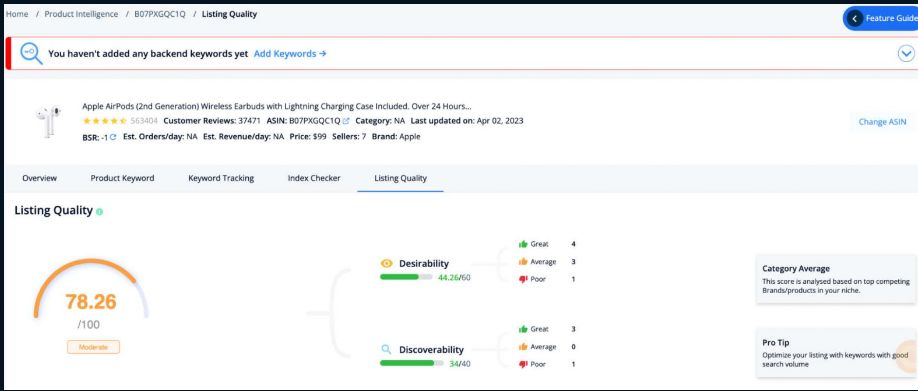
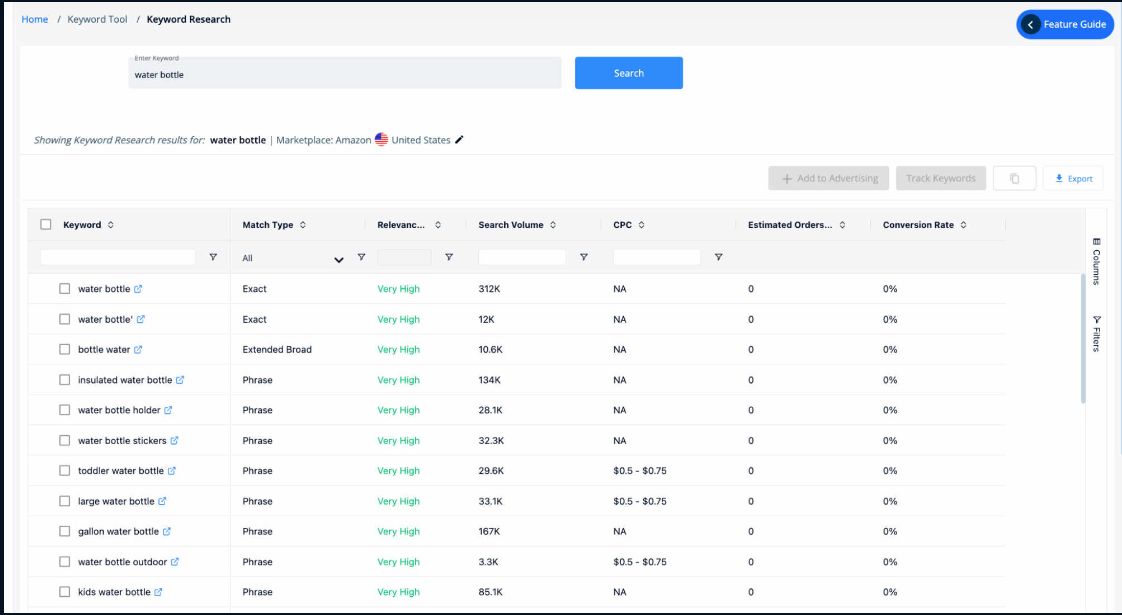
With SellerApp’s Listing Quality Checker feature, you can quickly check the listing quality of any product.
Launch Strategy
Pre-launch Teasers
Generate excitement by teasing your upcoming product launch through social media, email newsletters, and blog posts.
Early Bird Promotions
Offer exclusive discounts or limited-time offers to reward early adopters and encourage initial purchases.
Influencer Partnerships
Collaborate with social media influencers or bloggers in your niche to create buzz and reach a wider audience.
Marketing and Promotion: Amplifying Visibility
Amazon PPC Advertising
Invest in Pay-Per-Click (PPC) advertising on Amazon to attract relevant traffic to your product listings. For the best results, keep an eye on and tweak your campaigns.
Social Media Engagement
Engage with your audience on social media platforms by sharing valuable content, responding to comments, and running contests.
Email Marketing
Build an email list and create engaging email campaigns to inform customers about new products, promotions, and updates.
Post-Launch Analysis and Adaptation: Continuous Improvement
Analyze Performance Metrics
Monitor sales data, customer feedback, and reviews to assess the product’s performance and identify areas for improvement.
Iterative Enhancement
Based on customer feedback and sales data, continuously iterate on your product, listing, and branding to enhance customer satisfaction.
Expand and Diversify
Once your initial product gains traction, consider expanding your product line within the same niche or venturing into related niches.
Overcoming Challenges in Amazon Private Label Business
Launching and growing an Amazon private label business has its share of challenges. Addressing these challenges strategically is key to building a successful venture. Here’s a concise overview of the common challenges and how to tackle them:
Initial Investment and Risk Management
Starting a private label business requires initial product development, branding, and inventory investment. To manage risk, conduct thorough market research to validate demand before committing significant resources. Start with a lean inventory and reinvest profits as your sales grow.
Dealing with Counterfeits and Hijackers
Protect your brand by enrolling in Amazon’s Brand Registry program. This helps you proactively address counterfeit products and unauthorized sellers. Regularly monitor your product listings and take prompt action against any unauthorized activity.
Managing Inventory and Stock Levels Effectively
Balancing inventory levels is crucial to avoid stockouts or overstocking. Utilize inventory management tools and forecasts based on historical data and sales trends. Maintain a close relationship with your suppliers to adjust production based on demand.
Adapting to Changing Amazon Algorithms and Policies
Amazon’s algorithms and policies can change, affecting your product’s visibility and ranking. Stay updated by following Amazon’s seller news and forums. Adapt your optimization and advertising strategies to align with these changes to maintain your competitive edge.
Tips for Sustaining and Growing Your Private Label Brand
Sustaining and expanding a private label brand on Amazon requires ongoing effort and strategic approaches. Here are vital tips to ensure the growth and longevity of your brand:
Continuous Product Improvement
Actively seek customer feedback and reviews to identify areas for improvement. Regularly update and enhance your products based on customer suggestions to meet evolving needs.
Product Line Expansion
Introduce complementary products within the same niche. Offer variations, accessories, or related items to increase customer options and encourage repeat purchases.
Geographic Expansion
Explore opportunities to expand your brand’s reach beyond your current market. Consider selling in different Amazon marketplaces or opening up to international customers.
Seasonal and Trend Integration
Capitalize on seasonal trends and events by introducing limited-time products or special editions. Align your brand with trending topics to capture consumer interest.
Invest in Professional Imagery
High-quality images and videos are crucial for showcasing your products effectively. For the best pictures of your products, think about hiring a professional photographer.
Partnerships and Collaborations
Collaborate with other brands, influencers, or complementary products for joint promotions. Partnerships can expand your brand’s reach and introduce it to new audiences.
Optimize Listing Content
Optimize your product listings with relevant keywords, compelling images, and clear, concise descriptions. Regular updates can improve search visibility and conversion rates.
The Future of Amazon Private Label
Emphasis on Brand Differentiation
As more private-label brands emerge, the importance of differentiation will intensify. Brands that effectively communicate their unique value propositions, build strong brand identities, and establish emotional connections with customers will stand out in the competitive marketplace.
Data-Driven Decision Making
Data analytics will play a major role in shaping business strategies. Brands that harness customer data to personalize offerings, optimize marketing campaigns, and refine product development will have a competitive edge.
Expansion to International Markets
Access to global markets will continue to expand for private-label brands. Amazon’s growing international presence will allow brands to tap into new customer bases and adapt to diverse cultural preferences.
Cross-Channel Marketing Integration
Brands will increasingly integrate their Amazon presence with other marketing channels. Effective cross-channel marketing, including social media, email marketing, and influencer collaborations, will be essential for reaching customers throughout their buyer journey.
Technological Integration
Augmented reality (AR) and virtual reality (VR) will provide immersive shopping experiences. Customers can visualize products in their spaces before purchasing, enhancing confidence in online buying.
Voice Commerce and AI Assistants
Voice-activated devices and AI-powered assistants like Amazon’s Alexa will reshape how consumers interact with brands. Private label businesses must optimize their product listings for voice search and provide seamless voice-driven shopping experiences.
Evolution of Fulfillment Models
Amazon’s fulfillment services, including Amazon FBA private label, will evolve to accommodate changing customer expectations. Brands may explore innovative fulfillment methods to provide faster, more efficient shipping.
Regulation and Compliance
Regulatory scrutiny on e-commerce and private labels will likely increase. Brands must stay informed about changing regulations, ensuring product safety, labeling accuracy, and compliance.
Conclusion
The world of Amazon Private Label is brimming with potential, offering aspiring entrepreneurs the chance to build their brands, control their destinies, and tap into a global audience. With the knowledge and techniques described in this comprehensive guide, you’re equipped to embark on your journey into the exciting realm of Amazon Private Label. Remember, success in this venture requires diligence, creativity, and a deep commitment to delivering value to your customers. So, go forth confidently, and may your private label brand thrive in the vibrant e-commerce marketplace.
The post Amazon Private Label: Your Gateway to Profitable Branding appeared first on Amazon-ASIN Blogs - Latest from Amazon Sellers: News, Advice, and Effective Strategies.
]]>The post Top 11 Amazon FBA Calculators for Data-Driven Sellers appeared first on Amazon-ASIN Blogs - Latest from Amazon Sellers: News, Advice, and Effective Strategies.
]]>While Amazon FBA offers a host of benefits, navigating the world of fees and profits can be a complex endeavor. This is where FBA calculators come into play. These powerful tools have become indispensable for sellers looking to optimize their Amazon business. In this blog, we will explore the top 11 Amazon FBA fee calculators that can empower sellers to make data-driven decisions, boost profitability, and achieve success in the competitive world of Amazon selling.
Quick Guide
- Overview of Amazon Fulfillment by Amazon
- Importance of Using FBA Calculators for Sellers
- Advantages of using the FBA Fee Calculator
- Key Benefits of Using FBA for Sellers
- How FBA Can Impact Your Business
- Key Factors to Consider For Selecting FBA Calculator
- Key Features to Look for in an FBA Calculator
- The Top 11 Amazon FBA Calculators
- Conclusion
Overview of Amazon Fulfillment by Amazon
Fulfillment by Amazon is a service that allows sellers to delegate the critical aspects of order fulfillment to Amazon. Once a seller sends their products to Amazon’s fulfillment centers, the responsibility of packing, shipping, and handling customer service inquiries lies with Amazon.
This means that sellers can focus on core business activities, such as product research, marketing, and customer engagement, while Amazon takes care of the logistical complexities.
The process begins when sellers ship their products to Amazon’s fulfillment centers, where they are stored in secure warehouses until a customer places an order. Upon receiving an order, Amazon’s efficient network of fulfillment centers ensures quick picking, packing, and shipping of the product, often leading to faster delivery times for customers.
Additionally, FBA products are eligible for Amazon Prime, making them more attractive to Prime members who enjoy fast and free shipping benefits.
Importance of Using FBA Calculators for Sellers
As enticing as FBA may be, understanding and managing the various fees associated with the service is crucial for sellers to maintain profitability. Amazon’s fee structure includes fulfillment fees, referral fees, storage fees, and other miscellaneous charges, all of which can significantly impact a seller’s bottom line. Calculating these fees manually can be time-consuming and error-prone, leaving sellers vulnerable to making inaccurate pricing decisions.
This is where FBA calculators prove to be invaluable tools for sellers. These calculators are designed to provide accurate fee estimations based on various factors, including product category, size, weight, and sales volume. By utilizing FBA calculators, sellers can gain a comprehensive understanding of their total costs, profit margins, and potential returns on investment.
In the following sections, we will delve into the top 11 FBA fee calculators that offer unique features and benefits to help sellers optimize their Amazon businesses and thrive in this competitive marketplace.
From accurate fee calculations to real-time currency conversion and advanced product research integration, these calculators have the power to unlock the true potential of selling on Amazon. Stay tuned to discover which FBA calculator aligns best with your business goals and empowers you to achieve unprecedented success.
Advantages of using the FBA Fee Calculator
Inventory Storage
Sellers ship their products to Amazon’s vast network of fulfillment centers, where the inventory is stored securely until a customer places an order.
Order Fulfillment
When a customer buys a product, Amazon takes on the responsibility of picking, packing, and shipping the order to the customer’s doorstep.
Customer Service
Amazon’s customer service team handles all customer inquiries and returns on behalf of the seller, providing a seamless and efficient shopping experience.
Key Benefits of Using FBA for Sellers
Simplified Logistics
By leveraging FBA, sellers can focus on growing their businesses without getting bogged down by the complexities of order fulfillment. Amazon’s well-established infrastructure ensures smooth and efficient handling of inventory and shipping.
Prime Eligibility
FBA products are eligible for Amazon Prime, an exclusive membership program with millions of subscribers. Prime members enjoy the perks of fast and free shipping, making FBA products more appealing to this significant customer base.
Enhanced Buy Box Placement
The Amazon Buy Box is the coveted placement on product detail pages, and products fulfilled by Amazon often have a higher chance of winning this placement. This leads to increased visibility and higher conversion rates for FBA sellers.
Multi-Channel Fulfillment
FBA extends beyond Amazon’s platform. Sellers can use Multi-Channel Fulfillment (MCF) to fulfill orders from other sales channels, including their own websites. This enables sellers to offer a consistent and reliable fulfillment experience to customers across various platforms.
Global Selling Made Easy
FBA enables sellers to tap into international markets effortlessly. By using Amazon’s global fulfillment network, sellers can reach customers in different countries without setting up separate fulfillment operations.
How FBA Can Impact Your Business
Time and Resource Savings
With FBA handling the logistics, sellers can allocate more time and resources to critical aspects of their business, such as product research, marketing, and customer relationship management. This can lead to faster business growth and increased competitiveness.
Improved Customer Experience
FBA’s fast and reliable shipping options contribute to a positive customer experience. Customers receive their orders promptly, leading to higher customer satisfaction, positive reviews, and potential repeat business.
Scalability and Flexibility
FBA is designed to accommodate businesses of all sizes. Whether you’re a small-scale seller or an established brand, FBA can scale to meet your needs, accommodating fluctuations in demand and seasonal peaks.
Reduced Operational Overhead
By outsourcing fulfillment to Amazon, sellers can reduce the costs associated with maintaining their warehouses, staff, and logistics infrastructure. This can lead to significant cost savings and improved overall profitability.
Access to Prime Day and Seasonal Promotions
FBA sellers gain automatic eligibility for Amazon’s annual Prime Day event and other seasonal promotions. These high-traffic events can result in a surge in sales and increased brand visibility.
Key Factors to Consider For Selecting FBA Calculator
Accuracy and Data Reliability
One of the primary purposes of an FBA calculator is to provide precise fee and profit estimations for your Amazon products. Therefore, accuracy and data reliability are paramount. Look for calculators that use up-to-date and reliable data directly from Amazon’s API or other trustworthy sources.
The tool should consider various factors, such as product category, size, weight, and fulfillment fees, to provide accurate calculations that reflect real-world scenarios.
User-Friendly Interface and Features
A user-friendly interface is essential for an efficient and pleasant user experience. The best FBA calculators should be easy to navigate, with clear and intuitive instructions. Look for calculators that offer a straightforward input process, allowing you to input your product details and receive immediate fee and profit estimations.
Integration with Amazon Marketplace
Seamless integration with the Amazon marketplace is crucial for accurate and up-to-date calculations. Look for FBA calculators that directly connect to Amazon’s platform and use real-time data. This ensures that the fees and profit estimations provided by the calculator reflect any changes in Amazon’s fee structure or marketplace conditions.
Competitor Analysis
Some calculators offer competitor analysis tools that allow you to track and compare your product’s performance against other sellers in the same category. This can provide valuable insights for strategic decision-making and pricing adjustments.
Product Research Integration
FBA calculators integrated with product research tools can help you identify high-potential products, estimate their profitability, and make informed sourcing decisions.
Profit Forecasting
Advanced FBA calculators may include profit forecasting features that consider sales velocity, seasonality, and market trends to project future profits and help you plan your inventory and pricing strategies accordingly.
Keyword Research
Integrating keyword research capabilities can aid in optimizing your product listings for improved search visibility and increased sales.
Key Features to Look for in an FBA Calculator
Amazon Fee Calculation Accuracy
Accurate fee calculations are the backbone of any reliable FBA calculator. Look for a calculator that considers all the relevant fees associated with selling on Amazon, including fulfillment fees, referral fees, storage fees, and any other applicable charges.
The calculator should take into account different product categories, sizes, and weights, ensuring that the fee estimations are tailored to your specific products.
Integration with Product Databases
Integration with product databases is a valuable feature that can enhance your product research process. Look for an FBA calculator that has access to a vast product database, allowing you to gather critical information about competitor products, their pricing, and their sales performance.
Having access to this data can aid in identifying high-demand products, understanding market trends, and conducting a competitive analysis to help you make informed decisions about your product selection and pricing strategy.
Real-Time Currency Conversion
For sellers operating in multiple marketplaces or selling internationally, real-time currency conversion is a crucial feature to have in an FBA calculator. This ensures that you receive accurate profit estimations, factoring in fluctuating exchange rates.
Profit Margin and ROI Calculations
A comprehensive FBA calculator should provide insights into your potential profit margin and return on investment (ROI) for each product. This feature allows you to assess the viability of selling a particular product and helps you prioritize profitable items in your inventory.
Multi-Marketplace Support
As an Amazon seller, you may choose to expand your business to other Amazon marketplaces or even sell on different e-commerce platforms.
A calculator with multi-marketplace support enables you to estimate fees and profits for various marketplaces, helping you evaluate the potential of selling in different regions.
Inventory and Storage Cost Estimation
Managing inventory is a critical aspect of running a successful Amazon business. An FBA calculator that includes inventory and storage cost estimation can help you optimize your inventory levels and avoid overstocking or understocking issues.
The Top 11 Amazon FBA Calculators
SellerApp
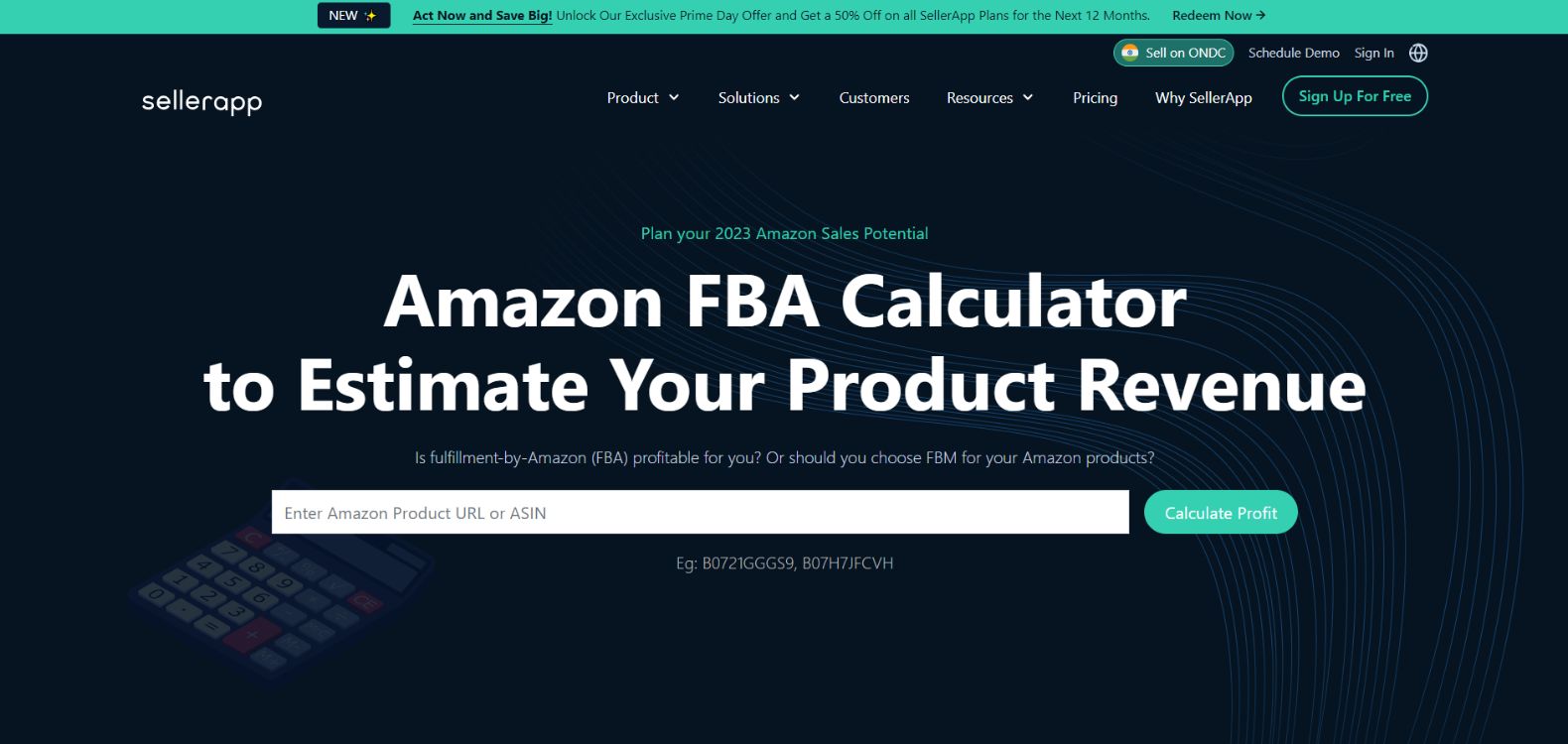
SellerApp is a comprehensive platform designed to empower Amazon sellers with data-driven insights and tools to boost their success on the platform. As part of their suite of services, SellerApp offers an FBA Calculator that simplifies the fee and profit calculations for sellers using Fulfillment by Amazon (FBA).
SellerApp’s FBA Calculator provides an intuitive and user-friendly interface, making it easy for sellers to estimate their fees accurately and gain valuable insights into their profitability. Whether you are a seasoned seller or just starting your Amazon journey, SellerApp’s FBA Calculator can be an invaluable tool in your arsenal.
Features of SellerApp’s FBA Fee Calculator
- Advanced Competition Analysis
- Keyword Research Integration
- Real-Time Data and Insights
- Bulk Processing Capability
- Product Performance Tracking
- Educational Resources and Support
Fulfillment by Amazon Revenue Calculator
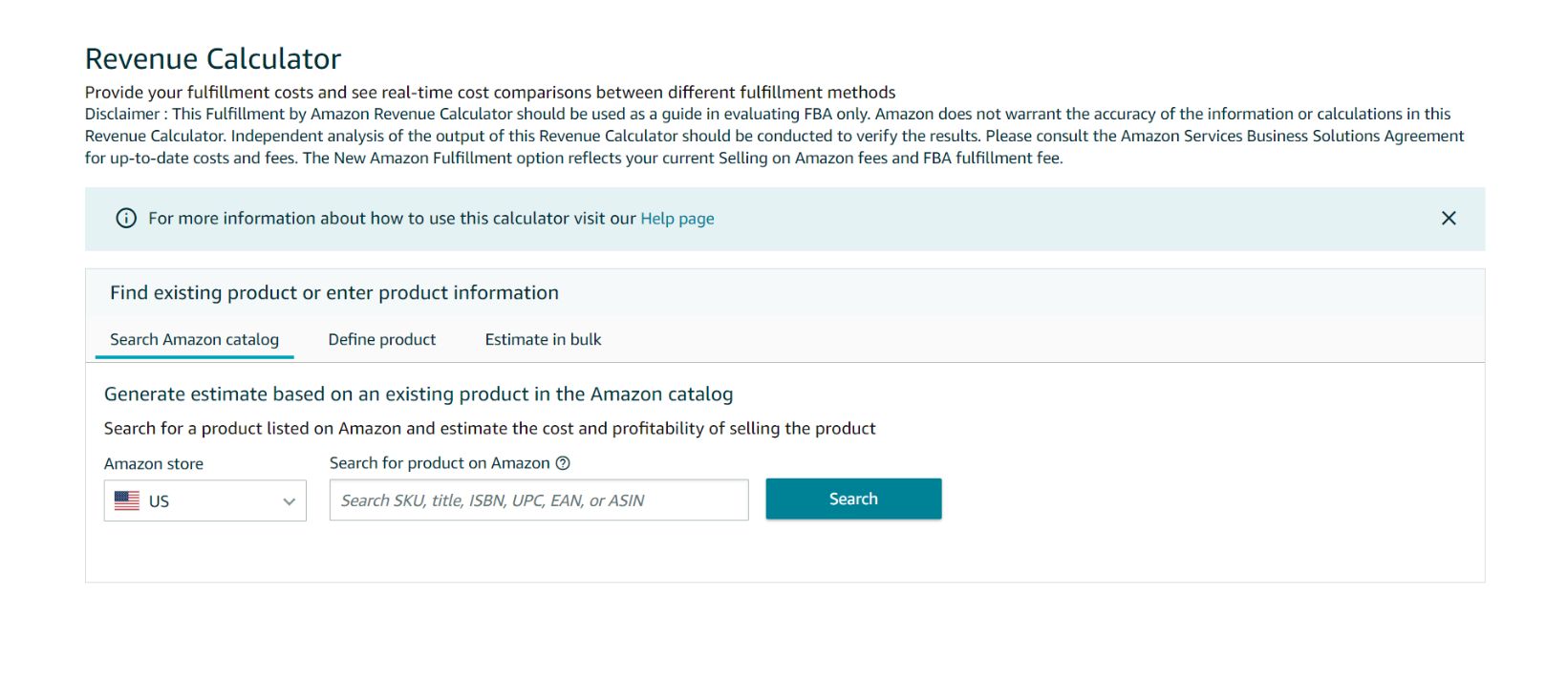
Fulfillment by Amazon (FBA) Revenue Calculator is an essential tool designed to assist Amazon sellers in estimating their potential profits and costs when using Amazon’s FBA service. FBA is a program offered by Amazon that allows sellers to store their products in Amazon’s fulfillment centers, and Amazon takes care of packing, shipping, and customer service on behalf of the seller.
Features of the Fulfillment by Amazon Revenue Calculator
- Product Price Estimation
- Fulfillment Fees Calculation
- Shipping Costs
- Sales Tax Estimation
- Net Profit Calculation
Helium 10
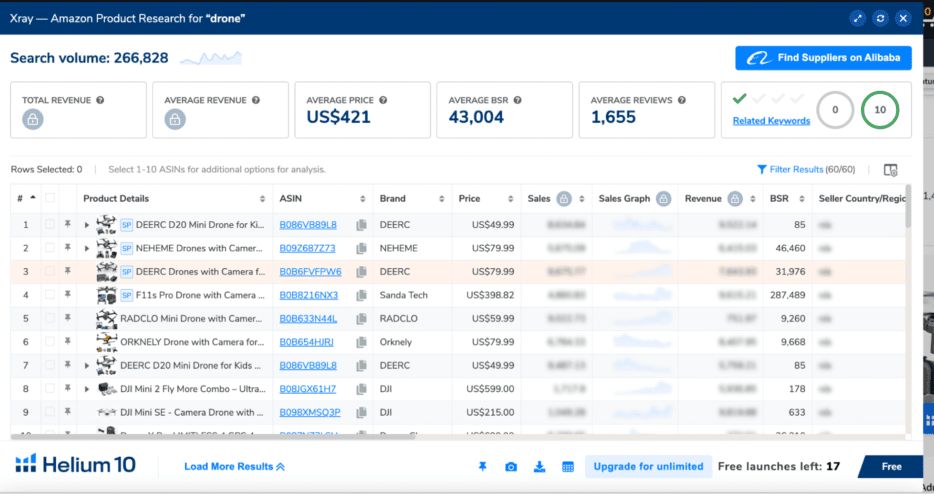
Helium 10 FBA Calculator is a powerful tool designed specifically for Amazon sellers to analyze and optimize their product profitability when using Amazon’s FBA service. It is a comprehensive suite of software tools catering to Amazon sellers, and their FBA Calculator is one of their most valuable offerings.
Features of Helium 10’s FBA Fee Calculator
- Accurate Profit Estimation
- Integration with Advanced Product Research Tools
- Real-Time Market Data
- Multi-Marketplace Support
- Profit Forecasting
Jungle Scout
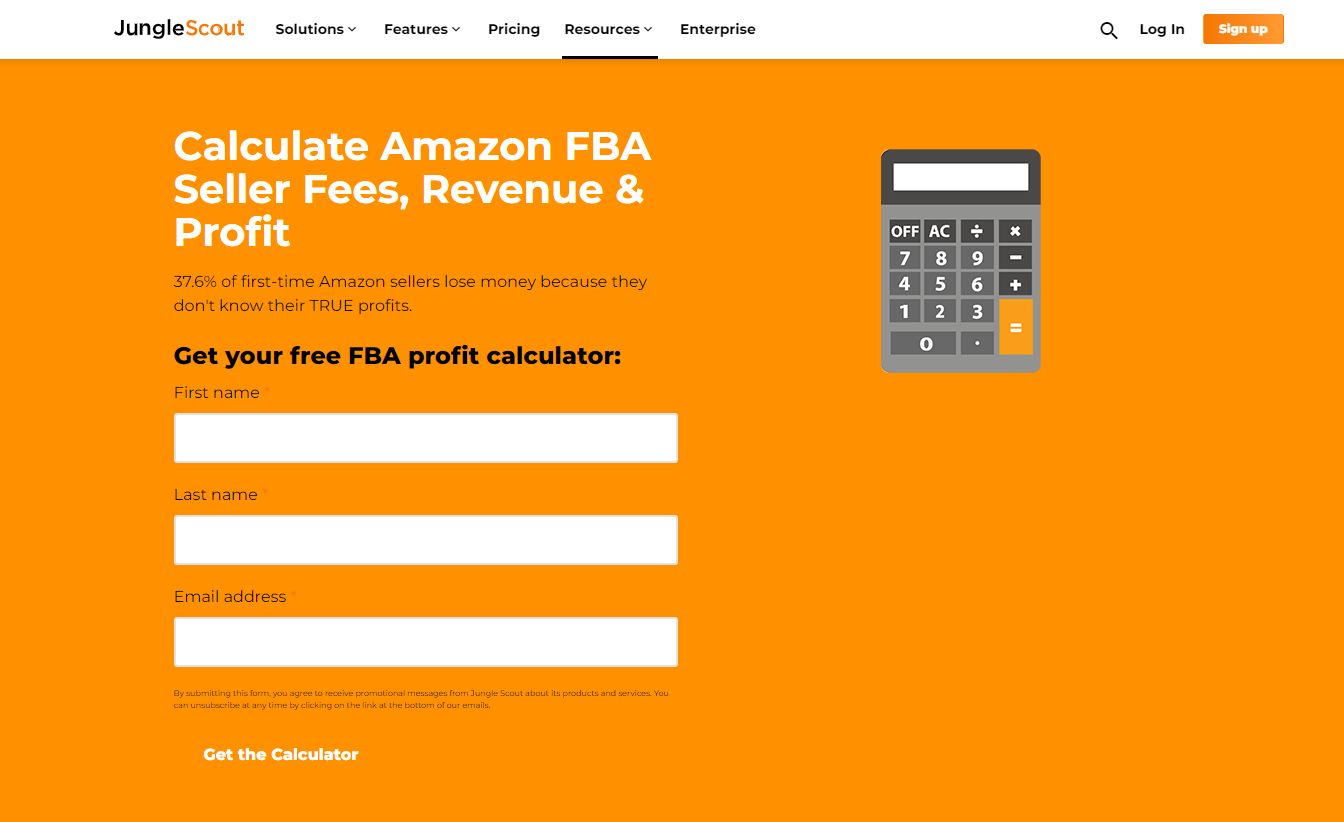
Jungle Scout FBA Calculator is a powerful tool designed to assist Amazon sellers in making informed decisions about their Fulfilled by Amazon (FBA) product listings.
FBA is a service provided by Amazon that allows sellers to store their products in Amazon’s fulfillment centers, where Amazon handles storage, packaging, and shipping to customers. The Jungle Scout FBA Calculator helps sellers estimate potential profits, fees, and other crucial financial aspects associated with their FBA listings.
Key Features of Jungle Scout FBA Calculator
- Profit Estimation
- FBA Fee Calculation
- Competitor Analysis
- Break-Even Analysis
Viral Launch
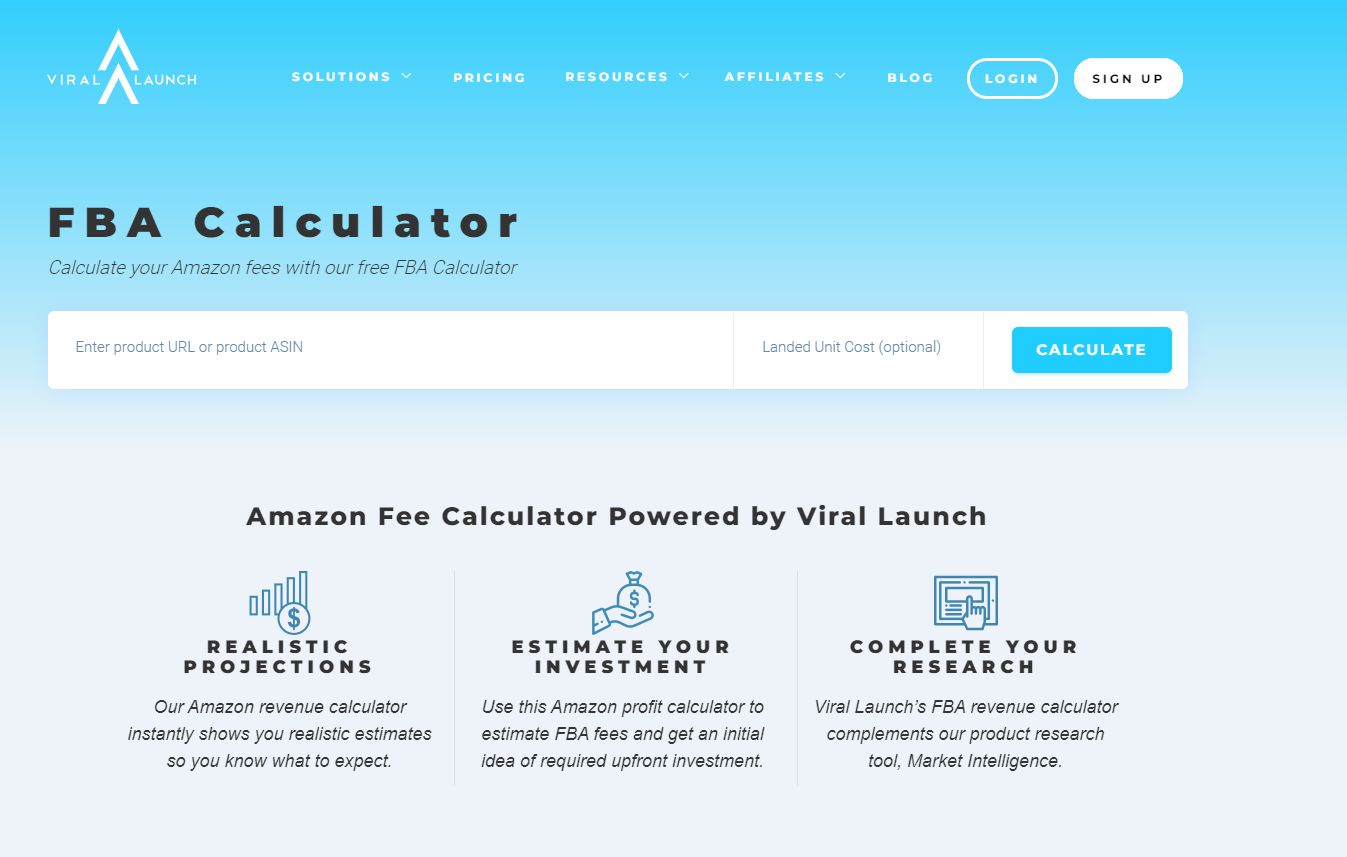
Viral Launch FBA Fee Calculator is a tool designed to help Amazon sellers estimate the fees associated with their Fulfilled by Amazon (FBA) product listings. It assists sellers in understanding the cost structure and potential profits of their products on the Amazon marketplace.
Features of Viral Launch’s FBA Fee Calculator
- Comprehensive Fee Breakdown
- Advanced Product Research Integration
- Customizable Profitability Metrics
- Competitor Analysis and Pricing Insights
- Seasonality and Sales Trend Analysis
AMZScout
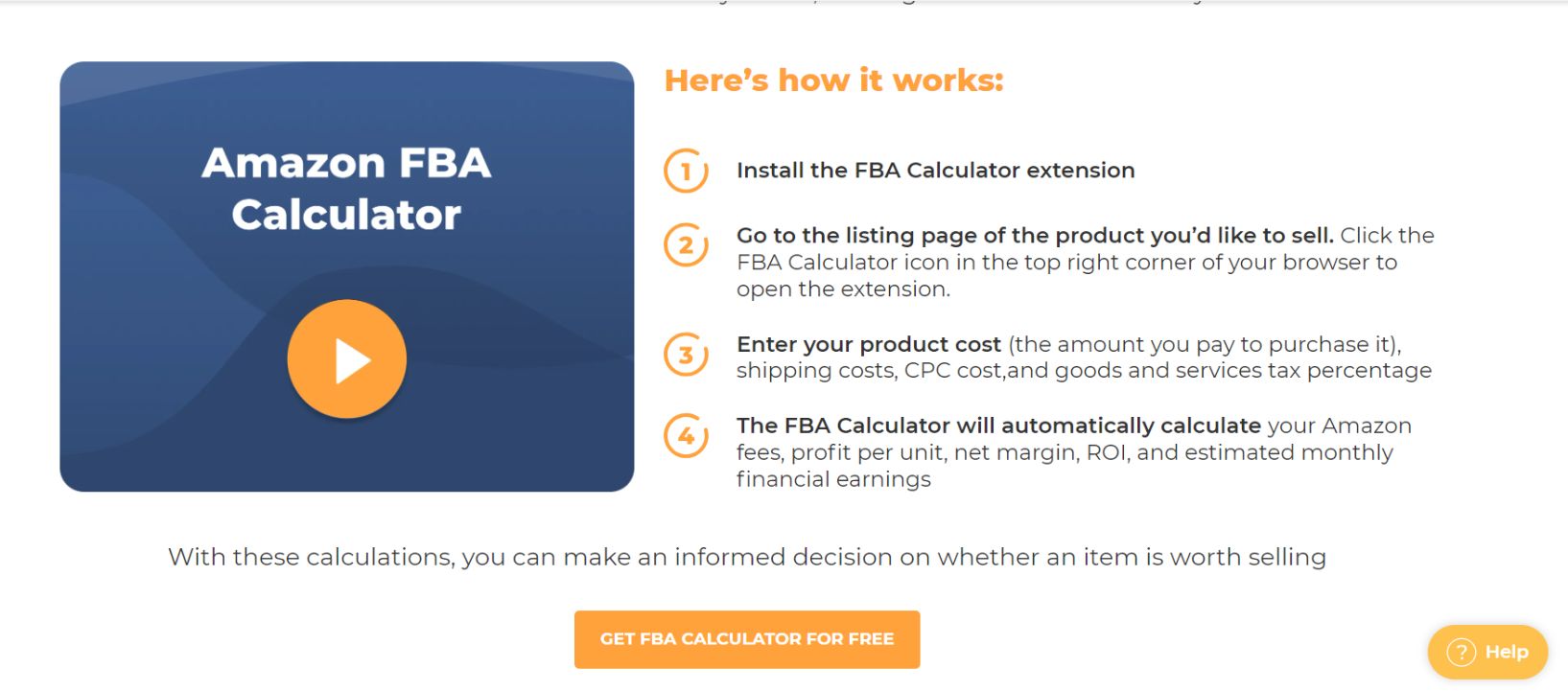
AMZScout FBA Calculator is a powerful tool designed to assist Amazon sellers in making informed decisions about their products’ profitability and potential success within the Amazon FBA program.
This web-based software provides sellers with essential data and insights that help them analyze the financial aspects of their Amazon business and choose the most lucrative products to sell on the platform.
Features of AMZScout’s FBA Fee Calculator
- Real-Time Fee Calculation
- Advanced Product Analysis
- Multi-Marketplace Support
- Keyword Research Integration
- Profit Margin and ROI Calculation
eComEngine
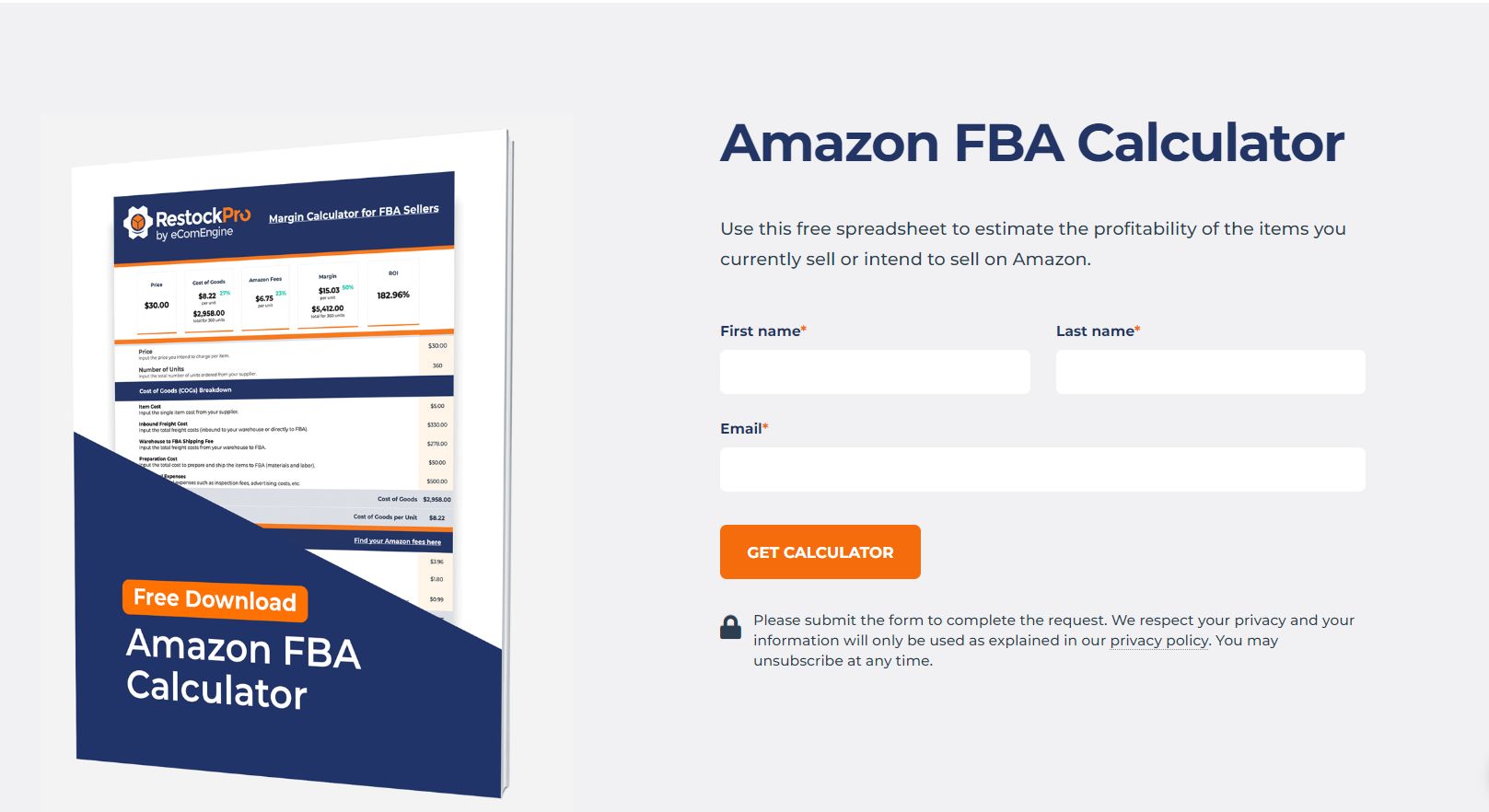
eComEngine FBA Calculator is a robust software tool designed to assist Amazon sellers in analyzing the profitability of their products within the Amazon FBA program.
By providing accurate calculations and valuable insights, this tool empowers sellers to make informed decisions about their inventory, pricing, and overall Amazon business strategy.
Unique Features of eComEngine’s FBA Fee Calculator
- Profitability Analysis
- Competitor Analysis
- Bulk Calculations
- Inventory Management
- Historical Data Analysis
Profitguru
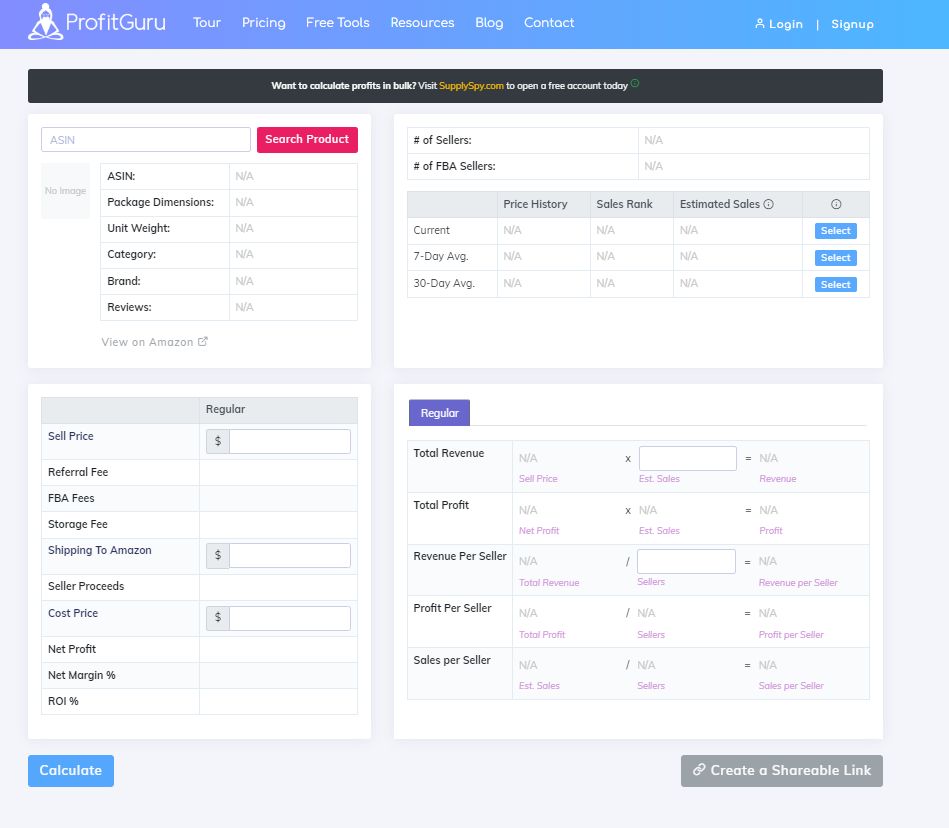
ProfitGuru is an all-in-one FBA calculator that offers a range of features to Amazon sellers, helping them analyze their product’s profitability and make data-driven decisions. It provides accurate and detailed calculations, taking into account various costs and fees associated with Amazon FBA selling.
Features of Profitguru’s FBA Fee Calculator
- Advanced Fee Calculation Algorithms
- Profit Margin Optimization
- Bulk Processing Capability
- Sales Rank and Demand Analysis
- Real-Time Data Integration
Feedvisor
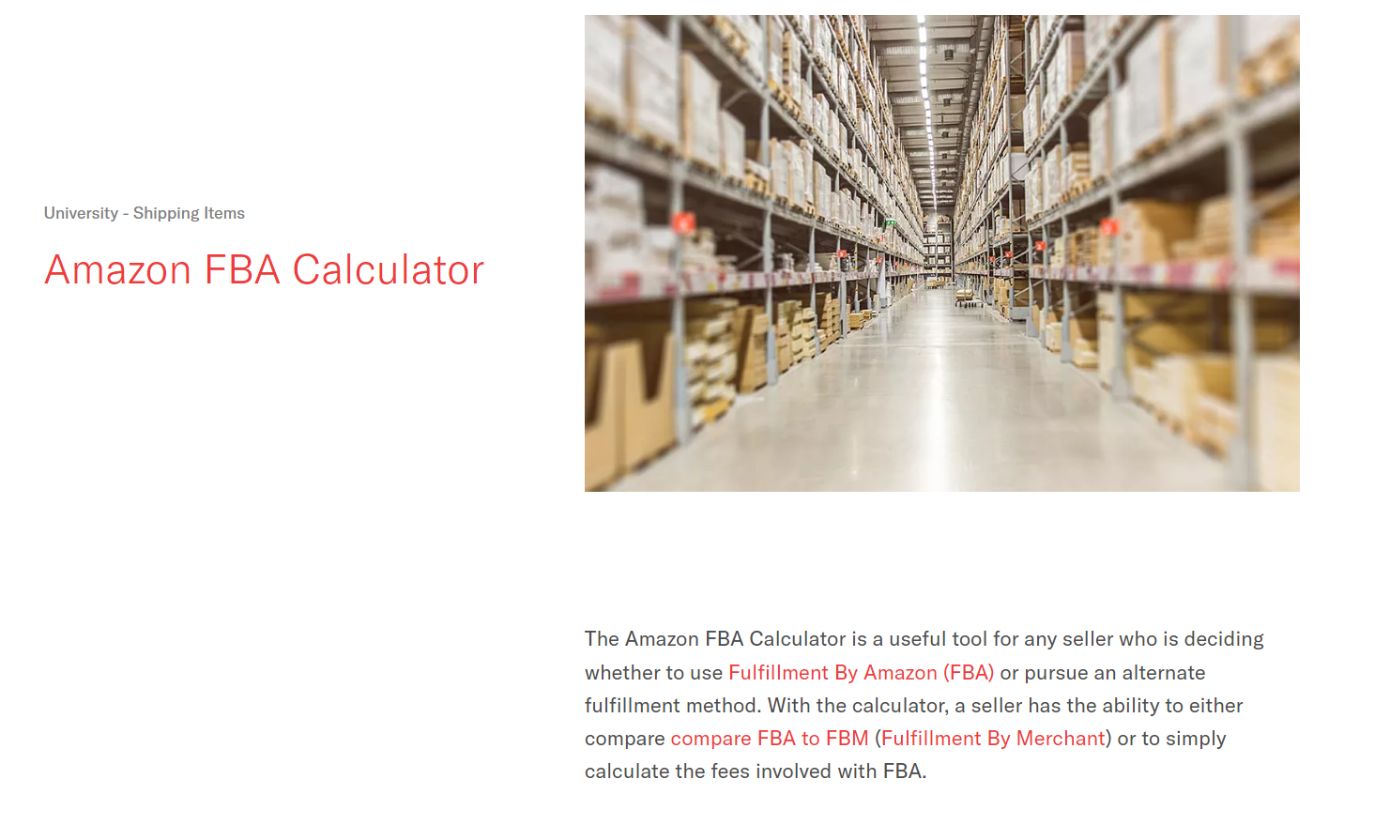
The Feedvisor FBA Calculator is designed to assist Amazon sellers in making data-driven decisions and understanding the financial aspects of their Fulfillment by Amazon (FBA) operations.
FBA is a service provided by Amazon that allows sellers to store their products in Amazon’s fulfillment centers, and Amazon handles the storage, packing, and shipping of orders. This tool aims to provide sellers with valuable insights into the profitability and performance of their FBA inventory.
Features of Feedvisor’s FBA Fee Calculator
- AI-Powered Predictive Analytics
- Dynamic Repricing Integration
- Market Trends and Seasonality Analysis
- Customizable Profitability Metrics
Synccentric
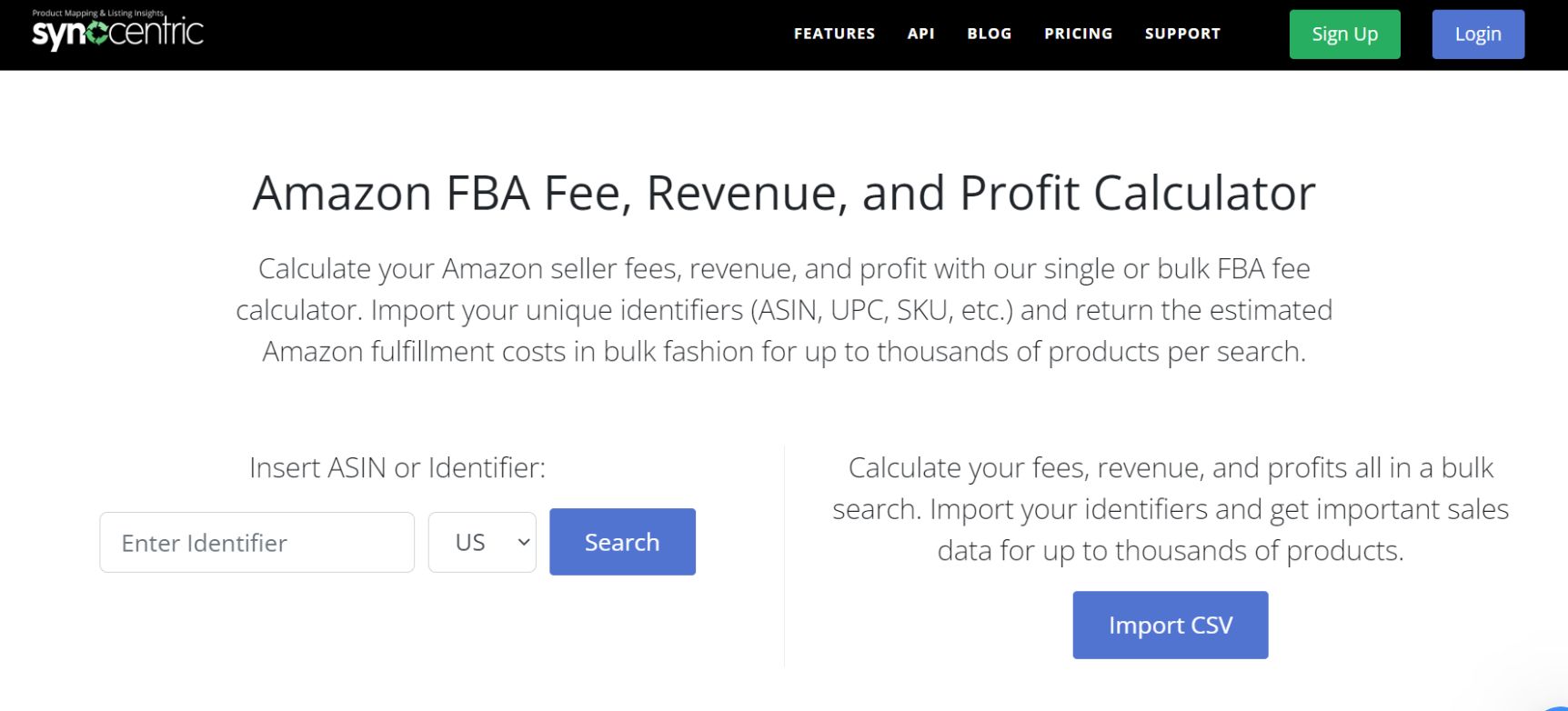
Synccentric is a powerful software suite designed to assist Amazon sellers in product research, competitor analysis, and business optimization. Among its array of features, eccentric includes an FBA Calculator that enables sellers to estimate fees and potential profits when using Fulfillment by Amazon (FBA).
Features of Synccentric’s FBA Fee Calculator
- Comprehensive Fee Breakdown
- Real-Time Market Data
- Multi-Marketplace Support
- Advanced ROI Calculation
- Bulk Product Analysis
Sellersprite
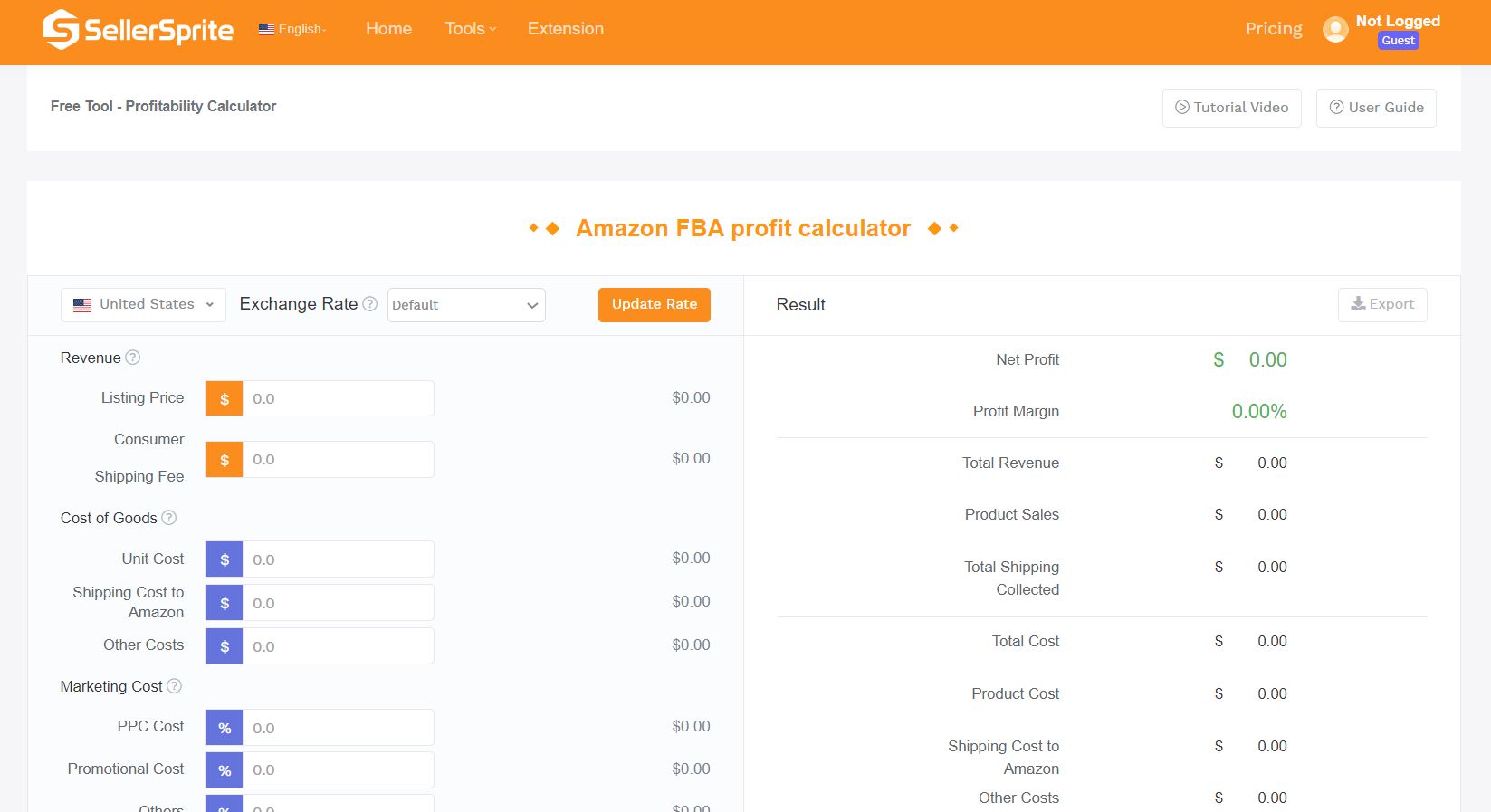
Sellersprite is a comprehensive platform designed to empower Amazon sellers with a variety of tools and resources to succeed in their businesses. Among its offerings, Sellersprite provides an FBA Calculator that assists sellers in estimating fees and potential profits when using Fulfillment by Amazon (FBA).
Features of Sellersprite’s FBA Fee Calculator
- Product Details
- Amazon Fees
- Shipping Costs
- Sales Volume
Conclusion
Amazon’s Fulfillment by Amazon (FBA) service has revolutionized the way sellers operate and manage their businesses on the platform. By leveraging FBA, sellers can delegate critical aspects of order fulfillment to Amazon, allowing them to focus on core business activities and provide fast and efficient service to customers. FBA offers a host of benefits, including simplified logistics, access to Prime eligibility, enhanced buy box placement, multi-channel fulfillment, and global selling opportunities.
These calculators provide accurate fee estimations based on various factors, helping sellers gain a comprehensive understanding of their total costs, profit margins, and potential returns on investment. When selecting the best FBA calculator, key factors to consider include accuracy and data reliability, a user-friendly interface, and integration with the Amazon marketplace.
The post Top 11 Amazon FBA Calculators for Data-Driven Sellers appeared first on Amazon-ASIN Blogs - Latest from Amazon Sellers: News, Advice, and Effective Strategies.
]]>The post Reclaim Your Lost Funds: Discover the Top 5 Amazon Reimbursement Experts appeared first on Amazon-ASIN Blogs - Latest from Amazon Sellers: News, Advice, and Effective Strategies.
]]>Quick Guide:
- Importance of Using Professional Amazon Reimbursement Service Providers
- Understanding Amazon Reimbursements
- Benefits of Using Amazon Reimbursement Service Providers
- Criteria for Selection
- Top 5 Amazon Reimbursement Service Providers
- How to Choose the Right Amazon Reimbursement Service Provider
- Understanding Amazon Reimbursement Software
- Amazon Reimbursement Policy and Best Practices
- Conclusion
As an Amazon seller, ensuring you are reimbursed for valid claims is crucial to maintaining a profitable and sustainable business. Amazon reimbursements can be triggered by various circumstances, including damaged goods during the fulfillment process, discrepancies in Fulfillment by Amazon (FBA) inventory, or lost inventory. These reimbursements play a vital role in recovering your funds and protecting your bottom line.
FBA Reimbursement Service Providers play a crucial role in assisting sellers in the reimbursement process. They leverage their expertise and knowledge of Amazon’s complex reimbursement policies to navigate the system’s intricacies on behalf of sellers. These professional service providers are equipped with advanced tools and Amazon reimbursement software that efficiently track and process claims, ensuring sellers receive the compensation they are entitled to promptly.
Importance of Using Professional Amazon Reimbursement Service Providers
Utilizing the services of a professional Amazon reimbursement service provider offers several advantages that sellers should pay attention to. Firstly, these experts understand Amazon’s reimbursement policy and can identify potential claims that sellers might have missed. They have a proven track record of successfully handling Amazon reimbursement cases, ensuring sellers receive their rightful reimbursements.
Moreover, Amazon reimbursement service providers are well-versed in the nuances of the reimbursement process. They can efficiently gather the necessary evidence and documentation to support your claims, saving you valuable time and effort. As a result, sellers can focus on core business activities like product sourcing, marketing, and customer service, while leaving the intricacies of Amazon reimbursements to the experts.
Understanding Amazon Reimbursements
Amazon offers various types of reimbursements, each with its unique set of conditions and requirements. Sellers need to understand these reimbursement types to ensure they receive their entitled compensation. Here are some common Amazon reimbursement types:
FBA Reimbursement: Fulfilled by Amazon (FBA) reimbursements cover cases where Amazon may have lost or damaged inventory while handling the fulfillment and shipping process. These reimbursements help sellers recoup the cost of lost or damaged goods.
Damaged Goods Reimbursement: Sellers can claim reimbursement for the value of their damaged inventory when items incur damage while stored in Amazon’s fulfillment centers.
Lost Inventory Reimbursement: If Amazon fails to inventory that was supposed to be in their fulfillment centers, sellers can claim reimbursement for the value of the lost items.
Amazon Reimbursement Process and Challenges Sellers May Face
The Amazon reimbursement process can be intricate and time-consuming. Sellers must submit detailed evidence and documentation to support their claims, and any discrepancies can lead to claim denials or delays. The challenges faced by sellers in the reimbursement process include:
Complex Policies: Amazon’s reimbursement policy is vast and subject to frequent updates, making it challenging for sellers to keep track of changes and fully understand all the rules.
Time-Consuming: Identifying and filing reimbursement claims can take time, diverting sellers’ attention from their primary business tasks.
Claim Denials: Amazon may only accept reimbursement claims if the documentation is complete or adequate, leading to lost opportunities for sellers to recover funds.
Lack of Expertise: Many sellers may need more expertise or resources to handle reimbursement claims effectively, resulting in potential missed opportunities for compensation.
Benefits of Using Amazon Reimbursement Service Providers
Engaging a reputable Amazon reimbursement service provider offers numerous benefits that can positively impact a seller’s business:
Expert Knowledge: Amazon’s complex policies are well-understood by reimbursement service providers, allowing them to traverse the system effectively and maximize compensation chances.
Advanced Tools: These service providers can access Amazon reimbursement software that streamlines the claim process, resulting in faster and more accurate reimbursements.
Improved Recovery Rates: With their expertise and experience, reimbursement service providers can significantly enhance the recovery rates for sellers, ensuring that they receive the maximum compensation possible.
Focus on Core Business: By outsourcing reimbursement tasks, sellers can focus on their core business activities, such as product development, marketing, and customer service, leading to business growth.
Timely Processing: Reimbursement service providers can expedite the claim process, ensuring sellers receive reimbursements promptly and avoid prolonged delays.
Criteria for Selection
When selecting an Amazon reimbursement service provider, it’s essential to consider the following criteria to make an informed decision:
Trustworthiness and Reliability: Look for providers with a proven track record of successfully handling reimbursement cases and delivering on their promises.
Experience and Expertise: Choose providers with significant experience in dealing with Amazon reimbursements, as they are better equipped to handle complex cases effectively.
Customer Reviews and Feedback: Read reviews and testimonials from previous clients to gauge the provider’s reputation and customer satisfaction levels.
Top 5 Amazon Reimbursement Service Providers
Now let’s get into the top five Amazon reimbursement service providers, each known for their expertise in handling Amazon reimbursement cases.
GETIDA
Getida is a leading platform specializing in Amazon reimbursement and financial analytics services. The company is designed to help Amazon sellers identify and recover funds that may be owed to them due to various reimbursement issues within the Amazon FBA (Fulfilled by Amazon) ecosystem. Getida utilizes advanced algorithms and data analytics to identify potential reimbursement opportunities, helping sellers recoup money that might need to be noticed or recovered.
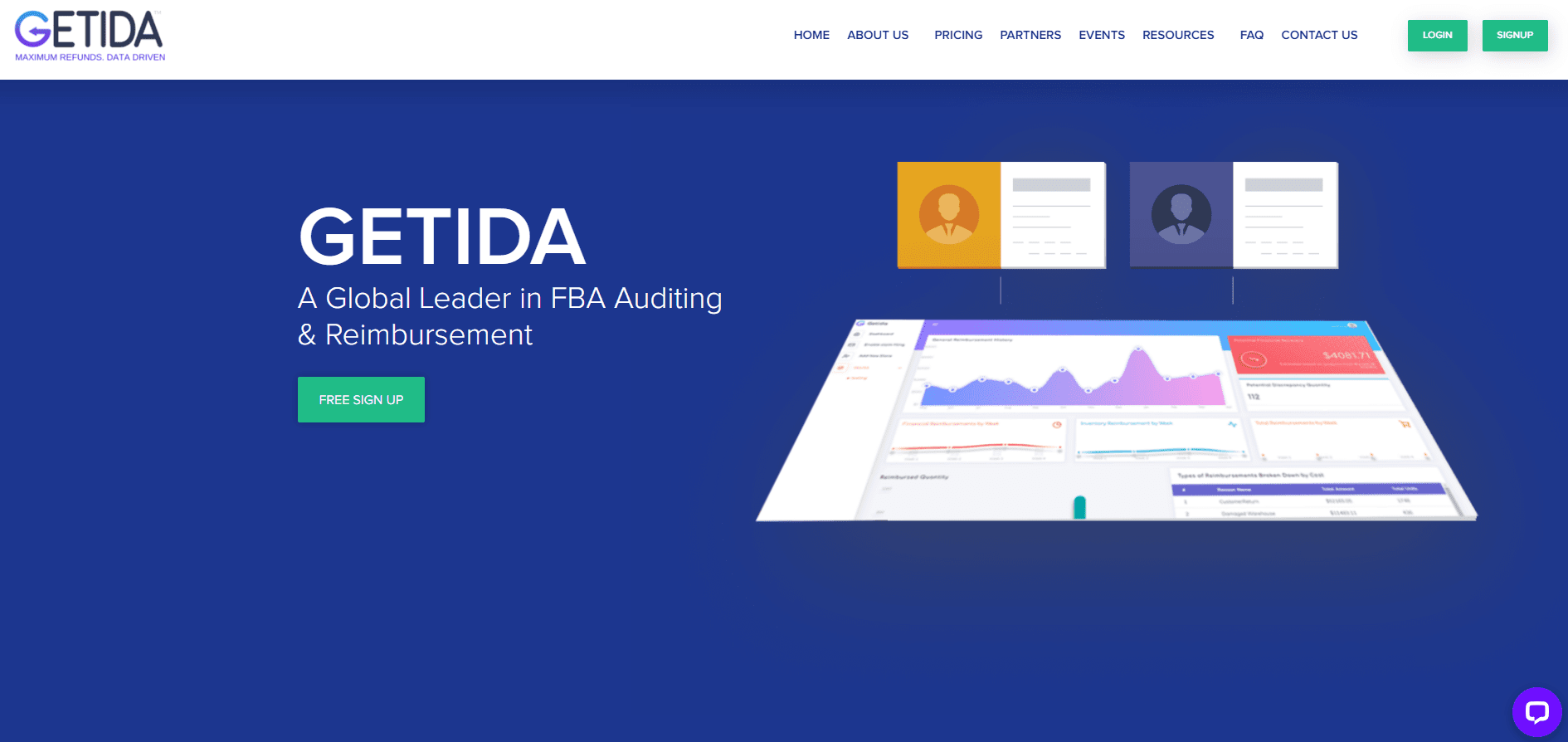
Overview of Getida’s Services:
Amazon Reimbursement Services:
Getida offers a comprehensive suite of services dedicated to handling Amazon reimbursement claims. This includes identifying instances of lost or damaged inventory, discrepancies in FBA inventory, and other eligible reimbursement claims.
Automated Reimbursement Tracking:
Getida’s advanced software automatically tracks and analyzes a seller’s Amazon data to identify potential reimbursement opportunities. This streamlined approach saves sellers valuable time and effort in managing the reimbursement process.
Data Analysis and Reporting:
Getida provides sellers with detailed reports and analytics related to their Amazon accounts, enabling them to gain valuable insights into their business performance and identify areas for improvement.
Financial Recovery:
By diligently pursuing reimbursement claims, Getida aims to maximize the money recovered for its clients, ensuring they receive their rightful compensation.
Expert Support:
The platform boasts a team of Amazon experts who are well-versed in the intricacies of Amazon’s reimbursement policies. They provide personalized assistance and guidance to sellers throughout the reimbursement process.
Key features of Getida:
Automated Reimbursement Identification:
Getida utilizes advanced algorithms and data analytics to identify potential reimbursement opportunities for Amazon sellers automatically. The platform continuously monitors a seller’s Amazon account for lost or damaged inventory, discrepancies in FBA inventory, and other eligible reimbursement claims.
Streamlined Claim Filing:
Getida streamlines the reimbursement claim filing process by generating comprehensive reports and gathering the necessary evidence to support each claim. This reduces the administrative burden on sellers and ensures that claims are submitted accurately and promptly.
Real-time Tracking:
Sellers can track the status of their reimbursement claims in real-time through Getida’s user-friendly dashboard. This provides sellers with complete visibility into the progress of their claims and ensures transparency throughout the reimbursement process.
Data Analytics and Insights:
Getida provides sellers with detailed data analytics and financial insights related to their Amazon accounts. This includes key performance metrics, financial reports, and trends analysis, empowering sellers to make informed business decisions.
Expert Support and Guidance:
Getida’s team of Amazon experts offers personalized support and guidance to sellers throughout the reimbursement process. Whether it’s understanding Amazon’s complex reimbursement policies or resolving claim-related issues, Getida’s support team is dedicated to assisting sellers at every step.
Increased Recovery Rates:
By leveraging its expertise and automated tools, Getida aims to maximize the amount of money recovered for sellers. The platform diligently pursues eligible reimbursements to ensure that sellers receive the maximum compensation they are entitled to.
Customer testimonials and success stories:
Several sellers have reported significant increases in reimbursements and improved claim accuracy after using GETIDA’s services.
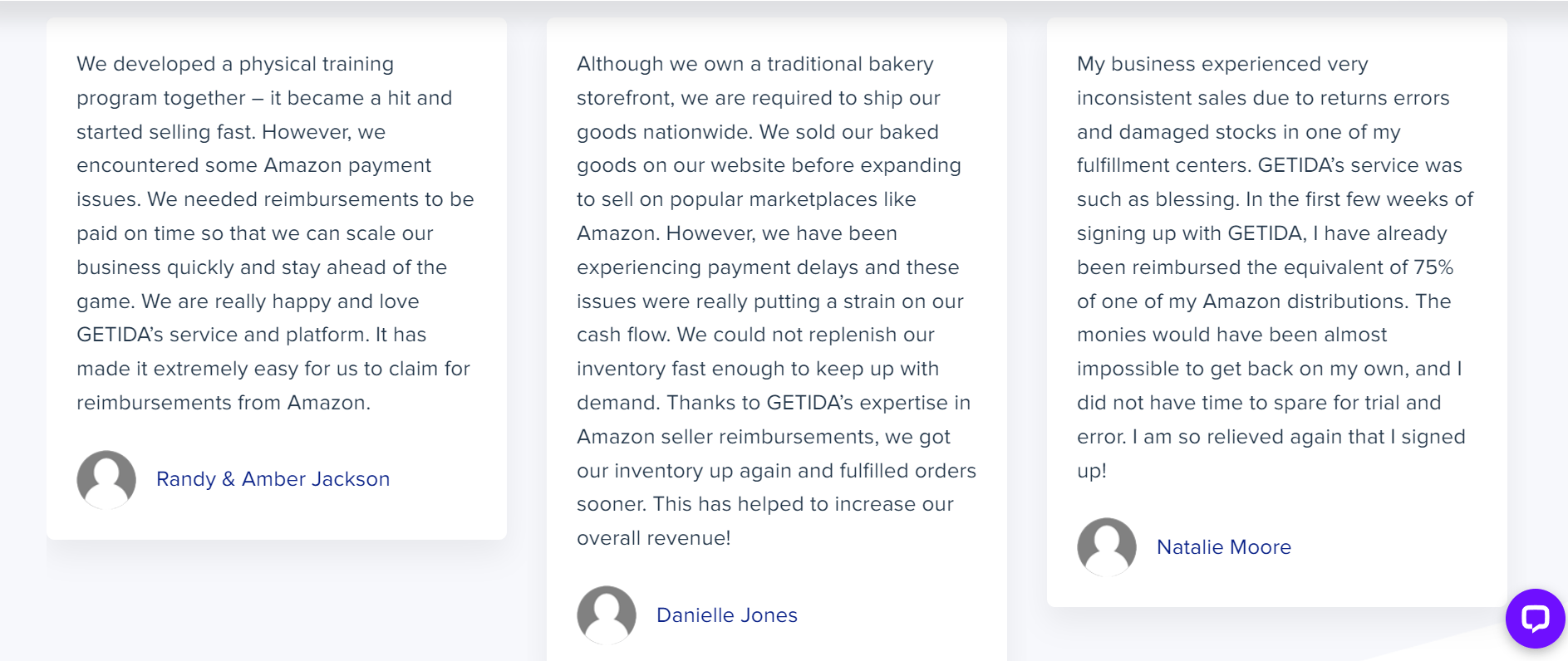
Riverbend Consulting
Riverbend Consulting is a well-established Amazon consulting firm that offers a wide range of services to Amazon sellers and brands. The company specializes in providing expert guidance, strategic solutions, and operational support to navigate the complexities of selling on Amazon’s platform successfully.
Overview of Riverbend Consulting’s Services:
Amazon Reimbursement Services:
Riverbend Consulting assists sellers in handling reimbursement claims, ensuring they receive compensation for issues such as lost or damaged inventory, discrepancies in FBA inventory, and other eligible reimbursement claims.
Amazon Account Management:
The firm offers comprehensive Amazon account management services, helping sellers optimize their product listings, inventory management, and advertising strategies to increase visibility and sales on the platform.
Amazon Policy Compliance:
Riverbend Consulting provides sellers with guidance and support to ensure compliance with Amazon’s ever-changing policies and guidelines. This helps sellers avoid potential suspensions or restrictions that may negatively impact their business.
Performance Improvement:
The consulting firm works with sellers to identify areas of improvement in their Amazon selling performance and offers tailored solutions to enhance sales, product visibility, and customer satisfaction.
Brand Protection and Enforcement:
Riverbend Consulting assists brands in protecting their intellectual property and enforcing their rights on the Amazon platform. This includes addressing issues related to counterfeit products and unauthorized sellers.
Amazon Suspension Appeals:
In cases where sellers face account suspensions, Riverbend Consulting helps appeal these decisions and work towards reinstating their selling privileges on Amazon.
Key features of Riverbend:
Expert Amazon Consultants:
Riverbend Consulting boasts a team of experienced Amazon consultants who are well-versed in the intricacies of selling on the platform. Their expertise extends to various aspects of Amazon selling, including reimbursement claims, account management, policy compliance, and brand protection.
Amazon Reimbursement Services:
The firm provides sellers with specialized assistance in handling Amazon reimbursement claims. Their experts meticulously analyze seller data and transactions to identify potential reimbursement opportunities and guide sellers through the claim filing process.
Amazon Policy Compliance:
With Amazon’s policies constantly evolving, staying compliant is crucial to maintaining a successful selling business. Riverbend Consulting helps sellers navigate Amazon’s policies and guidelines, ensuring adherence and mitigating the risk of account suspensions.
Amazon Suspension Appeals:
In cases of account suspensions, Riverbend Consulting offers expert assistance in crafting persuasive appeals to reinstate selling privileges on Amazon. They guide sellers through the appeal process and work diligently to resolve suspension issues.
Proactive Seller Performance Monitoring:
The firm continuously monitors seller performance metrics and account health to detect and address potential issues before they escalate. Their proactive approach helps sellers maintain a strong performance record on Amazon.
Customer testimonials and success stories:
Many sellers have praised Riverbend Consulting for its prompt and effective reimbursement services.
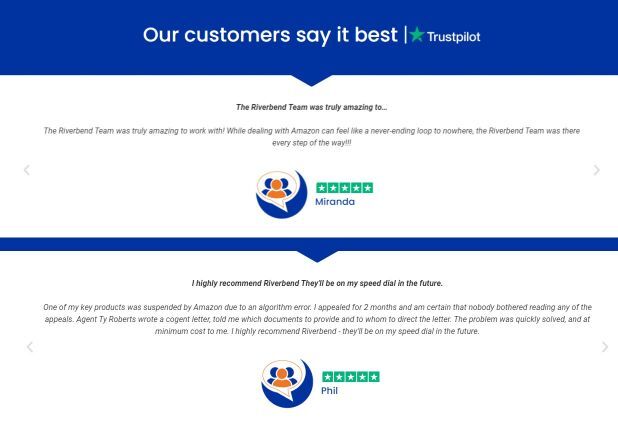
Seller Investigators
Overview of SellerInvestigators:
SellerInvestigators is a service provider specializing in Amazon reimbursement and seller account management solutions. The company offers assistance to Amazon sellers in navigating the complexities of the Amazon platform, particularly in the area of reimbursement claims.
Key Features of SellerInvestigators:
Amazon Reimbursement Services:
SellerInvestigators assists Amazon sellers in identifying and recovering funds for eligible reimbursement claims, such as lost or damaged inventory, discrepancies in FBA inventory, and other applicable claims.
Expert Guidance:
The company’s team comprises experienced Amazon experts who possess in-depth knowledge of Amazon’s reimbursement policies and procedures. They provide personalized guidance to sellers throughout the reimbursement process.
Data Analytics:
SellerInvestigators employ data analytics and advanced algorithms to analyze seller transactions and inventory data. This automated approach helps identify potential reimbursement opportunities that sellers may have overlooked.
Hands-On Approach:
SellerInvestigators takes a hands-on approach to handling reimbursement claims, managing the entire claim filing process on behalf of sellers. This relieves sellers of the administrative burden and ensures accurate and timely claim submissions.
Transparent Communication:
The company maintains transparent communication with sellers, providing real-time updates on the status of their reimbursement claims and keeping them informed throughout the process.
Proactive Monitoring:
SellerInvestigators proactively monitor seller accounts for potential reimbursement opportunities and work diligently to file claims regularly.
Customer testimonials and success stories:
Several sellers have lauded Seller Investigators for their exceptional service and impressive results.
Refunds Manager
Refunds Manager is a prominent service provider that specializes in handling Amazon reimbursement services for sellers. The platform is designed to help Amazon sellers recover funds for issues such as lost or damaged inventory, discrepancies in FBA inventory, and other eligible reimbursement claims.
Overview of Refunds Manager’s Services:
Automated Reimbursement Tracking:
Refunds Manager utilizes sophisticated software to automatically track and analyze a seller’s Amazon transactions and inventory data. This automated approach helps identify potential reimbursement opportunities that sellers might have overlooked.
Claim Filing and Management:
The platform streamlines the reimbursement claim filing process by generating detailed reports and gathering the required evidence to support each claim. Refunds Manager handles the entire claim process on behalf of sellers, from submission to follow-up, reducing the time and effort needed from sellers.
Real-time Reimbursement Updates:
Sellers can monitor the status of their reimbursement claims in real-time through Refunds Manager’s user-friendly dashboard. This transparency ensures that sellers are kept informed of the progress of their claims at all times.
Accurate and Efficient Processing:
Refunds Manager’s advanced algorithms and data analytics enable accurate identification and processing of eligible reimbursement claims. Their technology-driven approach increases the efficiency of the reimbursement process, resulting in faster recoveries for sellers.
Enhanced Recovery Rates:
By leveraging their expertise and automated tools, Refunds Manager aims to maximize the amount of money recovered for sellers. Their dedicated team diligently pursues eligible reimbursements, ensuring that sellers receive the maximum compensation they are entitled to.
Key features of Refunds Manager:
Automated Reimbursement Tracking:
Refunds Manager’s advanced software automatically tracks and analyzes a seller’s Amazon transactions and FBA inventory data. This automated process helps identify potential reimbursement opportunities that sellers may not have been aware of.
Comprehensive Claim Filing:
The platform handles the entire reimbursement claim filing process on behalf of sellers. The refunds Manager generates detailed reports and gathers the necessary evidence to support each claim, streamlining the process for sellers.
Real-time Dashboard:
Sellers can access a user-friendly dashboard that provides real-time updates on the status of their reimbursement claims. This transparency allows sellers to stay informed throughout the reimbursement process.
Accuracy and Efficiency:
Refunds Manager’s algorithms and data analytics ensure accurate identification and processing of eligible reimbursement claims. This increases the efficiency of the reimbursement process and leads to faster recoveries.
Maximized Recovery Rates:
With their expertise and technology-driven approach, Refunds Manager aims to maximize the amount of money recovered for sellers. Their dedicated team diligently pursues eligible reimbursements, ensuring sellers receive the maximum compensation they are entitled to.
Customer testimonials and success stories
Many sellers have reported higher reimbursement amounts and reduced reimbursement-related workload after using Refunds Manager.
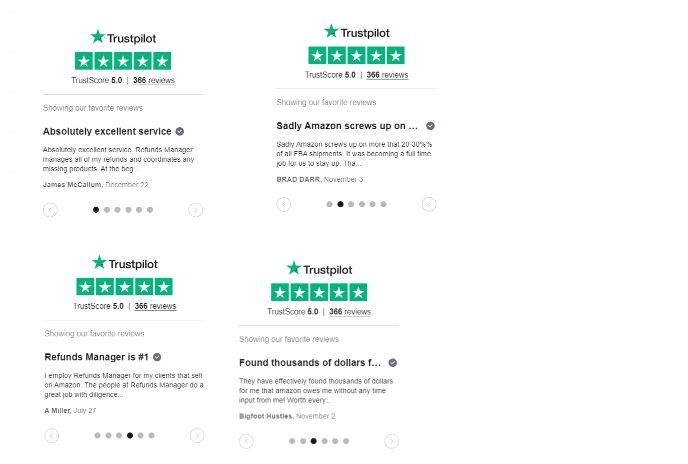
Seller Locker
Seller Locker is a reputable service provider specializing in Amazon reimbursement services for sellers. The platform aims to assist Amazon sellers in identifying and recovering funds owed to them due to various reimbursement issues, such as lost or damaged inventory, discrepancies in FBA inventory, and other eligible claims.
Overview of Seller Locker’s Services:
Seller Locker’s primary focus is on helping sellers navigate the complex process of Amazon reimbursements. The platform offers automated tracking and analysis of seller transactions and inventory data to identify potential reimbursement opportunities. By streamlining the claim filing process and providing real-time updates on the status of reimbursement claims, Seller Locker aims to maximize the amount of money recovered for sellers.
Key features of Seller Locker:
Automated Reimbursement Tracking:
Seller Locker utilizes advanced algorithms and automated tools to continuously monitor a seller’s Amazon transactions and FBA inventory data. This automated tracking system helps identify potential reimbursement opportunities accurately and promptly.
Comprehensive Claim Filing:
The platform handles the entire reimbursement claim filing process on behalf of sellers. Seller Locker generates detailed reports, collects the required evidence, and submits the claims to Amazon, saving sellers time and effort.
Real-time Dashboard:
Sellers have access to a user-friendly dashboard that provides real-time updates on the status of their reimbursement claims. This transparency allows sellers to stay informed throughout the reimbursement process.
Accuracy and Efficiency:
Seller Locker’s data-driven approach and experienced team ensure accurate identification and processing of eligible reimbursement claims. This increases the efficiency of the reimbursement process and leads to faster recoveries.
Data Security:
Seller Locker prioritizes data security and takes measures to protect seller information throughout the reimbursement process.
Customer support:
Consider the level of customer support the provider offers, as prompt assistance is vital when dealing with reimbursement claims.
How to Choose the Right Amazon Reimbursement Service Provider
Selecting the most suitable Amazon reimbursement service provider requires careful consideration. Here are some tips to help sellers make an informed decision:
Assess your needs: Understand your specific reimbursement requirements and identify providers that offer services tailored to your needs.
Experience matters: Choose a provider with a proven track record and experience handling Amazon reimbursement cases.
Transparent pricing: Opt for a provider with clear and transparent pricing, avoiding hidden fees or charges.
Customer support: Consider the level of customer support the provider offers, as prompt assistance is vital when dealing with reimbursement claims.
Understanding Amazon Reimbursement Software
In addition to using professional Amazon reimbursement service providers, sellers can also benefit from leveraging Amazon reimbursement software. This software is designed to streamline reimbursement by automating various tasks and providing sellers with real-time insights into their reimbursement claims.
Amazon reimbursement software often has advanced algorithms and data analytics capabilities to identify potential reimbursement opportunities. It can detect lost or damaged inventory, discrepancies in FBA inventory, and other eligible claims that sellers might have overlooked. By automating the identification process, sellers can maximize their chances of receiving the reimbursements they are entitled to.
Moreover, Amazon reimbursement software can also simplify the documentation and filing process. It generates comprehensive reports and gathers the necessary evidence, such as inventory discrepancies, shipping records, and order information, to support reimbursement claims. This significantly reduces the administrative burden on sellers, allowing them to focus on growing their businesses.
Amazon Reimbursement Policy and Best Practices
Understanding Amazon’s reimbursement policy is crucial for sellers seeking to recover funds effectively. The approach can be complex and subject to changes, making it essential to stay updated on the latest guidelines and requirements. Amazon provides detailed documentation on reimbursement policies and procedures, and sellers are encouraged to familiarize themselves with these resources to navigate the reimbursement process confidently.
To enhance the effectiveness of reimbursement claims, sellers should follow some best practices:
Maintain meticulous records: Keep thorough records of your inventory, shipments, and sales to ensure you have the necessary evidence to support reimbursement claims.
Act promptly: Timely reporting of reimbursement issues is critical. Delays in filing claims may result in lost opportunities for compensation.
Monitor FBA inventory regularly: Regularly check your FBA inventory to promptly identify discrepancies and potential issues.
Verify inventory shipments: Cross-check your inventory shipments with Amazon’s records to identify any missing or damaged items during the fulfillment process.
Utilize Amazon reimbursement software: Consider integrating Amazon reimbursement software into your operations to automate claim identification and filing processes.
Conclusion
Amazon reimbursements are an essential aspect of running a successful Amazon-selling business. With the potential for lost or damaged inventory, discrepancies in FBA inventory, and other eligible claims, sellers must proactively pursue reimbursement opportunities.
By using professional Amazon reimbursement service providers, sellers can tap into expert knowledge, advanced tools, and streamlined processes to maximize their reimbursement potential. Additionally, Amazon reimbursement software can be valuable in automating claim identification and simplifying the filing process.
As the e-commerce landscape continues to evolve, sellers must adapt to the changing policies and requirements set forth by Amazon. Staying informed and proactive in the reimbursement process will protect sellers’ profitability and contribute to their Amazon businesses’ growth and success.
Amazon reimbursement services, whether provided by professionals or assisted by software, offer sellers a powerful solution to navigate the complexities of the reimbursement process. By taking action and seeking professional help, sellers can optimize their Amazon selling venture, recover funds, and focus on scaling their business to new heights.
The post Reclaim Your Lost Funds: Discover the Top 5 Amazon Reimbursement Experts appeared first on Amazon-ASIN Blogs - Latest from Amazon Sellers: News, Advice, and Effective Strategies.
]]>The post What is Amazon FBA & Is FBA Right for your Business? appeared first on Amazon-ASIN Blogs - Latest from Amazon Sellers: News, Advice, and Effective Strategies.
]]>Let’s discuss the advantages and disadvantages of FBA How to use FBA and much more.
Pros and cons of using Amazon FBA
Through the use of its own logistics as well as consumer faith, Amazon has allowed thousands of entrepreneurs from the e-commerce industry to expand and expand their business through the FBA program.
It’s amazing to think that one person with no knowledge of e-commerce can sell their own items on the biggest online marketplace worldwide and have their items delivered to customers in just two days.
Although FBA is an effective fulfillment option that comes with many positives, it has some negatives as well. Let’s look at the advantages and disadvantages of FBA.
Advantages of Using Amazon FBA:
Prime Shipping: If you’re an Amazon customer, you’re already familiar by Amazon Prime. The Prime badge means that you’re entitled to get complimentary one-to two-day shipping on purchases of the item. You can also easily return the item in case of need. If sellers make use of FBA their listings will carry the Prime badge as well as access to Amazon’s 200 million Prime customers.
Send your inventory to Amazon’s fulfillment centers. For selling your items via FBA the only thing you need to set up a shipping strategy in Seller Central and ship your items into Amazon’s fulfillment centres. Amazon will take your inventory and keep it until the time that customers buy.
Customers have faith in Amazon: When customers look at Amazon’s Prime image, they are aware that they’re entitled to quick shipping and accessibility to the Amazon customer support when something goes wrong. Your items will usually be delivered to the address of your customer with a Amazon-branded package making it more attractive to customers. your product.
Amazon delivers all orders you make: Manually packaging and shipping orders daily is a long and laborious procedure. FBA FBA is similar to being your very own warehouse staff who take care of everything.
Amazon manages customer support: Amazon will take charge of any customer service issues that are associated with orders shipped out using FBA. When orders are shipped through FBM (fulfilled by the Merchant) however the seller will handle its own service to customers.
Amazon manages returns It’s not just that Amazon package and deliver orders on your behalf however, they also take care of returns. When the product is in its original state, Amazon will return that item back to your inventory.
Multi-channel fulfillment Have you heard that Amazon could make use of Amazon FBA to fulfill orders for other marketplaces and e-commerce stores? Sellers can make a fulfillment order and deliver a item to a customer who is not an Amazon.
Disadvantages of Using Amazon FBA:
FBA charges: A downside to the use of FBA is that FBA fees can be rather expensive. Based on the size and weight of your item, the costs to complete your order will be around 30-40% of your item’s cost. It is essential to determine the costs prior to selling products to determine their profits.
FBA storage charges: On top of FBA costs, Amazon also charges you to store your products at their fulfillment centres. There are two kinds of storage charges: monthly and long-term. The proper management of your inventory can assist you in avoiding storage costs for long-term storage, since they can be very costly.
Inventory and Restock limits: Amazon has implemented limitations on restocking to stop retailers from overstocking their stock but it has proven to be a bigger problem for sellers who are unable to send enough products. Be aware that you might not have enough storage space to accommodate all your inventory.
Amazon allows customers to return items Although this is extremely convenient for consumers however, it is easy to return goods on Amazon can result in more frequent returns than other marketplaces.
Is FBA suitable for your business?
After you have a better understanding of the advantages and disadvantages of using FBA Is it the right choice for you?
It is possible to make use of FBA in the following situations:
- Sell lightweight and small-sized items which will make you FBA and storage charges less
- You can run your business from your home and do not have storage space to store your inventory
- Aren’t in the mood or resources to package and deliver orders
- Do you want your items to be Prime shipping eligible?
- Do you want Amazon to manage customer service and return issues?
It is possible that you do not need to make use of FBA If you:
- Sell extremely heavy and/or large items.
- Do you want to control how your products are delivered to your customers?
- Own your own warehouse that can be used for storage and fulfillment
- You can process returns on your own
- Utilize a third-party fulfillment provider
- You are in charge of your fulfillment, however you are part of Seller-Fulfilled Prime
- You cannot afford your own warehouse space , or employees to pack and ship your orders
This article should give you an understanding of FBA and how it operates and if it’s appropriate for your business.
The post What is Amazon FBA & Is FBA Right for your Business? appeared first on Amazon-ASIN Blogs - Latest from Amazon Sellers: News, Advice, and Effective Strategies.
]]>The post 13 Tactics to Grow Your Sales on Amazon appeared first on Amazon-ASIN Blogs - Latest from Amazon Sellers: News, Advice, and Effective Strategies.
]]>These easy-to-implement tips, tricks, and tactics can help you crush your 2023 goals and beyond.
Table of contents:
- SEO
- Amazon Advertising
- Reviews
- Amazon A+ Content
- Videos
- Giveaways
- Social Media
- Affiliate Marketing
- Reduce Add-on Items
- Subscribe and Save Program
- Lightning Deals
- Prime Day Prep
- Optimized Product Images
Ways to Increase Amazon Sales:
1. SEO
In order to drive organic traffic to your Amazon listings, consider these top 4 rules of thumb:
- Include the right keywords: Do keyword research through Amazon VC reports, competitive analyses, data providers like Viral Launch, and Merchant Words. Remember, not all terms are created equal!
- Strings of text: Amazon queries the detail page for strings of text rather than individual key words. You want to include the exact phrases consumers are typing into the search bar.
- Avoid Brand Speak: Avoid using company jargon on your detail pages. Just because your marketing team calls a product X doesn’t mean consumers do.
- Amazon Guidelines: Keep in mind that Amazon may have unique guidelines for each product category and, in some cases, will enforce those guidelines. Your goal should adhere to those rules as best you can while optimizing for the A9 algorithm.
Amazon SEO Facts:
- Amazon has surpassed Google for product searches (2018), with nearly 60% starting on Amazon. This is likely even higher as of 2023.
- Amazon ads have a CVR rate that is 3.5x higher than Google’s.
- Amazon SEO is different from Google. It’s often wise to optimize for long-tail keyterms on Google. Amazon’s algorithm is driven by sales.
2. Amazon Advertising
- Rules-based advertising could be synonymous with advertising optimization. Rather than spending valuable time and resources to manually adjust keyword bids base on certain advertising criteria, a rules-based system increases one person’s band- width exponentially. Rather than monitoring each ASIN for each brand, they can simply apply a rule to each ASIN or to a product family to get results for that brand’s unique advertising strategy.
- Rules-based advertising also streamlines the process of effective keyword discovery. By running rules on hundreds of keywords, our advertisers can quickly hone in on the most efficient keywords to make the budget go further.
- SellerApp advertising software helps our advertising team set rules (i.e. optimize) for over 20 different advertising metrics for our 3P partners on Amazon.
Take advantage of external advertising.
- Hulu Advertisements, Twitch, Snapchat, Instagram, OLV, etc.
- Leverage existing advertising or create new video advertisements and use them to drive to the product detail page on Amazon.
- Utilize advertising on YouTube by effectively advertising products through leveraging the followers of influential YouTube creators. Just make sure you target relevant videos with relevant traffic.
Myth: Focusing advertising on top-selling products means more growth.
Dedicating efficient and intelligent ad spend across a wider variety of products will actually grow your brand in a more effective way and will reach a larger audience for your brand to resonant with than continually throwing money at top-selling products.
Recommended to read: 12 Best Amazon PPC Optimization Tools for Sellers.
3. Reviews
Why Reviews & Ratings matter:
- Ratings and reviews are major reason Amazon commands 60%+ of new product searches.
- They are the top 2 drivers of conversion ratios.
Consider in-package inserts.
Leave a card thanking people for their purchase and ask for a review. You can use a card insert for quality assurance purposes as well. If there’s anything wrong with the product you can give them clear instructions about where to go and who to contact. That way, you’re a step ahead of potentially negative product reviews and can gather more positive ones while you’re at it. However, be mindful there are strict rules here— your request should be framed in a “neutral manner.” You don’t want to be penalized by Amazon.
Take advantage of brand loyalty.
People love your brand. Ask them to tell everyone else! You can take advantage of brand loyalty by creatively asking consumers to leave a review for you on Amazon. You can do this on your website or on social media. People love supporting their favorite brands, especially when they’re asked in a fun and creative way.
Use Amazon Vine reviews.
Amazon Vine is like incorporating precious metals for your investment portfolio. Make this a piece of your reviews & rating strategy if you haven’t already.
Always respond to customers who leace negative reviews (usually 3-star reviews or below).
While Amazon doesn’t let brands respond publicly to negative review, responding to poor customer feedback in private shows customers that you care about their business.
4. Amazon A+ Content
Utilize A+ Content on Amazon.
- Just a few months ago, Amazon announced the merger of Enhanced Brand Content and A+ Content (EBC was the SEller Central version of A+ Content for Vendors). The two were essentially the same anyway, so besides the name change and the addition of a few modules, the interface is the same. Read more about the merger here.
- A+ Content is a high CVR driver because it highlights your unique value messaging. Having A+ Content can help your listings stand out from the competition, as well as give additional product information to the consumer.
- Not only does A+ Content look great, but it can improve your SEO rankings as well, since the SEO backend behind images in A+ Content indexes with Google. It’s a great platform to communicate using graphics, additional images, and more.
Consider A++ Content if it’s available to you.
A++ Content, or Premium A+ Content, offers additional content blocks and features to brands, like allowing embedded video and additional lifestyle images. However, it’s only available to certain brands by request. (And these are typically brands selling large amounts of product on Amazon). Entry price points vary anywhere from $250K to $500K. Learn more here.
When to use A+ Content:
- Use it on high consideration products.
- Remember that A+ Content is inherently complicated. • Take in mind the sensitive nature of A+ Content.
- Be mindful of the higher ticket price.
Remember these best practices for content:
- Always put keywords in the images meta keyword section. You need to reap those SEO benefits!
- Label images you upload with a keyword.jpg. Again, even more SEO clout.
- Amazon does not index A+ Content for search—Google does, so leverage Google search terms for the actual content text.
- STAND OUT. Images that capture attention are really the only things that will be read or seen by consumers, so you must get those images right.
5. Videos
Benefits of video:
Videos can be uploaded by brand owners at the top of the page, or by third-party sellers and others in the “Related Video Shorts” below the description. Above-the- fold videos will display at the bottom left of the uploaded product images as a thumbnail. Brand owners can use this content to push brand messaging, instructions, or general product information.
The Related Video Shorts section, however, recommends even more creativity through these different video types:
- Unboxing
- Product demonstration
- Setup
- Troubleshooting
- Comparison
- How To
- Other
How to add above-the-fold videos:
- For above-the-fold videos, you’ll need to be a registered brand owner. This will give you access to A+ Content uploads. Although Amazon says that approval may take up to seven days, videos seem to be approved and live the same day they are submitted.
- Step 1: Log in to Amazon Seller Central and navigate to the A+ Content page under advertising. Note: if you don’t see A+ Content in your advertising menu on Seller Central, check your permissions. If you have full permissions and you still don’t see it, you do not yet qualify to add this content.
- Step 2: Enter the relevant SKU and click, “Get Started.” This will provide you with two options: Create A+ Content Description or add video.
Clicking on “Add video” will bring up a second screen where you can upload the relevant information. You’ll need to have the following ready for upload:
- A 3GP, AAC, AVI, FLV, MOV, MP4, or MPEG-2 video file for upload.
- A thumbnail image in a 16:9 aspect ratio and a minimum width of 192 pixels (JPEG or PNG). If you do not provide a thumbnail, Amazon will generate one automatically.
- Video title and video description.
6. Giveaways
What is an Amazon Giveaway?
An Amazon giveaway is a service that helps sellers on the platform raise product awareness and Amazon sales using a sweepstakes. And luckily for you, Amazon’s platform does most of the heavy lifting, making giveaways very easy to set up and run. All the giveaway host has to do is decide what your brand would like to give away and choose the entry requirements.
Follow these best practices for Amazon giveaways:
- Build up excitement about your giveaway at least 48 hours in advance to the actual event.
- Use all the tools at your disposal social media, influencer marketing, and email blasts to notify your potential customers of the giveaway.
- When the giveaway is over, re-engage your customers who didn’t win. You can do this by offering them a discount code or some other incentive to stay loyal to your brand.
- Of course, make sure you have measurements in place both before the giveaway starts and after it ends to track the effectiveness of this giveaway so you can adjust for future ones. SellerApp software can help you monitor sales.
7. Social Media
Organic brand posts best practices:
- Leverage your brand’s social media following by creating social posts and disseminating them through your various accounts.
- Make sure to add a call to action that links to product detail pages
- However, make sure your organic posts are relevant to your consumer base! If there’s a traffic increase to your Amazon pages but not a conversion rate increase, you’ll see a decrease in your product ranking on Amazon. One way to mitigate this is by linking to a page with a discount codes instead of directly to your Amazon product page. That way, you can separate more serious potential customers apart from the rest.
Sponsored posts best practices.
- Support a social media campaign by sponsoring advertisements that have a specific call to action and target your key consumer base.
- Make sure to retarget brand purchasers 3 weeks post-purchase on social media, es- pecially if your product is dispensable or needs frequent replacements.
- For new customers, make sure to target specific segments. On Amazon you can tar- get groups according to a variety of demographics like age, interests, and previous browsing history.
8. Affiliate Marketing
What is affiliate marketing for ecommerce?
- Affiliate links are links you provide to influence affiliate partners who then promote your products on their own platforms (websites, blogs, social media channels) to leverage their niche audiences on your behalf. Affiliate marketing is a great way to acquire new customers, enhance credibility, and see a good ROI.
- We often found that affiliate traffic had 6-7 times the conversion of normal traffic at Walmart.
- According to the Global Web Index Blog, 44% of active Instagram users say they use social media to conduct brand research.
- Affiliate marketing “Best” lists can often be picked up by Amazon and Google and featured on the search pages. This is part of the onsite associate program.
- The way the blogs link to Amazon strongly influences Google SEO.
Leverage affiliate marketing on Amazon:
- First, you’ll need an affiliate marketing tool that can help you keep track of sales and attributed purchases. Amazon Associates has an affiliate program that can integrate easily with Amazon product listings.
- Then you’ll want to create a tag that goes into a detail page URL of a product you’d like to promote. To learn more, contact Amazon’s Product Development team to have Affiliate Tags created that’ll help differentiate and sort your products so that poten- tial influencers can see them.
- Next, it’s a good idea to leverage AMZTracker to build Super URLs that can provide you with more data than simply conversions and clicks.
Measure success.
There are a few key metrics you’ll want to keep track of to know whether or not your affiliate links are effective.
- Click volume on an individual product link.
- Conversion after the click.
- Cross purchase analysis.
9. Reduce Add-on Items
How add-ons affect Amazon sales:
- The simple truth is, there are many products with low ASP’s and disproportionate fulfillment costs. These items are often sold as ‘add-ons’. This status can also be Amazon’s shot across your bow indicating the financials just don’t make sense. You could be on the path to CRAP if you have too many add-on items.
- Amazon add-on items are the types of small items that are cost-prohibitive to ship by themselves. In fact, these items can only be purchased if customers add them onto an existing item, bringing their total order to $25 or more. These types of products are often office supplies, snacks, and hygiene items. Amazon quickly realized that the shipping costs it was paying on these items were higher than the fees it was receiving. Since Amazon isn’t in the business of losing money, it introduced the add-on program—causing controversy among both sellers and customers.
10. Amazon Lightning Deals
Make the most of Lightning Deals.
Amazon Lightning Deal is a type of flash sale which appears under a section on Amazon’s homepage called ‘Today’s Deals.’ Here, consumers will find limited quantities of products that are steeply discounted and must be claimed within a specific time.
What boosts you can expect from Lighting Deals:
- According to Jumpshot, Amazon hosts close to 1,500 to 2,000 Lightning Deals per day. That’s over 45,000 in a given month!
- A product sees an approximate 65% boost in sales the day of the Lightning Deal on average. The next day, the boost is still there but it drops to close to 39%. On day three, it’s down to 22%, and 19% on day four. By day six the boost is lower than 10%, and continues the downward trend back to its original sales numbers over the next eight days.
11. Subscribe and save program
Things to know about Subscribe & Save program:
Subscribe & Save allows brands to essentially create a subscription for their product through Amazon. It allows customers to receive a 5% discount per subscription until they’ve built up 5 different subscriptions. After 5, they receive up to 15% discount on orders.
- Subscribe & Save does NOT apply to Lightning Deals.
- Subscribe and Save items had twice the retention for new customers as non S&S.
- Subscribe and Save evens out seasonality.
Subscribe & Save has two types of orders:
- Signup orders, where customer’s first order after subscribing to a product in the S&S program. (Note: S&S doesn’t appear unless you’re the Buy Box offer.)
- Replenishment orders, which are set up to automatically deliver at a time interval the customer sets up. Customers can choose monthly intervals from 1–6 months.
- S&S increases conversion. With one of our brands, we saw twice the repeat customers with S&S compared to traditional orders.
12. Prime day prep
How to prep for Prime Day 2023 now:
- Focus your time and energy on optimizing products that are already performing well rather than trying to get rid of products that aren’t performing so well.
- Make sure you’ve got all the deals and promotions that you want to offer lined up because there’s often a waiting period after you create a deal for it to go live on Amazon.
- Make sure you’ve got a customer service strategy in place to respond to last minute problems and keep customers happy.
- Use the above mentioned strategies to optimize your listings, create promotional campaigns, and advertise your product.
- Prime Day is often super crowded. One growing strategy is to deal pulse, focusing your deals in the weeks leading up to Prime. That way, on Prime Day, you can just ride the traffic.
- Brands that win Prime Day promote the weeks going into Prime Day, allowing them to ride the traffic wave. Post Prime Day, they promote again.
13. Product Images
Get your hero images right.
- 90% of users look at every image on an ASIN page.
- The main image should call out main important information of the product. It’s the
- first thing people see about your product!
- Make sure the image is mobile friendly.
- Make sure the pixel size and everything else is correct.
- Make sure your images and clear, sharp, and well lit.
Give the product context with image stacks and glamour photos.
- Amazon allows up to 7 product images on a given listing (and even more when users click in for certain product categories).
- Show the product in use in a lifestyle image. This will help consumers understand how the product can be used, and also give them an idea of how the product occupies space.
- Show the product in action. If it’s a container, show it filled with something. If it’s a clothing item, show how it fits when worn.
Utilize 360 images if applicable.
360 spin images help give high-definition renders of a product. These are especially helpful with products that customers would want to feel and get a better scope for the shape and size before actually buying. Not every listing needs a 360-spin image, so be strategic about what makes the most sense for your brand.
Conclusion:
By following these simple tricks, tactics, and tips, you can grow your Amazon sales significantly in 2023.
The post 13 Tactics to Grow Your Sales on Amazon appeared first on Amazon-ASIN Blogs - Latest from Amazon Sellers: News, Advice, and Effective Strategies.
]]>The post Amazon 1P, 3P, Or E3P – Which Selling Model is Better? appeared first on Amazon-ASIN Blogs - Latest from Amazon Sellers: News, Advice, and Effective Strategies.
]]>Introduction
If you’re not selling products on Amazon yet, you’re missing out on a capturing some of Amazon’s $490B GMV. Whether you’re selling directly on Amazon or not, your products are likely available on the platform and remain unregulated by your team. Those who are actively selling on Amazon are faced with a variety of challenges and nuances associated with their particular selling relationship with Amazon.
In this eBook, we’re going to take a closer look at Amazon selling models including 1P (First Party), 3P (Third Party), and an Exclusive Third Party (E3P) relationship. We’ll break down what they are, how they vary, and what some of the key features of each are so you can decide which model is the best fit for your business.
- 1p, 3p, E3p Defined
- Differences Between Amazon 1P, 3P & E3P
- Other Areas to Consider
- Which to Choose? 1P, 3P, E3P Pricing
- Conclusion
1P, 3P, E3P Defined
What is Amazon 1P ?
First Party or 1P seller (1P) means the business has a direct selling relationship with Amazon. A 1P relationship means that Amazon buys product from you and sells your products on the marketplace. As 1P is invite-only, Amazon Vendor Central, or 1P, will not be a choice brands can make unless they are already a substantial player in the mass market or have substantial sales they can show. An invitation means that a brand is meeting Amazon’s criteria as a nationally distributed brand.
What is Amazon 3P ?
Third Party Seller or 3P Seller (3P) means that the business has become an Amazon seller. You create an Amazon seller account and you are in charge of selling your own products online through the ecommerce giant.
What is Amazon E3P ?
A Exclusive Third-Party Seller (E3P) relationship means that a 3P sellers buys inventory directly from a brand and then resells the inventory on the marketplace as an authorized seller, if not the only authorized seller. Exclusive 3P sellers take on inventory risk and assist brands ecommerce growth by reinvesting margins into brand growth through content and advertising, brand protection, and global distribution into new markets and regions.
Differences Between Amazon 1P, 3P & E3P
Inventory Ownership & Order Fulfillments
AMAZON 1P:
AMAZON BUYS YOUR PRODUCTS In the 1P model, Amazon directly buys and resells your product, displaying your listing as sold and shipped by Amazon.com. 1P ensures that your product is price competitive, Prime eligible, and comes with two-day shipping.
AMAZON 3P: YOU OWN YOUR INVENTORY
As a marketplace seller, you take ownership of all inventory until the time it sells to a consumer. This means that you account for all of the inventory until the time it sells and Amazon will only pay you for the units sold.
AMAZON E3P: AN 3P SELLER BUYS YOUR PRODUCTS
In most cases, a 3P Exclusive Seller purchases and owns the inventory directly. The seller under this model will list on their own seller central account and select the fulfillment method based on margin economics and how to best represent the brand and enable sales on the Amazon platform.
Amazon Fulfillment Methods
1. FULFILLED BY SELLER
- As a seller, you can use your own fulfillment network which Amazon calls Manufacturer Fulfillment Network (MFN) or Fulfilled by Merchant (FBM). Inventory will remain in your warehouse or your 3PL’s warehouse until the order is executed and then an inventory feed or a manual pick from seller central will allow you to ship the products directly to the consumer. You can choose to use your own carrier or buy shipping via Amazon’s recommended shipping carriers.
- When a customer sees your products on Amazon, they will see the shipment show, “Sold & Fulfilled By Seller.”
- Prime Eligibility can be granted via seller fulfilled prime or FBA On Site. These programs require longevity of on time order compliance and shipment times. You have to meet certain metrics such as order to ship time, and on-time delivery or you run the risk of losing eligibility to these programs.
2. FULFILLED BY AMAZON (FBA)
- Amazon has an extended network of fulfillment centers that sellers can use to do end fulfillment to consumers. Sellers select how much inventory they would like to ship into FBA centers and Amazon Fulfillment ultimately drives the pick, pack, and ship for each customer.
- When a customer sees your products on Amazon, they will see the shipment show, “Sold By Seller & Fulfilled By Amazon.”
- Prime Eligibility is always granted under an FBA offer and is a major factor for why sellers choose to use FBA as a fulfillment method. d. Fulfilled by Amazon provides a guarantee to consumers of 2-day shipping and similar customer service efforts by Amazon for returns. If you are planning on using Amazon’s vast fulfillment network to ship your products, you will want to ensure that the FBA shipping costs are going to allow you to remain profitable on your products. Amazon provides a free profitability tool to verify your shipping costs and commissions required to sell a product on their platform.
Use our free FBA Revenue Calculator to gauge the FBA fees, revenues, expenses, and profits of your Amazon ASIN. Set your price points before you start selling.
Out of Stocks
If Amazon runs out of inventory of your product, it will be marked “Out of Stock” and the Buy Box will defer to another seller who will win the Buy Box in Amazon’s place. If ALL sellers and Amazon are out of stock, the product detail page will no longer be searchable other than through an Amazon.com/dp/ ASIN URL direct search for the product.
Inventory Forcasting
The intricacies of forecasting have become even more complex since the birth of ecommerce. Here are additional variables to keep in mind for 1P, 3P, and E3P when it comes to forecasting.
1P FORECASTING
In a 1P relationship you sell your inventory to Amazon (who is acting as a retailer) and ship to their warehouses. Vendor Central uses their algorithmic demand forecast to replenish products that are in the brands catalog. Brands have very little control over how much inventory Amazon will order and as we’ve seen recently, sometimes Amazon might not even order your inventory or may drop you as a 1P seller all together with little or no notice. Orders can be executed manually or via Electronic Data Interchange (EDI). Both have their challenges and most brands will have to ship to 20+ locations. If any data in Vendor Central is incorrect, the item on the PO can be rejected for incorrect pricing, incorrect case pack size, etc. Amazon may also charge you for shipping incorrect quantities.
3P FORECASTING
You are completely responsible for maintaining stock inventory levels that are consistent with demand. Both MFN, FBM, and FBA will require you to retain enough inventory in your warehouse or in the FBA warehouses and regularly restock inventory to ensure that you are in stock on products.
3P AUTHORIZED WHOLESALE PARTNER FORECASTING
Several 3P sellers have sophisticated inventory forecasting systems that allow them to place POs with a brand based on Buy Box percentage and sell through rate on the Amazon platform.
Shipping Requirements
“Packaging your shipment correctly is crucial to making sure your inventory reaches us safely and that it’s optimized for entry into our fulfillment centers.” – Amazon
1P SHIPPING REQUIREMENTS
Amazon requires vendors to provide products consistent with their shipping guidelines or they enact chargebacks and deductions. Amazon has a Vendor Prep and Shipping Guide that walks through the various requirements needed. Amazon has an entire section of their Vendor Central account dedicated to Chargebacks. In this area, they will monitor mislabeled products, on-time compliance, if you are cancelling orders, getting products to their warehouse within the specific window of time that they require, and will tack on a chargeback. Some Vendors have reported that these chargebacks can add up to upwards of 5% of their PCOGS wholesale revenue.
3P SHIPPING REQUIREMENTS
Amazon provides a large list of compliant shipping and routing requirements for sellers to adhere to or sellers will have to pay additional fees and chargebacks. FNSKUS: For most products, sellers are meant to individually label their skus with an FNSKU # which is unique to a sellers specific account and allows trackability of products. Commingled Inventory: For ASINS that Amazon 1P and 3P both sell, a seller can elect to have inventory which is not required to be labeled but ultimately gets mixed with other sellers and 1P offers inventory for the same like SKUs. If a seller does not comply with shipping guidelines, inventory will become stranded until further actions are taken. Actions can include re-labeling the products or prepping the products for shipment. These actions are added up as an additional service fee and then deducted from payments.
E3P EXCLUSIVE SELLER SHIPPING REQUIREMENTS
Since most wholesale partners are prepping and fulfilling products from their warehouse, they typically offer a bit more flexibility in how the product is received. The E3P Seller will then prep the product for Amazon fulfillment through either MFN or FBA and adhere to the policies that Amazon has established.
Other Areas to Consider
If Amazon runs out of inventory of your product, it will be marked “Out of Stock” and the Buy Box will defer to another seller who will win the Buy Box in Amazon’s place. If ALL sellers and Amazon are out of stock, the product detail page will no longer be searchable other than through an Amazon.com/dp/ASIN URL direct search for the product.
New Product Launches
Launching a new product on Amazon can be exciting, but it can also be a nightmare if you don’t have sales momentum to convince Amazon to purchase enough product orders to keep up with demand.
1P AMAZON NEW PRODUCT LAUNCHES
Launching a new product can become problematic as Amazon often waits to order the product until the listing has enough traffic. Once the product shows some traffic on its page, they will initiate an order of typically one case. As Amazon is taking inventory risk, they want to make sure that they will be able to sell through any inventory they order. They wait to see what the demand is, then order two cases, and then begin scaling up as the product starts to gain traffic and momentum on the platform. This approach lends itself to out of stock risks which can be particularly detrimental during the launch period.
Amazon launched a program called Born to Run which allows a vendor to choose their initial inventory position when launching a product. They setup the agreement under a Launch Buy Quantity. Terms for this program include the brand’s commitment to receive full returns on all unsold products from the Launch Buy Quantity, an additional accrual, and a commitment to support the launch with advertising between 10-25% on the wholesale cost.
3P SELLER NEW PRODUCT LAUNCHES
As a seller, you choose how much inventory to list on either MFN or FBA. You send in the inventory and can stock up for promotions or new product launches.
E3P EXCLUSIVE SELLER NEW PRODUCT LAUNCHES
E3P Sellers can work with the brand to understand the potential size and scope of a new product and order additional inventory to stock up in their fulfillment network. Then, similar to a 3P Seller new product launch, can choose how much inventory to list.
Product Listing Management
Do you have a couple of really stellar products or hundreds of product SKUs? Understanding who is in charge of listing them on the Amazon platform along with who manages the content is important whether you’re 1P, 3P, or E3P.
1P PRODUCT CONTENT & LISTING MANAGEMENT
Although Amazon is the one buying inventory, it is up to the brand to ensure the content and listing looks great so people actually want to buy your products. Amazon does NOT create or optimize any content on behalf of a brand and does not handle any marketing other than automated marketing services which both sellers and vendors receive (i.e. retargeting on Amazon, email follow ups etc.).
Amazon’s automated campaigning is a far cry from current advertising technologies and struggles to truly optimize your advertising dollars. Amazon does offer some content services for a fee, like product images, but they’re generally not worth what you pay for it. A+ Content is a tool that allows you to change the layout of your listing, include more images, and speak about your product in more detail. If you can make your product stand out and look fantastic with something like A+ Content, you’re more likely to attract customers and make a sale. Keep in mind that these tools require full creation and management from your team.
3P PRODUCT CONTENT & LISTING MANAGEMENT
Just like with Vendor Central, in Seller Central, the brand is still responsible for creating content for the product listing. Basic content can be updated in bulk via spreadsheet upload or by individually updating the items in the manage inventory section of seller central. A+ Content is also the tool for updating below the fold content. Any content optimization, SEO, marketing, and so on, will be heavily dependent upon the seller’s internal team.
E3P EXCLUSIVE SELLER PRODUCT CONTENT & LISTING MANAGEMENT
Brands can direct work for a exclusive 3P seller to update content and manage listings. Typically most wholesale partners will not create content or develop assets for a brand unless incentivized to do so. We provide 360 product renderings, infographics, A+ Content creation, and help merge and variate product listings to provide the best consumer experience on a detail page.
Customer Service
The way customer service is handled is very important in the ecommerce world. It can be the difference between a repeat customer or a negative product review, which in turn affect sales.
1P CUSTOMER SERVICE
As Amazon takes ownership of the inventory, they also take ownership of the full customer service process for consumers ordering the products.
3P CUSTOMER SERVICE
As a seller of a product, you will be responsible to respond to customer inquiries and process returns. Amazon Seller Central mandates that customers receive a response no later than 24 hours after they submit a question including weekends and holidays. If you fail to respond within the proper time, you may have your account suspended.
E3P EXCLUSIVE SELLER CUSTOMER SERVICE
The exclusive 3P seller who sells the actual product will be responsible for responding to customer questions and complaints along with the responsibility of processing refunds and returns.
Payment Terms
After figuring out whether or not to sell to Amazon or sell on Amazon, the more important question is, “How do I get paid?”
1P PAYMENT TERMS
Amazon pays its vendors monthly, either 30, 60, or 90 days after invoices are submitted, depending on your needs. During negotiation, Amazon includes several types of 1P accruals for vendors. Accruals are chargebacks for specific areas of running and operating the business.
Common accruals consist of:
- Base Accruals: Amazon essentially deducts a base percent (typically between 5-10%) of your wholesale price. This accrual used to be called marketing accrual and is typically called out as being an accrual to support many of the automated advertising such as retargeting and general business fees.
- Accel Accrual: This 1% accrual is typically an optional accrual to give a brand access to additional data from Amazon Retail Analytics Premium (ARAP) which provides insights into demographics, search keywords, and sales history.
- Freight Accrual: 2-7% accrual meant to fund and support freight shipping
- Damage Accrual: 2-10% accrual meant to fund damages and returns
- Merch Accrual: 4-6% accrual funding merch program activities on Amazon
- AMS Committed Spend: 2-7% buyers often require acommitment of AMS and paid search spend on Amazon
3P PAYMENT TERMS
Amazon will pay you twice a month and notify you after each payment. There are several costs and deductions that are taken out of your Amazon payments similar to accruals.
These costs include:
- FBA Shipping Costs: Aggregated costs of all shipping FBA costs
- Seller Commission Fees: % of total retail value of the product based on category
- Long Term Storage Fees: Additional fees for products held in Amazon’s fulfillment centers over 6 months • Promo Rebates: for any discounts or concessions provided to customers
- Advertising Costs
- Premium Account Monthly Cost Shipping Requirements
Sales Tax
Understanding how to sell on Amazon can be tricky. Understanding how taxation works on Amazon can be even trickier.
1P TAXES
Amazon handles sales tax as they own the inventory being sold to a consumer.
3P TAXES
Amazon requires a seller to file their own taxes with each state that requires ecommerce taxes. Because Amazon FBA centers ship products and inventory to multiple Fulfillment Centers in a variety of states, you are technically liable in the Tax Nexus to file individual taxes with each state you have inventory.
3P AUTHORIZED WHOLESALE PARTNER
The wholesale reseller of products will be liable for filing taxes according to Amazon’s policy
Amazon Brand Registry
Vendors or suppliers often find their products being resold by third-party sellers without permission. Often there are duplicate listings, mislabeled information, wrong content, and bad brand experiences. Some of the listings violate trademark infringements and these listings often contain very little detail and can harm your brand image.
BRAND REGISTRY AVAILABLE TO 1P, 3P, AND E3P
By using with Amazon’s Brand Registry program, you have a tool to assist in deactivating or merging duplicate listings and trademark violations. Amazon will not enforce or work with any brand to stop unauthorized sellers. Instead, they defer to the brand to work directly with sellers to stop selling.
Brand registry also allows a brand to create A+ Content that will improve the consumer experience, boost your brand recognition, and instill trust in your brand. Brand registry is a step to helping manage and control product listing content and consumer experiences.
COUPONS & PROMOTIONS
Amazon has standardized many of the self-service coupons that brands and sellers have access to. Coupons in Vendor Central, Vendor Powered Coupon (VPC), and Seller Central, Coupons, offer customers discounts on their products. Vendor Powered Coupons (VPCs) appear as digital coupons within ad units (Amazon). Similar to VPCs, Sellers can upload coupons into Seller Central that show up as a clipped digital coupon ad. Promotional codes that are redeemed at the end of cart can be generated by both sellers and vendors.
SUBSCRIBE & SAVE
One of the best methods for increasing customer retention is the Amazon Subscribe & Save program. Subscribe & Save is a feature offered through Vendor Central to approved Sellers to help them retain and acquire repeat customers. Customers that choose Subscribe & Save will receive free shipping. They’ll also get a 5% discount on their first four subscriptions, and a 15% discount for five subscriptions or more if their subscriptions are from the health, baby care, grocery, or beauty categories. All other product categories are capped at a 10% discount.
Which to Choose? 1P, 3P, E3P Pricing
While Amazon may have started out as the sole retailer on their platform back in 1994, the 3P marketplace has become more profitable for them than the 1P side in many instances. Which selling model you choose will ultimately depend on your pricing and distribution strategies. Here’s why and which option to choose depending on your goals.
WHY GO 1P, 3P OR E3P? PRICE CONTROL
“Your margin is my opportunity.” – Jeff Bezos
1P PRICING
When Amazon sells your product for you, that also means they have the right to sell it at any price they see fit—even if that’s below your established Minimum Advertising Price (MAP) or even wholesale cost. Some online shoppers can be unsure about a new brand, but seeing that the product is sold by Amazon helps to reassure them enough to click “Buy.” Amazon’s goal is to help shoppers find the best deal, and so the liberty of pricing to meet those needs could mean your product is sold at cost value as opposed to retail value.
3P PRICING
As the retailer of record, you maintain the price at which you sell your inventory. Due to the complex dynamics of having multiple sellers listing on products, you may find that if you price too high, you will not win the Buy Box and therefore not sell any of your inventory from your seller account. This incentivizes many brands to lower prices until they can win the Buy Box by having a lower price than other resellers.
It is recommended that you create individual item P&Ls to understand the price point thresholds of profitability for your products. Many believe that as a seller you’ll price and sell your product according to your needs. However, Amazon will always defer to the lowest priced seller on the marketplace with the exception of similarly priced MFN (fulfilled by the seller) vs. Amazon FBA seller (fulfilled by Amazon). This means you’ll have tougher competition for the Buy Box.
For more information about getting pricing control of online sales and winning back the Buy Box, check out our eBook about online brand control.
E3P EXCLUSIVE SELLER PRICING
An E3P seller is limited in lowering price by the margins that they make on the products. Some sellers are incentivized to sell through remaining inventory as quickly as possible to avoid long term storage fees or to move unit volume.
OVERALL, 3P OUTPERFORMS 1P IN SALES
A Cleveland Research Company report estimated 3P sales will likely account for nearly 70% of GMV for Amazon in four years as Amazon has realized that letting sellers sell their own products on the marketplace is far more lucrative than for them to own those costs.
Overall this makes sense as there are millions of Amazon sellers and Amazon is pushing for an even more curated 1P owned selection. We will likely see 3P share driving higher over the coming years as Amazon pushes for profitability and less inventory ownership risk.
We suggest brands use a 3P approach if they care about their pricing policy and margin. If their goal is simply to make sales on Amazon,without regard to pricing policy or brand equity, 1P is a suitable option.
Conclusion:
Ultimately, there is no wrong way to sell on Amazon. Whether you sell 1P, 3P, or use an E3P seller is up to your brand and your individual goals.
The post Amazon 1P, 3P, Or E3P – Which Selling Model is Better? appeared first on Amazon-ASIN Blogs - Latest from Amazon Sellers: News, Advice, and Effective Strategies.
]]>The post What is Amazon ASIN Number & How to Find it? appeared first on Amazon-ASIN Blogs - Latest from Amazon Sellers: News, Advice, and Effective Strategies.
]]>Amazon’s reach and convenience are unrivaled in eCommerce marketplaces. Amazon’s catalog contains more than 350 million products, surpassing Google as the best place to search for product information. Amazon has been a key sales channel for many online retailers.
What is Amazon ASIN Number?
The ASIN number is a 10-digit alphanumeric number that uniquely identifies products on Amazon. This unique number is assigned to each product when you create a new Amazon product. With the exception of books, almost every Amazon product has an ASIN. They use the ISBN (International Standard Book Number) instead of the ASIN. This Amazon identifier is required before you can sell your products on Amazon.
The main purpose of this code was to make it easier to track and handle all products in warehouses. It also aims to improve user experience by giving them a unique search term.
Importance of ASIN Number
Why is ASIN so essential? It is used to track product inventory, reference catalog data, and index pages of catalog pages for searching and browsing Amazon.com.
The ASIN number is the foundation of Amazon’s product catalog structure, which allows for:
- Amazon’s product catalogue structure is built on the ASIN number.
- Amazon offers more efficient item management
- Exact and straightforward product search for customers and sellers (Required for nearly every listing/product on Amazon
- Track products via its catalogue
- Locate products in our warehouses
- Track picking and shipping of your products
- Customers can search for the product that they are looking for
How do I get an ASIN number on Amazon?
Before you list your products on Amazon, you will need to learn how to obtain an ASIN number. Take the time to research and follow these steps to avoid seller suspension.
There are basically two types of products that must be distinguished.
1. Creating a Completely New ASIN
You will need an ASIN number to list a new product on Amazon.
This is usually a job for manufacturers and brands. If you are able to source a product that isn’t yet available on Amazon, you will have little competition. This increases your chances of winning Amazon Buybox and increasing your sales.
It is important to note that new sellers cannot create more listings than they have sold before they are proven successful on Amazon. You’ll have more ASINs if you have more sales.
Click ‘Create new product‘ in Amazon’s “Add a Product” tool. The form will ask you to enter your product details, including its name, brand and color, and the size, material, and make-up. You will also need to provide a unique EAN/UPC number. This information should be easy to locate on the barcode, label, or manufacturer’s website.
Amazon will assign your product an ASIN number and publish a product detail page once it is submitted. This code will allow you to list your products – as well as other sellers.
2. Use an existing ASIN
Resellers and retailers will be able to include existing ASIN numbers into their listings.
You can search for ASINs in Amazon’s Add a Product’ tool within your Seller Central account by entering the product name, model number, and UPC or EAN.
After you have selected the listing that you wish to sell your products, click “Sell yours”. You can then add your price, quantity, and condition. To improve the quality of your listing, you can also add keywords and additional content.
Product Identifiers like UPC and ASIN are essential to selling on Amazon. In this article, you will learn everything about Amazon ASIN to UPC converters.
How do I find ASIN on Amazon
An Amazon ASIN can be found for your product at various places, including product details and product web addresses. You also have the option to use specific tools to look up ASINs.
1. Using Product URL
You can find the fastest way to locate the ASIN for the product you are trying to sell by looking in your browser’s URL bar. Search the box to find the ASIN or go to your Amazon Seller Central account’s ‘Add product’ page. You can search by model, UPC, EAN, and product name. Amazon ASIN will appear after the product name and “dp“.
This structure is the same every time, and it is the best—the fastest way to locate the Amazon Standard Identification Number.
Here’s an example of locating the identification number on the web address of product listing:
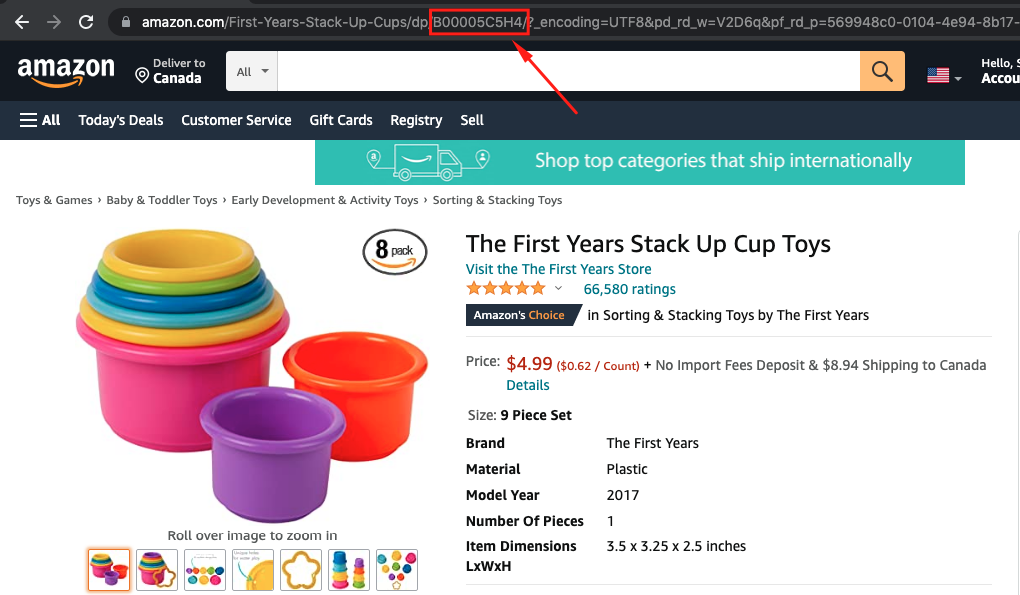
2. Product Detail Section
The ASIN can be found in product details on Amazon.com under the “Additional Information” section.
If you have many products, a manual ASIN search is not very useful. Here’s what you can do: Use tools.
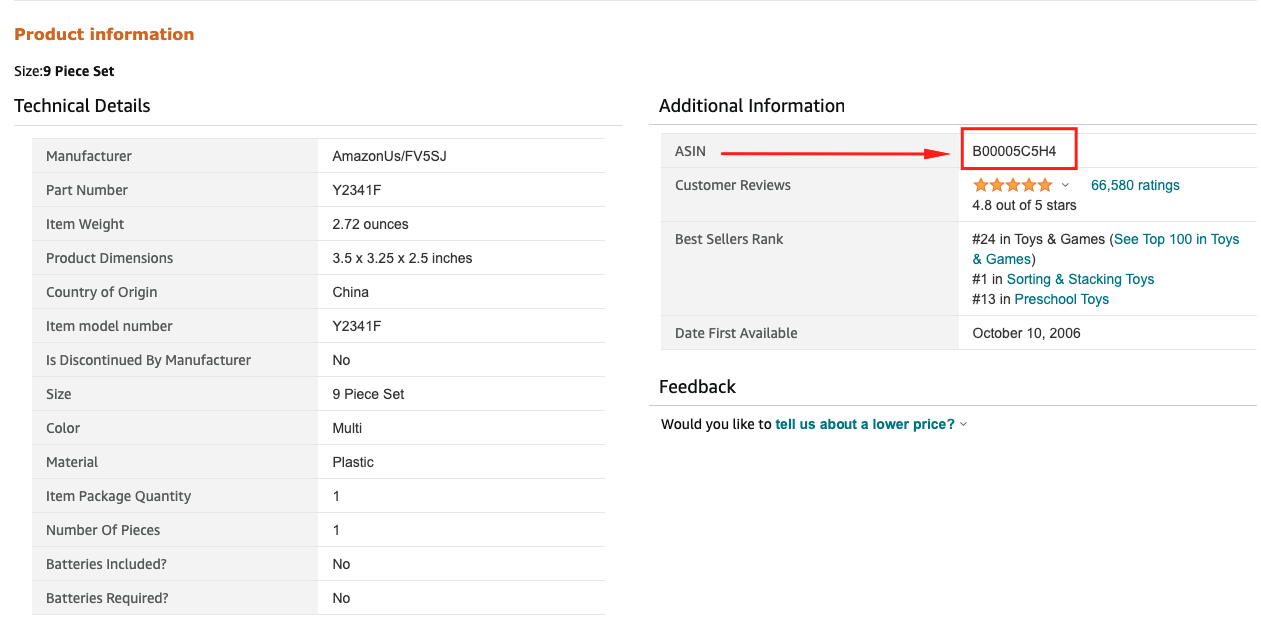
3. Amazon ASIN Lookup Tools
There are many different tools for checking the ASIN of a product. Our Amazon ASIN Lookup Tool can help you with that. Some devices are free, and others have to be purchased but provide an excellent overview and additional features. In the end, it depends on the number of products you want to sell.
The post What is Amazon ASIN Number & How to Find it? appeared first on Amazon-ASIN Blogs - Latest from Amazon Sellers: News, Advice, and Effective Strategies.
]]>The post Amazon FBA Checklist for Sellers in 2023 appeared first on Amazon-ASIN Blogs - Latest from Amazon Sellers: News, Advice, and Effective Strategies.
]]>New to Amazon FBA? Don’t worry, we have you covered. Just follow this Amazon FBA Checklist, and you will be off to a great start!
1. Choose the Right Marketplace
First, find out which marketplace will be suitable for you. It depends on the amount of investment in hand, market competition, shipping obstacles, and language barriers. Not every marketplace is profitable for every Amazon FBA seller. It’s fruitful to understand the variation in marketplaces to make the right decision about where to sell.
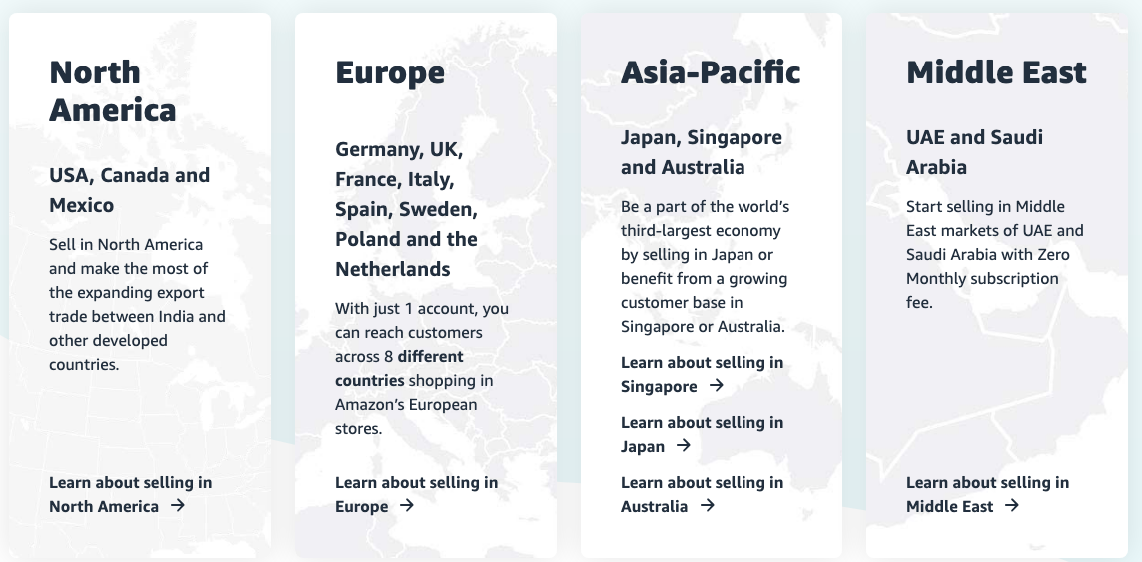
2. Find the Right Product
Let’s face it. It is not the 1900’s anymore. You can’t just pick up anything and start selling it. SellerApp provides the most accurate data on Amazon products for the convenience of the seller.
Instead of wasting your money on flukes, make calculated decisions about what’s trending in the market. What are people searching for? What will sell with minimal effort?
“Pro Tip – If you are partial to a certain product or niche, but there is clear evidence for you to stay away from it i.e. low search volume of the product or a highly competitive niche, don’t spend your resources on it. Always remember, Amazon FBA is a business and in business, you have to listen to your mind.”
After you find the right product, you need to make sure that your product meets the Amazon FBA standard. SourcingNova offers Amazon FBA Prep Services that can help you reduce the chance of mistakes.
3. Select a Suitable Niche
A few sellers start their FBA journey with a pre-selected niche in which they want to build their brand. Some niches are extremely tough to get into and demand a ludicrous amount of cash, whereas some are welcoming for new sellers.
Some niches are within the “Gated Categories” which require certifications and a small fee to be paid to Amazon to allow the seller to sell in those categories. Generally, the following categories and products require approval.
- Collectable Coins
- Personal Safety and Household products Fine Art
- Holiday selling requirements in Toys and Games
- Jewelry
- Amazon Subscription Boxes Made in Italy
- Music and DVD
- Automotive and Powersports products
- Services
- Sports Collectibles
- Streaming Media Players
- Video, DVD, & Blu-ray
- Watches
“Categories vary from one marketplace to another. Please visit the Amazon website relating to your selected marketplace to get more details about what you can sell.”
4. Setup your Amazon Seller Central Account
This is your “Control Panel.” With this, you’ll operate your Amazon FBA business. Due to its high importance, Amazon requires a lot of information for its creation.
Amazon Seller Central Sub-checklist:
- Business Name
- Email Address
- Credit Card
- Phone Number
- Tax ID
- State Tax ID
5. Choosing the Seller Plan
Amazon offers 2 selling plans:
Individual Selling Plan – $0.99 Per Item
Individual Selling Plan is for sellers who expect to sell less than 40 units each month.
Professional Selling Plan – $39.99 Per Month
Professional Selling Plan is for sellers who are confident that they’ll sell more than 40 units each month.
It comes with a lot of features for the sellers which are unavailable to the sellers with the Individual Selling Plan.
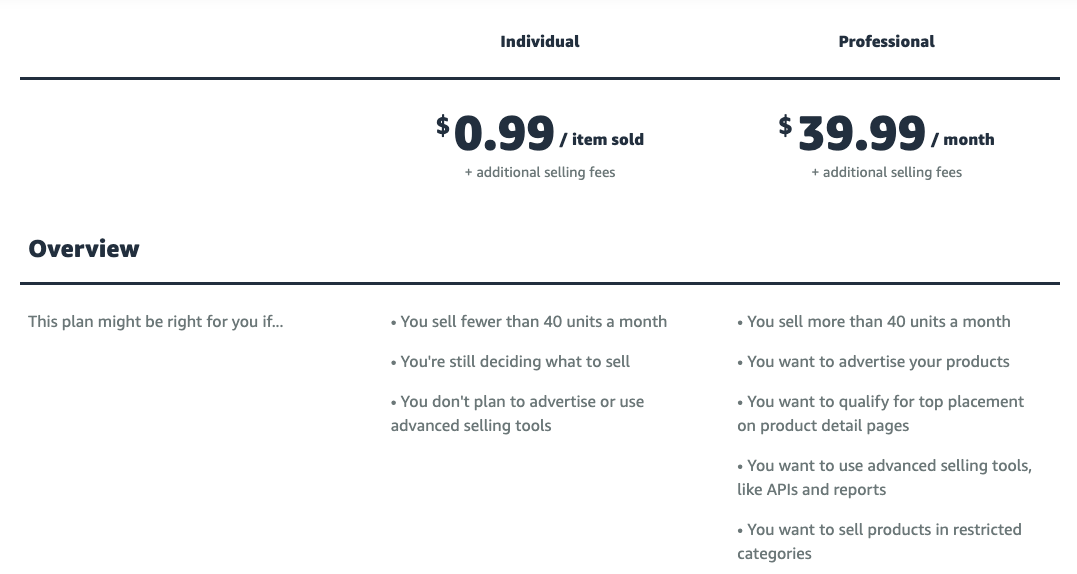
“If you want to sell more than 40 units. Hence, we recommend Professional Selling Plan to FBA sellers.”
6. Create a Dummy Listing
If you Just got your Amazon Seller Central account and are thinking about ordering your 1st shipment? Hold your horses. Set up a dummy listing in your selected category with generic images of your product. This small task will:
- Confirm whether your category is gated or not. If gated, you will need to ungate the category before you can sell.
- Make sure that the product is NOT patented.
There are two types of Patents.
- Design Patent
- Utility Patent
This small deed alone can save thousands of dollars because you won’t be able to sell your product even if you spend all your money on manufacturing and shipping, only to find out that the product was patented beforehand. Your Product Listing will be ”Put-On Hold,” and your account will be suspended.
7. Source some samples
After passing the patent check, try to find a manufacturer who can fulfill your demands in the shortest time with the highest quality.
You can search for a manufacturer on these platforms:
Choose the manufacturers based on their ratings, reviews, and order completion. Order one sample from the manufacturers you have chosen and your competitor’s manufacturer. Pick the one with the highest quality and lowest prices.
8. Prepare a Launching and Ranking Strategy
This is the most crucial part of Amazon FBA for every seller. Unless you invent a product, you’ll compete with thousands of sellers all selling the same product.
Launching: You just started selling on Amazon? So what? There are thousands of sellers selling the same product as yours. Launching involves how you’ll introduce your product on Amazon to stand out from the competition.
Ranking: Almost no one goes past the third page of Amazon. The sellers who are in the 1st place dominate the market and drive the most conversions. Reaching the top spots of the 1st page is a race in which every seller is a participant. Ranking involves how to improve the visibility of your product by promoting it to the 1st page of Amazon.
There are many ways to launch and rank your product. Each with its own merits and demerits.
9. Register as a Brand and get a trademark
Imagine Nike or Adidas, if they hadn’t registered as brands and hadn’t gotten a trademark.
Would you mind if you put in all the effort to sell on Amazon, but some unethical hijacker starts to mooch off your work? If yes, then register yourself as a brand and get a trademark. This will ensure that no one will steal your sales along with creating your identity in the market.
10. Prepare and External Traffic Source
Want to improve your sales even more? Set up a Facebook Ad campaign and direct traffic from it to your product listing. You will be surprised to see the reach you get this way. This won’t be as easy as it seems because there is a high chance of violating Amazon’s TOS with this technique.
11. Offer Discounts to Slash the Competition
By now, potential customers will be visiting your product listing. Give them another reason to buy, i.e. ”Discounts.” Surveys show that people tend to buy more when products are discounted.
12. Sell with Selling Specials
A seller can employ a variety of tactics to improve sales even more. Tactics like:
- Amazon lightning deals
- Email marketing campaigns
- Bundling
- Upselling and cross-selling
- Discount coupons/codes
- BOGOF sales
Amazon Seller Central contains updates about inventory reports, current sales promotions, and much more. You can benefit enormously from the knowledge in these halls.
Explore the article on the 3 best free email marketing services lookinglion to gain a deeper understanding of email marketing.
13. Constantly Analyze your Metrics
Are you sure you will still be turning profit 3 months from now? Is the market changing or only you are not getting your piece of the pie?
Look closely into the market details to answer these questions. You can’t run a business without having a clue. Metrics will give you the insights and the vision you need.
14. Don’t get over excited
A lot of people become over-excited as soon as they start getting a few sales. They start spending more than they are earning at that moment.
SellerApp suggests that new sellers be patient and recover their initial investment. After the Launch of the product, there is a stabilization period of 5-6 months in which the organic orders start flooding in and the expenses begin to drop. Then and only then, it is suggested to start spending your hard-earned cash.
The post Amazon FBA Checklist for Sellers in 2023 appeared first on Amazon-ASIN Blogs - Latest from Amazon Sellers: News, Advice, and Effective Strategies.
]]>The post Amazon FBA Vs Amazon MFN (Merchant Fulfillment Network): Complete Comparision Guide [Pros & Cons] appeared first on Amazon-ASIN Blogs - Latest from Amazon Sellers: News, Advice, and Effective Strategies.
]]>Amazon vendors possess strong opinions about every technique, and each has its strengths and flaws.
The ideal method to pick between FBA or MFN would be to judge your operation size and range and know how your product combination impacts the FBA fees you incur. Let us investigate this further.
As stated previously, when looking at the gaps between FBA vs MFN, it will be critical to consider the extent of your operation and what sorts of items you sell. Sellers who use Fulfillment from Amazon pay commissions to store their goods in Amazon fulfillment centers. With FBA, Amazon handles transport and satisfaction, in addition to customer service and returns. MFN identifies sellers sending their products directly to the consumer out of their very own business, home, or warehouse location after receiving orders from Amazon.
So far as popularity is concerned, FBA vendors may better chance to outrank their competitors and acquire the Buy Box more often because they can provide Amazon’s Prime transport choice and accessibility to Amazon’s transportation and fulfillment networks globally. However, it is a pricey program to participate in, together with monthly storage fees and long-term storage charges.
But small companies that are starting and cannot pay each of the related FBA fees could be more appropriate to MFN. They could pack and ship their goods; however, they need to select, packaging, transport, and customer services.
Seller Fulfilled Prime (SFP) is a comparatively new fulfillment choice that awards Amazon MFN sellers with superior metrics. Those who are eligible for Amazon SFP appreciate the advantages of FBA without having to send shipments to Fulfillment Centers.
Amazon SFP sellers also seem to get the same royal treatment as FBA sellers from Amazon’s Buy Box algorithm. That means leading sellers with their fulfillment systems set up can acquire the Buy Box just as frequently because FBA sellers pending their seller metrics stay high across the board without needing FBA fees.
Fulfillment by Amazon (FBA):
Fulfillment from Amazon (FBA) is only utilizing Amazon’s services as opposed to your resources. The program permits sellers to send their products to Amazon where products are being stored in warehouses until they market.
Advantages of using Amazon FBA
- Amazon Prime: After obtaining FBA, the corresponding item gets qualified for prime delivery. This is the perk you can provide to your customers. Customers always search for quick and speedy shipping. FBA does its best through its Prime 2-day shipping service.
- Higher Conversions: FBA products add more customers than non-FBA listed products. As per Amazon, 50% sale occurs for FBA recorded products. The clients who have a clear vision and know what they want and need to buy always search for FBA with prime service products. Conversions are generally higher since people trust Amazon to care for them.
- Easy to win Buy Box: Being Amazon FBA seller, you have the opportunity to win the Buy Box as Amazon provides priority to FBA listing products vendors in its algorithm. The purchase through FBA recorded products takes you at the Amazon search. FBA Sellers always get the Buy Box, that’s the ideal situation for any product.
- Amazon takes care of customer support and transport.
- They store the inventory for you and perform the choosing in their warehouses
- Much Bigger target market
- Comparatively shallow learning curve Because of plenty of support materials on the Online
- Super Saver along with Amazon Prime expedited transportation advantages
- Easy returns
- More spare time to build your business
- Perfect for merchants selling big, bulky or low-cost things
Amazon MFN (Merchant Fulfillment Network)
Amazon MFN stands to get Merchant Fulfillment Network. The Merchant Fulfillment Network service comprises only vendors to send their items. The retailers and vendors have their warehouses to keep products that are being marketed. These retailers themselves are in charge of picking items up from such warehouses, packaging them at last shipment it to these clients. Amazon doesn’t get indulged in transporting items from sellers to buyers.
Advantages of Using MFN:
- No delivery price: The retailers themselves select, pack and send their purchased goods so that they do not have to pay any sum to anybody; in reality, sellers pay shipping fees for buyers. This increases sellers profitability.
- No monthly and stock prices: Sellers will not bill themselves for maintaining products in their warehouses. You can keep your entire goods of almost any dimension and even in substantial volume on your warehouse, and you also won’t have to pay just one penny as you need to pay for FBA Amazon store storage.
- Fewer Returns & Damages: The perfect packaging of items which leads to fewer damages and product returns.
- Could be Creative for Clients: MFN sellers could be more imaginative in their packing side. They’re also able to customize the accounts visually and may add gratitude notes also. This will surely allow them to entice clients with their imagination.
- Build your Brand: Together with the MFN, you make the badge to your brand. No other individual can take charge of your merchandise and solutions like in FBA, Amazon manages the transport and requires credit for your merchandise.
Disadvantages of Using MFN:
- When vendors send via MFN, they are entirely accountable for managing and weighing, including picking, packaging hash, shipping returns, and refunds. This is sometimes complex and provides lots to the vendor.
- While sending via MFN, you ought to look after the cited delivery period and a real shipping period. Since if a client wouldn’t obtain the merchandise punctually, they wouldn’t return to you. Your company may be in danger.
- In case MFN sellers deficiency in providing appropriate solutions to clients, clients are more inclined to repel away from their shops. It may severely affect sales and earnings.
- It’s an easy endeavour to market and send through Amazon nor much hard. Every vendor endures through the battle about the best way best to market on Amazon. Then again, the following dilemma is the way to send merchandise: FBA or MFN? Although every coin has two faces, it may be reasoned that FBA includes a brighter side than MFN. With some FBA charge, you can experience fast-paced marketing with quick and fast prime shipping. Additionally, FBA companies and shops undergo high priority with Amazon. The vital point would be to be familiar with Amazon shipping policies (if FBA or MFN) and expedited transport legislation.
Conclusion
How you choose to send to your buyers either by using FBA or MFN will be your decision, but you need to familiarise yourself with all the details as entirely as you can. Not only do laws vary from country to country, but shipping times do, too. Your buyers are only concerned with something, and one thing only: getting their purchase quickly. And it’s your choice, the e-commerce retailer, to accomplish that.
The post Amazon FBA Vs Amazon MFN (Merchant Fulfillment Network): Complete Comparision Guide [Pros & Cons] appeared first on Amazon-ASIN Blogs - Latest from Amazon Sellers: News, Advice, and Effective Strategies.
]]>